STM32 Schematics
STM32 is a family of 32-bit microcontrollers developed by STMicroelectronics. These microcontrollers are widely used in a variety of applications, including consumer electronics, automotive, industrial control, and Internet of Things (IoT) devices. One of the key features of STM32 microcontrollers is their high performance and low power consumption, making them suitable for use in battery-powered and energy-sensitive applications. They also have a wide range of peripherals and interfaces, making them highly flexible and adaptable for different use cases. Flux.ai has the world's largest community-driven public library of STM32 microcontrollers, with a wide range of footprints, symbols, datasheets, and simulation models available. This library is a valuable resource for engineers and designers working with STM32 microcontrollers, and helps to accelerate the development process by providing access to pre-tested and verified components.
STM32G0B1KEU6
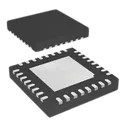
Microcontroller – 32-bit Arm® Cortex®-M0+ microcontroller operating at up to 64 MHz, featuring 512 KB Flash memory, 144 KB SRAM, and 30 programmable I/O pins. Operates from a 1.7 V to 3.6 V supply and integrates a 13-channel 12-bit ADC, 2-channel 12-bit DAC, three analog comparators, and communication interfaces including CAN FD, USB 2.0 Full-Speed, USB Type-C® Power Delivery, I²C, SPI, I²S, UART/USART, HDMI-CEC, IrDA, and LIN. Includes DMA, PWM timers, brown-out detect/reset, power-on reset (POR), and watchdog timer (WDT) peripherals. Housed in a 32-pin UFQFPN (5 × 5 mm) package. #STMicroelectronics #STM32 #STM32G0B1KEU6 #Microcontroller #ARMCortexM0Plus #32BitMCU #64MHz #512KBFlash #144KBSRAM #ADC #DAC #CANFD #USB2 #USBTypeC #I2C #SPI #I2S #UART #UFQFPN32 #EmbeddedSystems
12 Uses0 StarsPet Tracker Device noPL
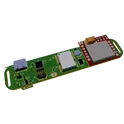
This is a Pet Tracker Reference Design based on STM32L4. Tracker connects with network by SIM800L module connected to the STM. Also MCU connected to the GPS by uart and send data to server #STM32 #GPS #G4 #G3 #LTE #IoT #Tracker #smartHomeDevices #referenceDesign #edge-computing #edgeComputing #stm #template #referenceDesign
0 Uses0 StarsSTM32F103VET6
32-bit ARM Cortex-M3 microcontroller operating at up to 72 MHz, featuring 512 KB Flash memory, 64 KB SRAM, and 80 programmable I/O pins. Operates from a 2.0 V to 3.6 V supply and integrates 3 × 12-bit ADCs (16 channels), 2 × 12-bit DACs, multiple timers with PWM capability, and communication interfaces including CAN, USB, I²C, SPI, I²S, SDIO, UART, and USART. Housed in a 100-pin LQFP package. #STM32 #STM32F103VET6 #Microcontroller #ARMCortexM3 #32BitMCU #72MHz #512KBFlash #64KBSRAM #LQFP100 #EmbeddedSystems #CAN #USB #SPI #I2C #UART #SDIO #ADC #DAC #STMicroelectronics
1 Uses0 StarsPet Tracker Device
This is a Pet Tracker Reference Design based on STM32L4. Tracker connects with network by SIM800L module connected to the STM. Also MCU connected to the GPS by uart and send data to server #STM32 #GPS #G4 #G3 #LTE #IoT #Tracker #smartHomeDevices #referenceDesign #edge-computing #edgeComputing #stm #template #referenceDesign
0 Uses0 StarsSTM32F427IIT6
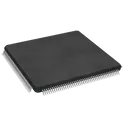
ARM® Cortex®-M4 STM32F4 Microcontroller IC 32-Bit 180MHz 2MB (2M x 8) FLASH 176-LQFP (24x24) The STM32F427IIT6 specification defines the engineering requirements for a high-performance microcontroller device designed for embedded processing applications requiring advanced computational capability, rich peripheral integration, and reliable real-time control. This specification establishes the functional, electrical, mechanical, environmental, and quality requirements necessary to ensure consistent operation across industrial, consumer, and communication systems. The device is intended for use in complex embedded systems where high-speed processing, efficient memory handling, and extensive peripheral connectivity are required. It supports applications such as industrial automation, motor control, signal processing, communication interfaces, and advanced embedded control systems. Engineering Requirements The microcontroller shall be manufactured using advanced semiconductor fabrication processes to ensure high processing performance, low power consumption, and long-term reliability. The device shall provide stable operation across its intended voltage, temperature, and environmental conditions while maintaining deterministic real-time behavior. The integrated architecture shall support high-speed processing capabilities, embedded memory resources, and multiple communication interfaces for system-level integration. Peripheral functionality shall operate reliably under defined electrical and environmental conditions without degradation of performance. Electrical characteristics shall ensure stable logic levels, accurate timing behavior, and robust signal integrity across all supported operating modes. The device shall maintain functional reliability during power transitions, reset conditions, and dynamic load variations. Mechanical and package construction shall be suitable for surface-mount assembly processes and shall ensure mechanical integrity during soldering, handling, and operation. Workmanship shall be free from defects including contamination, physical damage, or structural inconsistencies that could impact reliability or performance. Inspection, validation, and testing shall be performed using controlled procedures and calibrated equipment to ensure compliance with all applicable engineering and quality standards. Any deviation from this specification shall require formal engineering review, documented justification, and approval through the established change control process. Documentation Supporting documentation shall include engineering datasheets, reference manuals, qualification reports, electrical characterization data, inspection records, and revision-controlled manufacturing documentation. All records shall be maintained under formal configuration management and quality assurance systems. Revision Control Any modification to this specification shall be processed through the established engineering change management system. All revisions shall undergo technical review, validation, and formal approval prior to implementation to ensure continued compliance with design intent and applicable industry requirements. #EngineeringSpecification #Microcontroller #EmbeddedSystems #STMicroelectronics #DigitalControl #IndustrialElectronics #Firmware #Semiconductor #QualityAssurance #EngineeringDocumentation #RealTimeSystems
0 Uses0 StarsSTM32G071K8U6
STM32U073 Series – ultra-low-power 32-bit microcontroller based on the Arm Cortex-M0+ core operating up to 56 MHz. Features up to 256 KB Flash memory, 40 KB SRAM, USB Full-Speed interface, integrated LCD controller, advanced analog peripherals, and extremely low power consumption. Designed for battery-powered, portable, industrial, smart metering, IoT, wearable, medical, and consumer electronics applications. Includes ADC, DAC, op-amp, comparators, RTC, DMA, timers, communication interfaces, and multiple low-power operating modes. Search Keywords: STM32U073, STM32U073RBT6, STM32U073CBT6, STM32U073 MCU, STMicroelectronics MCU, Cortex-M0+ Microcontroller, Ultra Low Power MCU, ARM Microcontroller, USB Microcontroller, LCD Controller MCU, Battery Powered MCU, Embedded Controller, IoT Microcontroller, Industrial MCU, Smart Meter MCU, Wearable MCU, 256KB Flash MCU, 40KB SRAM MCU, Low Power Embedded System, STM32U0 Series Hashtags: #STM32U073 #STM32U0 #STM32 #STMicroelectronics #CortexM0Plus #ARMMCU #Microcontroller #UltraLowPower #EmbeddedSystems #USBMCU #LCDController #IoT #WearableElectronics #SmartMeter #IndustrialElectronics #BatteryPowered #FirmwareDevelopment #ElectronicsDesign #PCBDesign #EmbeddedHardwareST Microelectronics STM32G071K8U6 UFQFPN-32_L5.0-W5.0-P0.50-TL-EP3.5 LCSC Part Number: C724237 JLCPCB Part Class: Extended Part Manufactured by ST(意法半导体)
5 Uses0 StarsE32-433T30D
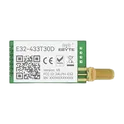
8km UART Through Hole RF Transceiver Modules and Modems RoHS,3.3V~5.2V,-40 ~ 80C The E32-433T30D is based on the Semtech SX1278 LoRa chipset and uses LoRa spread-spectrum modulation to achieve long-distance, highly reliable wireless communication even in noisy environments. It communicates with a microcontroller via UART (serial interface), making it easy to integrate with Arduino, ESP32, STM32, and similar systems. It is commonly used for IoT telemetry, remote control systems, sensor networks, and industrial monitoring, especially where GSM/Wi-Fi is unavailable or impractical. Key Features Frequency range: 410–441 MHz (433 MHz default) RF output power: 21–30 dBm (up to 1 W high-power version) LoRa modulation: High sensitivity and strong anti-interference Communication distance: up to ~8 km (open area, ideal conditions) Interface: UART TTL serial (3.3 V logic level) Sensitivity: around -147 dBm for long-range reception Low data rate support: ~0.3 kbps to 19.2 kbps Half-duplex communication (TX/RX not simultaneous) Configurable modes: normal / wake-up / power-saving / sleep via M0 & M1 pins Compact module size with SMA antenna connector Wide operating temperature: -40 °C to +85 °C Important Notes Requires external microcontroller (MCU) for operation (not standalone). Must not leave M0 and M1 pins floating (must be defined HIGH/LOW or GND). Works best with proper 433 MHz antenna (2–5 dBi recommended). Power supply must be stable (typically 5V with sufficient current capability). For maximum range, line-of-sight + correct antenna height matters more than raw power. Applications Smart agriculture monitoring Remote sensor networks Utility meter reading (water/gas) Industrial telemetry systems Drone/robot communication links Remote control & automation systems #E32_433T30D #Ebyte #LoRa #SX1278 #WirelessModule #IoT #Telemetry #LongRangeCommunication #UART #433MHzLoRa #EmbeddedSystems
7 Uses0 StarsSTM32MP157CAC3
ARM® Cortex®-A7 Microprocessor IC STM32MP1 2 Core, 32-Bit 209MHz, 650MHz 361-TFBGA (12x12) # Engineering Specification ## Product Name STM32MP157CAC3 ## General Description STM32MP157CAC3 is a high-performance microprocessor unit that combines application processing and real-time control capabilities within a single integrated circuit. The device is designed to support advanced embedded systems requiring a balance of computing performance, deterministic control, multimedia processing, connectivity, and security functionality. The component integrates multi-core processing resources, memory interfaces, graphics capabilities, peripheral controllers, and communication subsystems to enable the development of sophisticated embedded platforms. Its heterogeneous architecture allows high-level operating systems and real-time firmware to operate simultaneously, supporting applications that require both user-interface functionality and low-latency control. The device is intended for industrial automation, human-machine interface systems, edge computing platforms, communication equipment, medical devices, smart infrastructure, and Internet of Things applications. Its architecture enables consolidation of system functions, reducing component count and simplifying overall hardware design. The design emphasizes processing efficiency, system scalability, power management, security, and long-term reliability. It supports advanced software ecosystems and facilitates the development of connected embedded products with graphical interfaces, networking capabilities, and real-time operational control. ## Functional Requirements ### Application Processing The device shall provide application-level processing capabilities suitable for operating systems, middleware, and user applications. ### Real-Time Processing The device shall support deterministic control functions for time-critical embedded operations. ### Multimedia Support The component shall support graphical and multimedia processing functions for display and user-interface applications. ### System Integration The device shall integrate processing, communication, and peripheral functions within a unified embedded computing platform. ## Electrical Requirements ### Power Management The device shall support efficient power operation and multiple power management modes to optimize energy consumption. ### Memory Interface Support The component shall support external memory devices for program execution, data storage, and system operation. ### Peripheral Connectivity The device shall provide interfaces for communication, control, monitoring, and external subsystem integration. ### Signal Integrity The design shall support reliable operation across supported interface standards and operating conditions. ## Processing Architecture Requirements ### Multi-Core Operation The device shall support concurrent execution of application and real-time workloads through integrated processing resources. ### Operating System Support The architecture shall support embedded operating systems and software frameworks suitable for advanced application development. ### Security Features The device shall support hardware-based mechanisms intended to protect system integrity, software assets, and sensitive data. ### Resource Management The component shall support efficient allocation of processing, memory, and peripheral resources. ## Mechanical Requirements ### Surface Mount Construction The device shall be supplied in a high-density surface mount package suitable for automated manufacturing processes. ### PCB Integration The package shall support integration into multilayer printed circuit boards designed for high-performance embedded systems. ### Structural Integrity The device shall maintain electrical and mechanical reliability during assembly and operational service life. ## Environmental Requirements ### Operating Conditions The component shall operate reliably within environmental conditions commonly encountered in industrial and embedded applications. ### Thermal Performance The device shall support stable operation under sustained processing workloads and associated thermal conditions. ### Storage and Handling The component shall maintain physical and electrical integrity during transportation, storage, and manufacturing processes. ## Quality Requirements ### Reliability The device shall provide dependable long-term operation in embedded and industrial computing environments. ### Verification Processing, peripheral, communication, and system functions shall be validated through applicable testing and qualification procedures. ### Compliance The product shall conform to relevant semiconductor, quality, and embedded computing standards applicable to its intended use. ## Documentation Requirements Technical documentation shall include processor architecture information, hardware integration guidelines, memory interface recommendations, power management considerations, software development support, security features, and application design guidance. ## Classification Tags #STM32MP157CAC3 #STM32MP1 #Microprocessor #MPU #EmbeddedProcessor #ARMProcessor #EmbeddedLinux #RealTimeControl #IndustrialAutomation #HumanMachineInterface #EdgeComputing #IoTGateway #EmbeddedSystems #SystemOnChip #SoC #ApplicationProcessor #GraphicsProcessor #ConnectivityPlatform #IndustrialElectronics #PCBDesign #HardwareDevelopment #ElectricalEngineering #CommonPartsLibrary #ComponentLibrary #EngineeringSpecification #TechnicalDocumentation #SystemIntegration #SecureEmbeddedSystems #MulticoreProcessing
9 Uses0 Stars1085
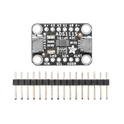
ADS1115 series 16 Bit 860 Samples per Second Analog to Digital Converter (ADC) Evaluation Board Adafruit 1085 ADS1115 Adafruit 4-Channel ADC Breakout based on Texas Instruments ADS1115 (16-bit) or ADS1015 (12-bit) analog-to-digital converter, featuring I2C communication, four single-ended inputs or two differential inputs, programmable gain amplifier (PGA) up to x16, internal voltage reference, programmable comparator, and selectable I2C addresses (0x48–0x4B). Operates from 2.0V to 5.5V and supports interfacing analog sensors with 3.3V and 5V microcontrollers such as Arduino, ESP32, STM32, RP2040, and Raspberry Pi. Search Keywords: Adafruit 4-Channel ADC Breakout, ADS1115 Breakout, ADS1015 Breakout, Adafruit ADS1115, Adafruit ADS1015, I2C ADC Module, 16-bit ADC, 12-bit ADC, 4-channel ADC, differential ADC, programmable gain amplifier, PGA ADC, analog sensor interface, TI ADS1115, TI ADS1015, Raspberry Pi ADC, Arduino ADC module, ESP32 ADC expansion Hashtags: #Adafruit #ADS1115 #ADS1015 #ADCModule #I2CADC #16BitADC #12BitADC #AnalogToDigitalConverter #SensorInterface #DifferentialADC #PGA #Arduino #ESP32 #STM32 #RP2040 #RaspberryPi #DataAcquisition #EmbeddedSystems #AdafruitBreakout
27 Uses0 StarsSTM32WL55JCI6TR
IC RF TxRx + MCU General ISM < 1GHz LoRaWAN 1.0, Sigfox 915MHz 73-UFBGA The STM32WL55JCI6TR is an ultra-low-power wireless microcontroller developed by STMicroelectronics. It integrates a high-performance Arm Cortex-M4 core with a secondary Arm Cortex-M0+ core and a sub-GHz radio transceiver within a single package. The device is designed for long-range wireless communication, industrial automation, smart metering, environmental monitoring, asset tracking, and Internet of Things applications. Its highly integrated architecture reduces external component count while providing secure, energy-efficient operation suitable for battery-powered and embedded systems. #STM32WL55JCI6TR #STM32WL #STM32 #STMicroelectronics #Microcontroller #WirelessMCU #LoRa #SubGHz #IoT #EmbeddedSystems #IndustrialAutomation #SmartMetering #LowPowerDesign #WirelessCommunication #RemoteMonitoring
0 Uses0 StarsSTM32L432KCU6
ST Microelectronics STM32L432KCU6 UFQFPN-32_L5.0-W5.0-P0.50-TL-EP3.5 LCSC Part Number: C1337280 JLCPCB Part Class: Extended Part Manufactured by ST(意法半导体) STMicroelectronics STM32L432KC ultra-low-power 32-bit ARM Cortex-M4 microcontroller with FPU running up to 80MHz, featuring 256KB Flash memory, 64KB SRAM, USB 2.0 Full-Speed device support, Quad-SPI interface, RTC with calendar and alarms, true random number generator (TRNG), DMA controller, CAN 2.0B, UART, LPUART, SPI, I2C, SAI audio interface, 12-bit 5MSPS ADC, dual 12-bit DACs, operational amplifier with PGA, comparators, capacitive sensing channels, advanced timers and ultra-low-power modes. Operates from 1.71V to 3.6V and is optimized for battery-powered, industrial, medical, IoT and portable embedded applications. Search Keywords: STM32L432KC, STM32L432KCU6, STM32L432KCU6TR, STM32L432, STM32L4 series, STM32 Cortex-M4 MCU, STM32 low power microcontroller, STM32 256KB Flash 64KB SRAM, STM32 USB FS MCU, STM32 CAN MCU, STM32 Quad SPI MCU, STM32L432 datasheet, STM32L432 development board, Nucleo-L432KC, ARM Cortex-M4 FPU Hashtags: #STM32L432KC #STM32L432KCU6 #STM32L432 #STM32L4 #STMicroelectronics #CortexM4 #ARMMicrocontroller #LowPowerMCU #EmbeddedSystems #USBFS #CANBus #QuadSPI #ADC12bit #DAC12bit #RTC #TRNG #IoTMCU #IndustrialMCU #MedicalElectronics #NucleoL432KC
46 Uses0 StarsPet Tracker Device 2YhJ
This is a Pet Tracker Reference Design based on STM32L4. Tracker connects with network by SIM800L module connected to the STM. Also MCU connected to the GPS by uart and send data to server #STM32 #GPS #G4 #G3 #LTE #IoT #Tracker #smartHomeDevices #referenceDesign #edge-computing #edgeComputing #stm #template #referenceDesign
0 Uses0 Stars