ESP32 Schematics
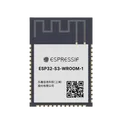
The ESP32 is a low-cost, low-power microcontroller with built-in Wi-Fi and Bluetooth capabilities. It is a highly integrated chip designed for the Internet of Things (IoT) and can be used for a variety of applications, including home automation, wearable technology, and industrial control. One of the key features of the ESP32 is its versatility and wide range of available peripherals, including sensors, displays, and communication modules. This makes it ideal for use in a variety of projects and applications, such as home security systems, smart home devices, and industrial automation systems. Flux.ai has the world's largest community-driven public library of ESP32 devices, with a range of footprints, symbols, datasheets, and simulation models available for users. This extensive library allows developers and designers to easily incorporate the ESP32 into their projects and take advantage of its powerful capabilities. Whether you are building a simple IoT device or a complex industrial control system, the ESP32 is an excellent choice due to its versatility and wide range of available resources.
ESP32 Robot Controller | AI Design Review Tutorial [Example]
Spot the mistake! Learn how to use AI to conduct a design review on an ESP32-based control board. This project is ideal for autonomous or radio-controller robots featuring inputs for sensors, encoders, and a Flysky RC receiver, plus an I2C display for configuration.
0 Uses0 StarsHEALED SK6812MINI_wSupport (demo)
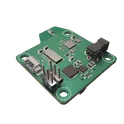
This is the launch version of the Delta, an ESP32-S3-MINI-1-N4R2 based sensor device. The board has RGB LEDs, USB C for firmware, EN and BOOT buttons, and 2 IO connectors for development #IoT #WiFi #MCU #RF #ESP32 #project #referenceDesign #simple-embedded #espressif #template #reference-design
0 Uses0 StarsESP32 Robot Controller | AI Design Review Tutorial [Example]
Spot the mistake! Learn how to use AI to conduct a design review on an ESP32-based control board. This project is ideal for autonomous or radio-controller robots featuring inputs for sensors, encoders, and a Flysky RC receiver, plus an I2C display for configuration.
0 Uses0 StarsESPRSSO32 Smart Scale AI Auto Layout [Example]
Learn how to use AI Auto Layout on this ESP32 Espresso Smart Scale! In one click you’ll see AI Auto Layout perform magic. Pay close attention to how we recommend creating rulesets, zones, and fanouts. By copying the setup in this example on your own project, you’ll have a fully routed board in no time!
0 Uses0 StarsESP32-S3-ZERO
ESP32-S3-Zero is a compact Waveshare castellated development module based on the dual-core 240 MHz ESP32-S3FH4R2, featuring 2.4 GHz Wi-Fi, Bluetooth 5 LE, 4 MB Flash, 2 MB PSRAM, an onboard USB Type-C port, and a ceramic antenna. Keywords: ESP32-S3-Zero, Wi-Fi BLE module, ESP32-S3 development board, castellated module, USB Type-C
17 Uses0 StarsESP32-S3-WROOM-1 Reference Design
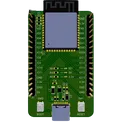
This project is a reference project for ESP32-S3-WROOM-1 to develop your IoT ideas. The board has 3 LEDs, USB C for firmware, EN and BOOT buttons, and 2 IO connectors for development #IoT #WiFi #MCU #RF #ESP32 #project #referenceDesign #simple-embedded #espressif #template #reference-design
0 Uses0 StarsESP32 Robot Controller | AI Design Review Tutorial [Example]
Spot the mistake! Learn how to use AI to conduct a design review on an ESP32-based control board. This project is ideal for autonomous or radio-controller robots featuring inputs for sensors, encoders, and a Flysky RC receiver, plus an I2C display for configuration.
0 Uses0 StarsESP32-S3
2.4 GHz Wi-Fi® + Bluetooth® 5 SoC – High-performance dual-core Xtensa® LX7 wireless System-on-Chip (SoC) for IoT devices, smart home products, industrial automation, AIoT, wearable electronics, HMI systems, and embedded wireless applications. Operates at up to 240 MHz with 512 KB on-chip SRAM and supports external SPI Flash and PSRAM. Integrates Wi-Fi 802.11 b/g/n (2.4 GHz) and Bluetooth® 5 (LE) with Long Range and 2 Mbps PHY, delivering up to +21 dBm transmit power and 150 Mbps maximum Wi-Fi data rate. Features native USB 2.0 OTG, AI vector instructions for machine learning acceleration, 30 GPIOs, SPI, I²C, I²S, UART, RMT, LCD/Camera interface, TWAI® (CAN-compatible), PWM, ADC, capacitive touch sensing, AES-128/256, SHA, RSA, ECC, HMAC, Flash encryption, Secure Boot, and a True Random Number Generator (TRNG) for secure embedded applications. Operates from a 3.0 V to 3.6 V supply, over a −40°C to +105°C temperature range, and is housed in a 56-pin QFN (7 × 7 mm) package. #EspressifSystems #ESP32S3 #WirelessSoC #WiFi #Bluetooth5 #DualCore #XtensaLX7 #USBOTG #AIoT #IoT #SecureBoot #FlashEncryption #EmbeddedSystems
9 Uses0 StarsMaster Industrial Gateway - Routing Test Copy
Industrial ESP32-S3 master gateway with Ethernet (W5500), LoRa 433 MHz, microSD storage, RTC, USB-UART console/debug interface (CP2102N), and isolated RS485 ports using ADM2587 transceivers. The design includes ESP32-S3-WROOM-1-N16R2 as the main controller, W5500 Ethernet, LoRa antenna interface, microSD connector, RTC circuitry, CP2102N USB-to-UART programming/debug console, SC16IS752 UART expanders, isolated RS485 channels, power regulation, ESD/surge protection, connectors, and mounting holes. Cellular/BG95/SIM functionality and true RS232 console hardware are not included; J1 is used only as the microSD card connector.
0 Uses0 StarsESP32 Robot Controller | AI Design Review Tutorial [Example]
Spot the mistake! Learn how to use AI to conduct a design review on an ESP32-based control board. This project is ideal for autonomous or radio-controller robots featuring inputs for sensors, encoders, and a Flysky RC receiver, plus an I2C display for configuration.
0 Uses0 StarsESP32-S3-PICO-1-N8R2
Wi-Fi® 4 + Bluetooth® 5 LE System-in-Package (SiP) MCU – Highly integrated 2.4 GHz wireless System-in-Package (SiP) featuring an ESP32-S3 dual-core Xtensa® LX7 microcontroller for IoT devices, smart home products, AIoT, edge computing, industrial automation, HMI, wearable devices, and embedded wireless applications. Operates at up to 240 MHz with 8 MB embedded Flash and 2 MB embedded PSRAM, eliminating the need for external memory and reducing PCB size. Supports Wi-Fi 802.11 b/g/n and Bluetooth® 5 LE (including Long Range and 2 Mbps PHY), with up to +20 dBm transmit power and 150 Mbps Wi-Fi data rate. Features native USB 2.0 OTG, vector instructions for AI acceleration, 45 programmable GPIOs, SPI, I²C, I²S, UART, USB, RMT, LCD/Camera interface, PWM, TWAI® (CAN), ADC, touch sensing, AES-XTS, SHA, RSA, ECC, HMAC, secure boot, Flash encryption, and a true random number generator (TRNG) for secure embedded applications. Operates from a 3.0 V to 3.6 V supply, over a −40°C to +85°C temperature range, and is housed in a compact 56-pin QFN (7 × 7 mm) package. #EspressifSystems #ESP32S3PICO1N8R2 #ESP32S3 #WirelessMCU #SystemInPackage #WiFi #Bluetooth5LE #DualCore #XtensaLX7 #USBOTG #AIoT #EmbeddedSystems
3 Uses0 Stars