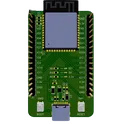
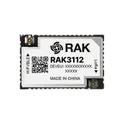
ESP32-S3 Schematics
The ESP32-S3 is Espressif's dual-core Xtensa LX7 microcontroller with 2.4 GHz Wi-Fi and Bluetooth 5 (LE). It adds vector instructions for AI and signal-processing workloads, native USB OTG, and up to 45 programmable GPIOs, making it a popular choice for camera, display, voice, and other edge AI devices. Common modules and boards include the ESP32-S3-WROOM-1, ESP32-S3-MINI-1, ESP32-S3-DevKitC-1, and the Seeed Studio XIAO ESP32-S3. They are used in smart home controllers, wearables, HMI panels with SPI or RGB displays, and battery-powered IoT sensors. Flux.ai has a large community-driven public library of ESP32-S3 parts, modules, and reference designs, with footprints, symbols, datasheets, and 3D models, so you can drop the ESP32-S3 into a schematic and PCB and start designing right away.
Misty Pink Replicator
Misty Pink Replicator schematic finalized for layout handoff with ESP32-S3, USB-C battery charging, T5838 always-on wake microphone, CI1302 backup ASR analog microphone front end, HTEW0154T8 SPI e-ink display, standardized power/test nets, and final ERC-clean baseline.
0 Uses0 StarsESP32-S3-WROOM-1 Reference Design
This project is a reference project for ESP32-S3-WROOM-1 to develop your IoT ideas. The board has 3 LEDs, USB C for firmware, EN and BOOT buttons, and 2 IO connectors for development #IoT #WiFi #MCU #RF #ESP32 #project #referenceDesign #simple-embedded #espressif #template #reference-design
0 Uses0 StarsDominant Plum Speeder Bike
3.3V ESP32-S3 Dual 6V Rail MOSFET Board with MCP23017 I2C Expanders, Option C Gate Network, SW2 DPST Rail-Interlock, 2S LiFePO4 Charger/BMS (BQ24618 + BQ29209) with Series Battery Wiring and Charge Integration, and 2×10 RA Headers (#MCP23017_3V3 #OptionC #GateNetwork #RailInterlock #Dual6V #BQ24618 #BQ29209 #2S #LiFePO4 #SeriesBattery #ChargeIntegration #RAHeaders)
0 Uses0 StarsESP32-S3-WROOM-1 Reference Design
This project is a reference project for ESP32-S3-WROOM-1 to develop your IoT ideas. The board has 3 LEDs, USB C for firmware, EN and BOOT buttons, and 2 IO connectors for development #IoT #WiFi #MCU #RF #ESP32 #project #referenceDesign #simple-embedded #espressif #template #reference-design
0 Uses0 StarsArchitectural Lavender Translation Collar
Architectural Lavender Translation Collar – ESP32‑S3 Wi‑Fi + LoRa, USB‑C, Li‑ion, low‑power design Overview Experience a cutting-edge IoT solution with this low‑power board built around the ESP32‑S3‑MINI‑1‑N8. Designed for seamless Wi‑Fi (2.4 GHz), BLE, and LoRa (868 MHz) connectivity, this board integrates ENS161 and ENS210 sensors over I2C alongside an RFM95W‑868 LoRa radio on SPI. It is powered via a 3.7 V Li‑ion cell with USB‑C charging up to 500 mA, complete with full battery protection, a robust 3.3 V rail tailored for Wi‑Fi burst currents, and per‑peripheral power gating to enhance energy efficiency. Core Features • MCU: ESP32‑S3‑MINI‑1‑N8 equipped with an onboard PCB antenna for 2.4 GHz Wi‑Fi/BLE, ensuring optimal wireless performance. • Sensors: Integrated ENS161 and ENS210 sensors utilize a shared I2C bus with controllable 4.7 kΩ pull‑ups for streamlined communication. • LoRa Radio: The RFM95W‑868 module, connected via SPI, enables long‑range communication at 868 MHz. Power & USB‑C Connectivity • Battery: A reliable 3.7 V 1200 mAh Li‑ion battery connected via a right‑angle JST‑PH 2‑pin connector features built‑in battery protection. • Charging: The USB‑C receptacle, with CC resistors and TVS protection on D+/D− along with series resistors, supports fast, safe charging with a current limit of 500 mA. • Regulation: A dedicated 3.3 V regulator capable of handling Wi‑Fi burst currents coupled with bulk and high‑frequency decoupling ensures stable operation, supported by status LEDs indicating power and charge states. Low‑Power Control • Peripheral Management: Load switches allow selective power‑gating of the ENS161, ENS210, and RFM95W modules, controlled directly by ESP32‑S3 GPIOs. • Energy Efficiency: Controllable I2C pull‑ups minimize idle current, vital for prolonged battery life in IoT applications. RF and Antenna Integration • 2.4 GHz: Utilizes the integrated PCB antenna on the ESP32‑S3 with proper ground/metal keep‑out zones for optimal signal integrity. • 868 MHz: Features a controlled‑impedance feed from the RFM95W to a PI matching network (C‑L‑C pads) with flexible antenna options—selectable via SMA connector, chip antenna, or PCB trace—and includes RF ESD protection. Connectivity & Debug Features • USB‑C Interface: Provides secure data connectivity with integrated safeguards and proper terminations. • Debugging: A comprehensive programming/debug header exposes EN, BOOT, and UART lines, with test points on key rails and buses (3V3, VBAT, SCK, MOSI, MISO, SDA, SCL, RESET/EN, GND) to simplify development and troubleshooting. Design Verification • Rigorous ERC/DRC and decoupling checks ensure adherence to component ratings and optimal signal routing. • Maintain RF keep‑outs and impedance‑controlled traces for both 2.4 GHz and 868 MHz paths, securing reliable performance even during high‑intensity operations. #IoT #ESP32S3 #LoRa #LowPowerDesign #USB-C #WirelessConnectivity #BatteryPowered #RFDesign
0 Uses0 StarsHomely Plum Flux Capacitor
Compact 4-Layer ESP32-S3-DevKitC-1 Nano-Style Carrier Board with I²S Audio, Class-D Amp, MicroSD, LiPo Power, WS2812B, and IR; featuring updated all-layer antenna keepout, additional decoupling capacitors on 5 V/3.3 V rails, four M3 mounting holes, finalized rounded-corner PCB outline and hand-friendly width, centered ESP32-S3-DevKitC-1 and symmetrically aligned MicroSD/I²S mic, centered bottom silkscreen title text, and zero-error ERC/DRC; layout is finalized and ready for routing #ESP32S3 #DevKitC1 #antennaKeepout #decoupling #M3MountingHoles #routingReady
0 Uses0 StarsBredevs-C
Bredevs Consa – Production-Ready ESP32-S3 Retro Game Console Mainboard featuring HDMI 720p60 via ADV7513, USB-C OTG charging and Micro-USB flashing, Li-ion play-while-charge system with integrated battery protection, 5 V→3.3 V buck converter, ≥16 MB PSRAM, 16–32 MB QSPI flash, optional RP2040/CPLD with extra flash, MicroSD via SPI, I2S audio DAC and Class-D amp, comprehensive ESD/OVP/RPP protections, clear programming test pads, implemented on a 4-layer controlled-impedance PCB with mounting holes and branded silkscreen. #ESP32S3 #HDMI #USBTypeC #LiIon #PSRAM #QSPI #I2S #ESDProtection #4LayerPCB
0 Uses0 StarsIncreasing Magenta Lightcycle 6f36
Low-Power USB-C (5 V) Environmental Sensor Node with 18650 Li-Ion Power-Path, Robust Protection (Reverse Polarity, OVP, UVLO, OCP to 3 A), Dual-Radio ESP32-S3 MCU, I²C VOC/Temp/Humidity/Pressure/Lux Sensors, and 2-/4-Pin JST-XH Expansion Pads for Battery and Sensors #USB-C #LiIon #ESP32 #I2C #PowerProtection #EnvironmentalSensor
0 Uses0 StarsCrowded Rose Warp Drive
Production-Ready 2-Layer ESP32-S3 Controller PCB: Dual WROOM-1U/WROOM-1 Footprints, ESD-Protected USB-C Debug, Protected 12 V Input (Fuse, Reverse Diode, TVS), TPS5430DDA Buck + TLV70033DDCT LDO Power, Integrated TMC2209 Stepper Driver, 3× 12 V/2 A LED Channels with Screw Terminals, Comprehensive Test Points, Full BOM/Pin Map/Gerbers, Logic Power Supply Audited and Validated #ESP32S3 #PowerManagement #MotorControl #LEDControl #ProductionReady #PowerAudit
0 Uses0 Stars