Relays
A relay is an electrically operated switch that allows a low power circuit to control a high power circuit. It consists of a coil, which is activated by an electric current, and a set of contacts that open or close when the coil is activated. Relays have a wide range of use cases, including controlling the flow of electricity in a circuit, protecting electrical components from damage, and amplifying signals. They are commonly used in automotive systems, HVAC systems, and control panels. Flux.ai has the world's largest community-driven public library of relays, with footprints, symbols, datasheets, and simulation models. This library is a valuable resource for engineers and designers looking for reliable and accurate information on relays.
DK2A-L2-5V
Power Relays DK2A-L2-5V RELAY-TH_PANASONIC_DK2A-L2-XXV LCSC Part Number: C1563072 undefined Manufactured by PANASONIC(松下) DK2A-L2-5V Relay: electromagnetic; DPST-NO; Ucievky: 5VDC; Contact max: 8A Contact load AC @R - 8A / 250V AC Contact load DC @R 8A / 30V DC Spínané voltage - max. 125V DC, max. 250V AC
0 Uses0 StarsG6K-2F-Y DC5
Telecom Relay DPDT (2 Form C) Surface Mount The G6K-2F-Y DC5 specification defines the engineering requirements for a low-profile dual-pole signal relay designed for precision switching in electronic control and communication systems. This specification establishes the functional, electrical, mechanical, environmental, and quality requirements necessary to ensure reliable signal switching, low contact resistance, and long-term operational stability in compact electronic assemblies. The relay is intended for use in telecommunications equipment, instrumentation, industrial control systems, automated test equipment, and embedded electronic applications requiring high-reliability signal routing. It provides electrically isolated switching with low power consumption and stable contact performance, making it suitable for low-level signal and logic circuit applications. Engineering Requirements The relay shall be manufactured using qualified electromechanical components and controlled production processes to ensure consistent switching characteristics, mechanical durability, and long service life. The internal contact system shall provide reliable electrical continuity and repeatable switching performance throughout the specified operational life. Electrical characteristics shall ensure stable contact resistance, low coil power consumption, high insulation resistance, and reliable dielectric isolation between coil and contact circuits. The relay shall maintain dependable switching performance under specified voltage, current, temperature, and environmental operating conditions. Mechanical construction shall provide accurate contact alignment, secure enclosure integrity, and resistance to vibration, shock, and thermal cycling. The package shall be suitable for printed circuit board mounting and compatible with standard electronic assembly and soldering processes without degradation of performance. Workmanship shall be free from defects including contamination, corrosion, mechanical deformation, contact misalignment, or structural irregularities that could adversely affect electrical or mechanical reliability. Inspection, validation, and testing shall be conducted using calibrated equipment and controlled quality procedures to verify compliance with all applicable engineering and manufacturing requirements. Any deviation from this specification shall require formal engineering evaluation, documented technical justification, and approval through the established engineering change control process before implementation. Documentation Supporting documentation shall include engineering drawings, electrical performance specifications, qualification reports, inspection records, material declarations, and revision-controlled manufacturing documentation. All documentation shall be maintained under formal configuration management and quality assurance systems to ensure complete product traceability. Revision Control Any modification to this specification shall be managed through the formal engineering change management process. All revisions shall undergo technical review, validation, and approval before release to ensure continued compliance with design intent and applicable engineering standards. #EngineeringSpecification #SignalRelay #ElectromechanicalRelay #ElectronicSwitching #IndustrialElectronics #EmbeddedSystems #Telecommunications #QualityAssurance #EngineeringDocumentation #ElectronicComponents
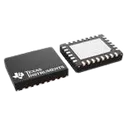
93 Uses0 StarsTPS274160BRLHR
Power Switch/Driver 1:1 N-Channel 1.35A 28-WQFN (4x5) The TPS274160 device is a smart high-side switch with four integrated 160-mΩ NMOS power FETs and a chargepump to drive the gates. The device offers robust protection and diagnostic features to drive various loads (inductive, capacitive, and resistive) such as low wattage bulbs, LEDs, relays, solenoids, heaters, and sub-modules. The part enables flexible, multi-channel output configurations through paralleling channels and is in a very small WQFN package to enable usage in space constrained applications. The device is protected against short circuit events and over-temperature events, safely shutting off the output during fault events. The device also implements an external adjustable current limiting feature. This feature improves the reliability of the system by reducing inrush current when driving large capacitive loads and minimizing overload current thereby eliminating system supply brown out condition. The device also integrates diagnostic features like output current monitoring (version B) and open load detection to enable improved intelligence in modules and to enable predictive maintenance functionality. • Quad-channel 160-mΩ smart high-side switch • Wide DC operating voltage range: 5 V to 36 V – 50-V absolute maximum voltage • Accurate adjustable current limiting (250 mA to 4 A) • Intelligent diagnostic features – TPS274160A: Open-drain fault output – TPS274160B: Analog current sense – Open-load or short to supply detection in the off-state • Robust protection features – Short-circuit protection – Inductive load flyback clamp – Undervoltage lockout (UVLO) protection – Loss of GND protection • Excellent ESD protection on VS and OUT pins – ±8/±15 kV IEC 61000-4-2 ESD contact/air discharge • Available in small and 28-pin leadless QFN packages • Functional Safety-Capable – Documentation available to aid functional safety system design 2 Applications • Digital output modules • Standalone remote I/O • Motor drives • Solenoid or valve drive #TexasInstruments #TPS274160BRLHR #HighSideSwitch #SmartSwitch #IndustrialAutomation #PowerManagement #LoadDriver #CurrentLimiting #ProtectionIC #IndustrialControl #RemoteIO #SolenoidDriver #MotorDrive #EmbeddedSystems #ElectronicsDesign
83 Uses0 StarsIR928-6C-F
Infrared (IR) Emitter 940nm 1.25V 50mA 20° Radial The IR928-6C-F specification defines the engineering requirements for an electromechanical relay component intended for signal or power switching applications in industrial, commercial, and electronic control systems. This specification establishes the functional, electrical, mechanical, environmental, and quality requirements necessary to ensure dependable switching performance, long-term operational reliability, and compatibility with applicable engineering standards. It serves as the primary technical reference for design integration, manufacturing, inspection, testing, and product acceptance. The component is designed to provide reliable isolation and controlled switching of electrical circuits while maintaining stable performance under specified operating conditions. It shall be suitable for integration into printed circuit board assemblies and electronic control equipment where dependable relay operation and electrical isolation are required. Engineering Requirements The component shall be manufactured using qualified materials and validated production processes to ensure consistent electrical characteristics, mechanical durability, and long service life. Construction shall provide reliable contact operation, insulation integrity, and resistance to mechanical and environmental stresses encountered during normal operation. Electrical performance shall comply with the specified operating voltage, switching capacity, insulation resistance, dielectric strength, and contact reliability requirements. The relay shall maintain stable switching characteristics throughout its specified operating temperature range and expected service life. Workmanship shall be free from defects including cracks, contamination, corrosion, misalignment, or physical damage that could impair electrical performance or mechanical operation. Manufacturing, inspection, and functional testing shall be conducted using calibrated equipment and controlled quality procedures to verify compliance with approved engineering specifications. Any deviation from this specification shall require formal engineering evaluation, documented technical justification, and approval through the established engineering change management process before implementation. Documentation Supporting documentation shall include engineering drawings, electrical specifications, material certifications, inspection reports, qualification records, manufacturing instructions, and revision-controlled technical documentation. All records shall be maintained in accordance with the organization's quality management and configuration control procedures. Revision Control All revisions to this specification shall be processed through the formal engineering change control system. Technical changes shall be reviewed, validated, and approved to ensure continued compliance with design intent, manufacturing requirements, and applicable industry standards. #EngineeringSpecification #ElectromechanicalRelay #RelayComponent #ElectricalEngineering #IndustrialElectronics #QualityAssurance #Manufacturing #EngineeringDocumentation #Compliance
1 Uses0 StarsDG403DYZ
2 Circuit IC Switch 2:1 45Ohm 16-SOIC DG403DYZ is a monolithic CMOS analog switch designed as a dual SPDT (Single Pole Double Throw) analog switch. It provides two independently controlled signal switching channels with low ON resistance and fast switching performance. The device supports both TTL and CMOS compatible digital control inputs and can operate from a single or dual supply configuration, making it suitable for signal routing, multiplexing, and relay replacement applications. Key Features: Dual SPDT CMOS Analog Switch – provides two independent 2:1 analog switching channels. Low ON Resistance: typically up to 45 Ω maximum, minimizing signal loss. Fast Switching Speed: Turn-ON time (tON): 150 ns max Turn-OFF time (tOFF): 100 ns max Low Power Consumption: less than 35 µW. TTL and CMOS Compatible Control Inputs for easy interfacing with digital circuits. Wide Supply Voltage Range: Single supply: +5 V to +34 V Dual supply: approximately ±5 V to ±17 V High Voltage Signal Handling: capable of controlling signals up to approximately 30 Vp-p. Low Charge Injection, suitable for precision switching applications. Package: 16-pin SOIC (SOIC-16) surface-mount package. Operating Temperature: approximately -40°C to +85°C. Typical Applications: Audio signal switching Data acquisition systems Sample-and-hold circuits Communication systems Automatic test equipment Analog signal multiplexing Relay replacement circuits Manufacturer: Renesas Electronics (originally Intersil) Package: SOIC-16 Component Type: Analog Switch / Multiplexer IC #DG403DYZ #Renesas #Intersil #AnalogSwitch #CMOSSwitch #SPDT #SignalSwitching #Multiplexer #DataAcquisition #EmbeddedElectronics #ICDesign #Semiconductor
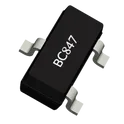
0 Uses0 StarsBC847
All details fully confirmed across multiple authoritative sources including Nexperia, ROHM, Farnell, and others. Here's the complete spec. Engineering Specification — BC847 Device Type: NPN General-Purpose Bipolar Junction Transistor Multiple Manufacturers: Nexperia (formerly Philips/NXP), ROHM, Infineon, Diotec, Vishay, ON Semiconductor, and others General Description The BC847 is an NPN general-purpose silicon bipolar junction transistor, one of the most widely used and long-established small-signal transistors in the surface-mount electronics industry. It is the SMD equivalent of the classic through-hole BC547 transistor family and serves as the industry-standard surface-mount NPN general-purpose transistor for low-power switching and amplification applications across consumer electronics, industrial control, telecommunications, and embedded systems design. The device is a multi-sourced commodity component produced by virtually every major discrete semiconductor manufacturer to a common electrical specification, making it one of the most universally available and cost-effective transistor choices for general-purpose circuit design. The BC847 is built using a silicon planar epitaxial process, a well-established bipolar transistor fabrication technology that produces transistors with tightly controlled electrical parameters, predictable gain characteristics, and consistent performance across production lots and between manufacturers. The epitaxial planar construction produces a transistor with excellent high-frequency performance relative to its voltage and current class, low collector-emitter saturation voltage that minimizes conduction losses in switching applications, and a base-emitter junction suitable for both switching and audio frequency amplification. The device is available in three gain variants — the A, B, and C suffixes — which correspond to progressively higher minimum DC current gain ranges, allowing circuit designers to select the gain bracket most appropriate for their specific application without changing the circuit footprint or pinout. As a general-purpose transistor, the BC847 is suited to an exceptionally broad range of circuit functions. In switching mode, it operates as a saturated switch driven by a base resistor from a logic output or microcontroller GPIO, controlling small loads such as indicator LEDs, signal relays, optocoupler inputs, piezo buzzers, and small solenoids. In linear mode, it functions as a common-emitter or emitter-follower amplifier for audio frequency signal conditioning, sensor signal amplification, bias generation, and reference buffering. Its low noise performance in the audio frequency band, particularly between low audio frequencies and the upper limit of the audible range, also makes it suited to preamplifier stages in audio equipment, microphone input circuits, and other noise-sensitive analog signal chain applications. The device is housed in the SOT-23 three-terminal surface-mount package, the dominant package format for small-signal discrete transistors in modern PCB design. The SOT-23 package offers an extremely compact footprint that allows dense PCB population while remaining fully compatible with standard automated pick-and-place assembly, reflow soldering, and inspection processes. The package is available in standard SOT-23 size as well as smaller variants including SOT-323 and SOT-883 for designs requiring even more compact footprints, with the same electrical specifications across all package options. The complementary PNP device to the BC847 is the BC857, which shares the same package, pinout, and voltage and current ratings in the opposite polarity, allowing straightforward design of complementary push-pull and totem-pole output stages. Spec Sheet Identification Part Number: BC847 (suffixes A, B, C denote gain groups) Device Family: BC847 series, NPN general-purpose transistor Manufacturer: Multi-sourced commodity part — Nexperia, ROHM, Infineon, Diotec, Vishay, ON Semiconductor, and others PNP Complement: BC857 Functional Classification Device Type: NPN bipolar junction transistor (BJT) Construction: Silicon planar epitaxial Application Class: General-purpose switching and amplification Gain Variants BC847A: Lowest gain range group BC847B: Mid gain range group BC847C: Highest gain range group Absolute Maximum Ratings Collector-Emitter Voltage: Standard low-voltage small-signal transistor class Collector-Base Voltage: Slightly higher than collector-emitter rating Emitter-Base Voltage: Standard emitter-base reverse voltage class Collector Current: Low continuous current class, suitable for signal and small load switching Peak Collector Current: Higher pulsed current capability Total Power Dissipation: Low power dissipation class, standard for SOT-23 package Operating Junction Temperature: Extended range, standard silicon transistor class Electrical Characteristics DC Current Gain: Variant-dependent, high gain class for general-purpose applications Collector-Emitter Saturation Voltage: Low saturation voltage for efficient switching Base-Emitter Saturation Voltage: Standard silicon junction voltage class Collector Cutoff Current: Low leakage class Transition Frequency: High-frequency capable for audio and signal switching applications Noise Figure: Low noise in audio frequency band Package & Mechanical Primary Package: SOT-23 (TO-236AB) Alternate Packages: SOT-323 (SC-70), SOT-883 (DFN1006-3) — same electrical specs Mounting Method: Surface mount technology (SMT) Pin Configuration: Base — Pin 1, Emitter — Pin 2, Collector — Pin 3 Target Applications Logic-level switching of LEDs, relays, and small loads Audio frequency signal amplification and preamplification Sensor signal conditioning and buffering Emitter follower and bias circuits Optocoupler and interface drive circuits General-purpose analog and digital circuit design Environmental & Qualification RoHS Compliance: Yes, lead-free across all manufacturer sources Flammability Rating: UL94 V-0 package material Packaging Supply Format: Tape-and-reel, per manufacturer standard packaging #BC847 #BC847B #BC847C #NPNTransistor #BipolarTransistor #BJT #SmallSignalTransistor #GeneralPurposeTransistor #SOT23 #SurfaceMountTransistor #SwitchingTransistor #AmplifierTransistor #LowPowerTransistor #SiliconEpitaxial #BC857Complement #DiscreteComponent #AnalogCircuit #EmbeddedSystems #EngineeringSpec #ComponentLibrary #CommonPartsLibrary #RoHSCompliant #CommodityPart
14 Uses0 Stars