STM32 Projects
STM32 is a family of 32-bit microcontrollers developed by STMicroelectronics. These microcontrollers are widely used in a variety of applications, including consumer electronics, automotive, industrial control, and Internet of Things (IoT) devices. One of the key features of STM32 microcontrollers is their high performance and low power consumption, making them suitable for use in battery-powered and energy-sensitive applications. They also have a wide range of peripherals and interfaces, making them highly flexible and adaptable for different use cases. Flux.ai has the world's largest community-driven public library of STM32 microcontrollers, with a wide range of footprints, symbols, datasheets, and simulation models available. This library is a valuable resource for engineers and designers working with STM32 microcontrollers, and helps to accelerate the development process by providing access to pre-tested and verified components.
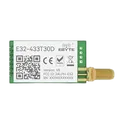
E32-433T30D
8km UART Through Hole RF Transceiver Modules and Modems RoHS,3.3V~5.2V,-40 ~ 80C The E32-433T30D is based on the Semtech SX1278 LoRa chipset and uses LoRa spread-spectrum modulation to achieve long-distance, highly reliable wireless communication even in noisy environments. It communicates with a microcontroller via UART (serial interface), making it easy to integrate with Arduino, ESP32, STM32, and similar systems. It is commonly used for IoT telemetry, remote control systems, sensor networks, and industrial monitoring, especially where GSM/Wi-Fi is unavailable or impractical. Key Features Frequency range: 410–441 MHz (433 MHz default) RF output power: 21–30 dBm (up to 1 W high-power version) LoRa modulation: High sensitivity and strong anti-interference Communication distance: up to ~8 km (open area, ideal conditions) Interface: UART TTL serial (3.3 V logic level) Sensitivity: around -147 dBm for long-range reception Low data rate support: ~0.3 kbps to 19.2 kbps Half-duplex communication (TX/RX not simultaneous) Configurable modes: normal / wake-up / power-saving / sleep via M0 & M1 pins Compact module size with SMA antenna connector Wide operating temperature: -40 °C to +85 °C Important Notes Requires external microcontroller (MCU) for operation (not standalone). Must not leave M0 and M1 pins floating (must be defined HIGH/LOW or GND). Works best with proper 433 MHz antenna (2–5 dBi recommended). Power supply must be stable (typically 5V with sufficient current capability). For maximum range, line-of-sight + correct antenna height matters more than raw power. Applications Smart agriculture monitoring Remote sensor networks Utility meter reading (water/gas) Industrial telemetry systems Drone/robot communication links Remote control & automation systems #E32_433T30D #Ebyte #LoRa #SX1278 #WirelessModule #IoT #Telemetry #LongRangeCommunication #UART #433MHzLoRa #EmbeddedSystems
7 Uses0 Stars1085
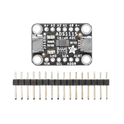
ADS1115 series 16 Bit 860 Samples per Second Analog to Digital Converter (ADC) Evaluation Board Adafruit 1085 ADS1115 Adafruit 4-Channel ADC Breakout based on Texas Instruments ADS1115 (16-bit) or ADS1015 (12-bit) analog-to-digital converter, featuring I2C communication, four single-ended inputs or two differential inputs, programmable gain amplifier (PGA) up to x16, internal voltage reference, programmable comparator, and selectable I2C addresses (0x48–0x4B). Operates from 2.0V to 5.5V and supports interfacing analog sensors with 3.3V and 5V microcontrollers such as Arduino, ESP32, STM32, RP2040, and Raspberry Pi. Search Keywords: Adafruit 4-Channel ADC Breakout, ADS1115 Breakout, ADS1015 Breakout, Adafruit ADS1115, Adafruit ADS1015, I2C ADC Module, 16-bit ADC, 12-bit ADC, 4-channel ADC, differential ADC, programmable gain amplifier, PGA ADC, analog sensor interface, TI ADS1115, TI ADS1015, Raspberry Pi ADC, Arduino ADC module, ESP32 ADC expansion Hashtags: #Adafruit #ADS1115 #ADS1015 #ADCModule #I2CADC #16BitADC #12BitADC #AnalogToDigitalConverter #SensorInterface #DifferentialADC #PGA #Arduino #ESP32 #STM32 #RP2040 #RaspberryPi #DataAcquisition #EmbeddedSystems #AdafruitBreakout
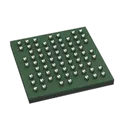
27 Uses0 StarsSTM32WLE5JCI6
Multiprotocol LPWAN 32-bit Arm Cortex-M4 MCUs, LoRa, (G)FSK, (G)MSK, BPSK, up to 256KB flash, 64KB SRAM IC RF TxRx + MCU 802.15.4 LoRa™ 150MHz ~ 960MHz 73-UFBGA The STM32WLE5JCI6 is an ultra-low-power wireless System-on-Chip (SoC) from STMicroelectronics that combines a 32-bit Arm Cortex-M4 microcontroller with an integrated sub-GHz radio transceiver. It is designed for long-range, low-power IoT and LPWAN applications such as smart metering, smart cities, industrial sensors, and remote monitoring systems. It supports multiple modulation schemes including LoRa®, (G)FSK, (G)MSK, and BPSK, making it flexible for both proprietary and standardized wireless protocols like LoRaWAN®. The device integrates RF, analog, digital, and security features into a single chip to reduce external components and PCB size. Key Features Core & Performance 32-bit Arm® Cortex®-M4 core up to 48 MHz DSP instructions and MPU support Up to 256 KB Flash and 64 KB SRAM Wireless Radio Sub-GHz frequency range: 150 MHz – 960 MHz Supports LoRa®, (G)FSK, (G)MSK, BPSK High receiver sensitivity up to –148 dBm (LoRa mode) Output power up to +22 dBm Ultra-Low Power Operation Supply voltage: 1.8 V – 3.6 V Very low sleep currents (nA–µA range) Optimized for battery-powered and energy-harvesting devices Peripherals Up to 43 GPIOs ADC (12-bit), DAC, comparators Multiple timers (16-bit and 32-bit) Interfaces: SPI, I2C, UART/USART, LPUART, I2S Security Features Hardware AES-256 encryption True Random Number Generator (TRNG) Secure memory protection and unique device ID System Integration Integrated RF + MCU (highly reduced BOM) OTA firmware update capability Industrial temperature range (typically –40°C to +85°C / +105°C depending variant) Summary The STM32WLE5JCI6 is a highly integrated LoRa-capable MCU + RF transceiver SoC, optimized for long-range wireless communication with extremely low power consumption, making it ideal for IoT devices that must run for years on battery power. #CommonPartsLibrary #IntegratedCircuit #STM32WLE5JCI6 #STM32WL #LoRa #IoT #LowPowerMCU #ArmCortexM4 #SubGHzRF #WirelessMCU #LPWAN #STMicroelectronics
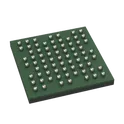
1 Uses0 StarsSTM32WL55JCI6TR
IC RF TxRx + MCU General ISM < 1GHz LoRaWAN 1.0, Sigfox 915MHz 73-UFBGA The STM32WL55JCI6TR is an ultra-low-power wireless microcontroller developed by STMicroelectronics. It integrates a high-performance Arm Cortex-M4 core with a secondary Arm Cortex-M0+ core and a sub-GHz radio transceiver within a single package. The device is designed for long-range wireless communication, industrial automation, smart metering, environmental monitoring, asset tracking, and Internet of Things applications. Its highly integrated architecture reduces external component count while providing secure, energy-efficient operation suitable for battery-powered and embedded systems. #STM32WL55JCI6TR #STM32WL #STM32 #STMicroelectronics #Microcontroller #WirelessMCU #LoRa #SubGHz #IoT #EmbeddedSystems #IndustrialAutomation #SmartMetering #LowPowerDesign #WirelessCommunication #RemoteMonitoring
0 Uses0 StarsSTM32L432KCU6
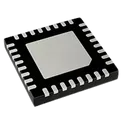
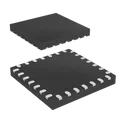
ST Microelectronics STM32L432KCU6 UFQFPN-32_L5.0-W5.0-P0.50-TL-EP3.5 LCSC Part Number: C1337280 JLCPCB Part Class: Extended Part Manufactured by ST(意法半导体) STMicroelectronics STM32L432KC ultra-low-power 32-bit ARM Cortex-M4 microcontroller with FPU running up to 80MHz, featuring 256KB Flash memory, 64KB SRAM, USB 2.0 Full-Speed device support, Quad-SPI interface, RTC with calendar and alarms, true random number generator (TRNG), DMA controller, CAN 2.0B, UART, LPUART, SPI, I2C, SAI audio interface, 12-bit 5MSPS ADC, dual 12-bit DACs, operational amplifier with PGA, comparators, capacitive sensing channels, advanced timers and ultra-low-power modes. Operates from 1.71V to 3.6V and is optimized for battery-powered, industrial, medical, IoT and portable embedded applications. Search Keywords: STM32L432KC, STM32L432KCU6, STM32L432KCU6TR, STM32L432, STM32L4 series, STM32 Cortex-M4 MCU, STM32 low power microcontroller, STM32 256KB Flash 64KB SRAM, STM32 USB FS MCU, STM32 CAN MCU, STM32 Quad SPI MCU, STM32L432 datasheet, STM32L432 development board, Nucleo-L432KC, ARM Cortex-M4 FPU Hashtags: #STM32L432KC #STM32L432KCU6 #STM32L432 #STM32L4 #STMicroelectronics #CortexM4 #ARMMicrocontroller #LowPowerMCU #EmbeddedSystems #USBFS #CANBus #QuadSPI #ADC12bit #DAC12bit #RTC #TRNG #IoTMCU #IndustrialMCU #MedicalElectronics #NucleoL432KC
46 Uses0 StarsSTM32F103C8T6
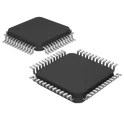
ARM® Cortex® M3 STM32F1 Microcontroller IC 32-Bit Single-Core 72MHz 64KB (64K x 8) FLASH Medium-density performance line Arm®-based 32-bit MCU with 64 or 128 KB Flash, USB, CAN, 7 timers, 2 ADCs, 9 com. interfaces Arm® 32-bit Cortex®-M3 CPU core – 72 MHz maximum frequency, 1.25 DMIPS/MHz (Dhrystone 2.1) performance at 0 wait state memory access – Single-cycle multiplication and hardware division • Memories – 64 or 128 Kbytes of Flash memory – 20 Kbytes of SRAM • Clock, reset and supply management – 2.0 to 3.6 V application supply and I/Os – POR, PDR, and programmable voltage detector (PVD) – 4 to 16 MHz crystal oscillator – Internal 8 MHz factory-trimmed RC – Internal 40 kHz RC – PLL for CPU clock – 32 kHz oscillator for RTC with calibration • Low-power – Sleep, Stop and Standby modes – VBAT supply for RTC and backup registers • 2x 12-bit, 1 µs A/D converters (up to 16 channels) – Conversion range: 0 to 3.6 V – Dual-sample and hold capability – Temperature sensor • DMA – 7-channel DMA controller – Peripherals supported: timers, ADC, SPIs, I 2Cs and USARTs • Up to 80 fast I/O ports – 26/37/51/80 I/Os, all mappable on 16 external interrupt vectors and almost all 5 V-tolerant Debug mode: – Serial wire debug (SWD) and JTAG interfaces • Seven timers – Three 16-bit timers, each with up to 4 IC/OC/PWM or pulse counter and quadrature (incremental) encoder input – 16-bit, motor control PWM timer with dead-time generation and emergency stop – Two watchdog timers (independent and window) – SysTick timer 24-bit downcounter • Up to nine communication interfaces – Up to two I2C interfaces (SMBus/PMBus®) – Up to three USARTs (ISO 7816 interface, LIN, IrDA capability, modem control) – Up to two SPIs (18 Mbit/s) – CAN interface (2.0B Active) – USB 2.0 full-speed interface • CRC calculation unit, 96-bit unique ID • Packages are ECOPACK #commonpartslibrary #integratedcircuit #microcontroller #stm32f1
36 Uses0 StarsFL2500283Z
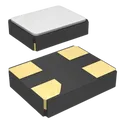
25 MHz ±30ppm Crystal 20pF 50 Ohms 4-SMD, No Lead The FL2500283Z is a 25 MHz surface-mount quartz crystal manufactured by Diodes Incorporated, part of the FL series (SaRonix-eCera™). It is designed for use as a stable clock reference in digital circuits such as microcontrollers, communication modules, and embedded systems. This crystal uses an AT-cut resonator inside a compact 3.2 mm × 2.5 mm (3225) ceramic package, making it suitable for high-density PCB designs and modern electronics. Key Features Standard Frequency 25 MHz fundamental mode crystal Compact SMD Package 3.2 × 2.5 mm (3225), 4-pad configuration Height ~0.68–0.75 mm AT-Cut Quartz Technology Provides good frequency stability and low drift Frequency Stability & Tolerance Typical: ±10 to ±30 ppm Load Capacitance Typically 20 pF Low ESR Around 50–60 Ω, suitable for MCU oscillator circuits Wide Operating Temperature Common range: -20°C to +70°C (some variants up to -40°C to +125°C) Surface-Mount Compatibility Ideal for automated assembly and reflow soldering RoHS / Lead-Free Environmentally compliant design Typical Applications Microcontroller clock (STM32, ESP32, AVR, etc.) Communication modules (Wi-Fi, Ethernet, RF) Embedded systems Consumer electronics Industrial control boards #Crystal #Oscillator #Resonator #SaRonix-eCera™ FL
85 Uses0 StarsCX3225SB16000D0GZJC1
16 MHz ±15ppm Crystal 8pF 60 Ohms 4-SMD, No Lead The CX3225SB16000D0GZJC1, manufactured by Kyocera AVX, is a 16.000 MHz crystal oscillator element designed to provide precise frequency reference for microcontrollers, communication ICs, and digital systems. It belongs to the CX3225SB series, known for compact size and stable frequency performance. Key Characteristics Type: Quartz crystal (passive frequency component) Frequency: 16 MHz Load Capacitance: 8 pF Frequency Stability: ±15 ppm Frequency Tolerance: ±15 ppm Operating Mode: Fundamental ESR (Equivalent Series Resistance): ~60–80 Ω Mechanical Details Package: 4-SMD, no-lead (surface mount) Size: 3.2 mm × 2.5 mm (3225 package) Height: ~0.6 mm (low profile) Operating Conditions Temperature Range: −25°C to +85°C Mounting Type: Surface mount (SMT) Function (Simple Explanation) This component: Generates a stable clock signal (16 MHz) Acts as the timing reference for MCUs, processors, or RF modules Works together with internal oscillator circuits inside ICs Microcontroller clock sources (e.g., ESP32, STM32, AVR) Communication modules Embedded systems Consumer electronics IoT devices #CommonPartsLibrary #Crystal #Oscillator #resonator
174 Uses0 Stars