STM32 Projects
STM32 is a family of 32-bit microcontrollers developed by STMicroelectronics. These microcontrollers are widely used in a variety of applications, including consumer electronics, automotive, industrial control, and Internet of Things (IoT) devices. One of the key features of STM32 microcontrollers is their high performance and low power consumption, making them suitable for use in battery-powered and energy-sensitive applications. They also have a wide range of peripherals and interfaces, making them highly flexible and adaptable for different use cases. Flux.ai has the world's largest community-driven public library of STM32 microcontrollers, with a wide range of footprints, symbols, datasheets, and simulation models available. This library is a valuable resource for engineers and designers working with STM32 microcontrollers, and helps to accelerate the development process by providing access to pre-tested and verified components.
Wio-E5 Dev Kit
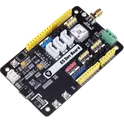
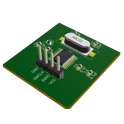
Wio-E5 Dev Kit embedded with Wio-E5 STM32WLE5JC LoRa module that supports Long Range protocol on the global frequency band. It provides full GPIOs, which support various data protocols and interfaces such as RS485, Grove, male/female headers, etc. This makes it user-friendly because it allows for easy and flexible connections to other devices or components. It would be a perfect choice for fast testing and rapid prototyping of your Long Range IoT projects.
8 Uses2 StarsSeeed Studio Wio-E5 mini Dev Board
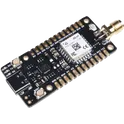
Wio-E5 mini Dev Board builds in and leads out full GPIO of the Wio-E5 STM32WLE5JC LoRa module. Supporting Long Range protocol and global frequency, the Wio-E5 mini is able to achieve a transmission range of up to 10 km in open areas. It supports EU868 and US915, making it suitable for wireless sensor networks and other IoT devices that require battery power, low power consumption and long range.
10 Uses2 StarsSTM32G030F6P6
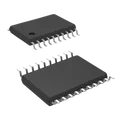
Microcontroller – 32-bit ARM® Cortex®-M0+ microcontroller operating at up to 64 MHz, featuring 32 KB Flash memory, 8 KB SRAM, and 17 programmable I/O pins. Operates from a 2.0 V to 3.6 V supply and integrates a 13-channel 12-bit ADC, internal and external oscillator support, and communication interfaces including I²C, SPI, UART/USART, IrDA, LIN, and SmartCard. Includes DMA, I²S, PWM, power-on reset (POR), and watchdog timer (WDT) peripherals. Housed in a 20-pin TSSOP package. #STMicroelectronics #STM32 #STM32G030F6P6 #Microcontroller #ARMCortexM0Plus #32BitMCU #64MHz #32KBFlash #8KBSRAM #ADC #I2C #SPI #UART #LIN #SmartCard #TSSOP20 #EmbeddedSystems
88 Uses1 StarsBME280
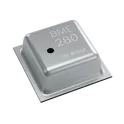
Humidity, Pressure, Temperature 0 ~ 100% RH I²C, SPI ±3% 1 s Surface Mount BME280 I2C breakout module The BME280 integrates three sensors—temperature, relative humidity, and pressure—along with a high-performance digital interface. It communicates via I²C or SPI, making it easy to interface with microcontrollers like Arduino, ESP32, and STM32. It is designed for low power consumption, making it suitable for battery-powered applications such as portable weather stations and smart home devices. Key Features Environmental Sensing Measures: Temperature Relative Humidity Barometric Pressure Enables altitude estimation based on pressure readings High Accuracy Temperature: ±1.0°C (typical) Humidity: ±3% RH (typical) Pressure: ±1 hPa (typical) Low Power Consumption Typical current: ~0.6 µA (sleep mode) ~3.6 µA (measurement mode) Ideal for battery-operated devices Communication Interfaces Supports: I²C (up to 3.4 MHz) SPI (3-wire / 4-wire) Easy integration with most microcontrollers Compact Package Small footprint: 2.5 × 2.5 × 0.93 mm LGA package Suitable for space-constrained designs Built-in Features Factory-calibrated coefficients stored in NVM Configurable oversampling and filtering Integrated ADC for high-resolution measurements #commonpartslibrary #sensor #humidity #pressure
330 Uses1 StarsSTM32F405RGT6
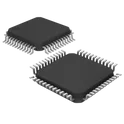
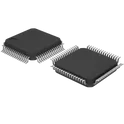
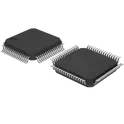
ARM® Cortex®-M4 series Microcontroller IC 32-Bit Single-Core 168MHz 1MB (1M x 8) FLASH 64-LQFP (10x10) Arm® Cortex®-M4 32b MCU+FPU, 210DMIPS, up to 1MB flash/192+4KB RAM, USB OTG HS/FS, Ethernet, 17 TIMs, 3 ADCs, 15 comm. interfaces, and camera Includes ST state-of-the-art patented technology • Core: Arm® 32-bit Cortex®-M4 CPU with FPU, Adaptive real-time accelerator (ART Accelerator) allowing 0-wait state execution from flash memory, frequency up to 168 MHz, memory protection unit, 210 DMIPS/ 1.25 DMIPS/MHz (Dhrystone 2.1), and DSP instructions • Memories – Up to 1 Mbyte of flash memory – Up to 192+4 Kbytes of SRAM including 64- Kbyte of CCM (core coupled memory) data RAM – 512 bytes of OTP memory – Flexible static memory controller supporting CompactFlash™, SRAM, PSRAM, NOR and NAND memories • LCD parallel interface, 8080/6800 modes • Clock, reset, and supply management – 1.8 V to 3.6 V application supply and I/Os – POR, PDR, PVD and BOR – 4-to-26 MHz crystal oscillator – Internal 16 MHz factory-trimmed RC (1% accuracy) – 32 kHz oscillator for RTC with calibration – Internal 32 kHz RC with calibration • Low-power operation – Sleep, Stop, and Standby modes –VBAT supply for RTC, 20×32-bit backup registers + optional 4 KB backup SRAM • 3×12-bit, 2.4 MSPS A/D converters: up to 24 channels and 7.2 MSPS in triple interleaved mode • 2×12-bit D/A converters • General-purpose DMA: 16-stream DMA controller with FIFOs and burst support • Up to 17 timers: up to twelve 16-bit and two 32- bit timers up to 168 MHz, each with up to 4 IC/OC/PWM or pulse counter and quadrature (incremental) encoder input • Debug mode – Serial wire debug (SWD) & JTAG interfaces – Cortex-M4 Embedded Trace Macrocell™ • Up to 140 I/O ports with interrupt capability – Up to 136 fast I/Os up to 84 MHz – Up to 138 5 V-tolerant I/Os • Up to 15 communication interfaces – Up to 3 × I2C interfaces (SMBus/PMBus) – Up to 4 USARTs/2 UARTs (10.5 Mbit/s, ISO 7816 interface, LIN, IrDA, modem control) – Up to 3 SPIs (42 Mbits/s), 2 with muxed full-duplex I2S to achieve audio class accuracy via internal audio PLL or external clock – 2 × CAN interfaces (2.0B Active) – SDIO interface • Advanced connectivity – USB 2.0 full-speed device/host/OTG controller with on-chip PHY – USB 2.0 high-speed/full-speed device/host/OTG controller with dedicated DMA, on-chip full-speed PHY and ULPI – 10/100 Ethernet MAC with dedicated DMA: supports IEEE 1588v2 hardware, MII/RMII #commonpartslibrary #integratedcircuit #microcontroller
75 Uses1 Stars