Voltage Regulators
A voltage regulator is an electronic device that maintains a constant output voltage level, regardless of changes in the input voltage or load conditions. These devices are commonly used to provide a stable power supply to electronic circuits, as well as to protect them from voltage spikes and surges. There are several types of voltage regulators, including linear, switching, and pulse width modulation (PWM) regulators, each with its own set of characteristics and applications. Linear regulators, for example, are simple and efficient, but have a relatively low switching speed and can only provide a limited output current. Switching regulators, on the other hand, have higher switching speeds and can provide a higher output current, but are more complex and require additional components. In addition to their use in power supplies and voltage protection, voltage regulators are also used in a wide range of other applications, including motor control, battery charging, and instrumentation. Flux.ai has the world's largest community-driven public library of voltage regulators, with footprints, symbols, datasheets, and simulation models for a wide range of devices. Whether you're a designer, engineer, or hobbyist, you can find the resources you need to get your project up and running quickly and efficiently.
TPS62172DSGT
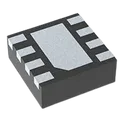
Buck Switching Regulator IC Positive Fixed 3.3V 1 Output 500mA 8-WFDFN Exposed Pad The TPS6217x device family are easy to use synchronous step-down DC-DC converters optimized for applications with high power density. A high switching frequency of typically 2.25 MHz allows the use of small inductors and provides fast transient response as well as high output voltage accuracy by utilization of the DCS-Control™ topology. With its wide operating input voltage range of 3 V to 17 V, the devices are ideally suited for systems powered from either a Li-Ion or other battery as well as from 12-V intermediate power rails. It supports up to 0.5-A continuous output current at output voltages between 0.9 V and 6 V (with 100% duty cycle mode). Power sequencing is also possible by configuring the enable and open-drain power good pins. In power save mode, the devices show quiescent current of about 17 μA from VIN. Power save mode, entered automatically and seamlessly if the load is small, maintains high efficiency over the entire load range. In shutdown mode, the device is turned off and shutdown current consumption is less than 2 μA. The device, available in adjustable and fixed output voltage versions, is packaged in a 2-mm × 2-mm 8- pin WSON package (DSG). • DCS-Control™ Topology • Input Voltage Range from 3 V to 17 V • Up to 500-mA Output Current • Adjustable Output Voltage from 0.9 V to 6 V • Fixed Output Voltage Versions • Seamless Power Save Mode Transition • Typically 17-µA Quiescent Current • Power Good Output • 100% Duty Cycle Mode • Short Circuit Protection • Over Temperature Protection • Pin to Pin Compatible with TPS62160 and TPS62125 • Available in a 2-mm × 2-mm 8-Pin WSON Package • Create a Custom Design using the TPS62170 with the WEBENCH® Power Designer #CommonPartsLibrary #IntegratedCircuit #PowerManagement
72 Uses0 StarsNRF52832-QFAA-R7
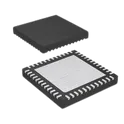
IC RF TxRx + MCU Bluetooth Bluetooth v5.3 2.4GHz 48-VFQFN Exposed Pad NRF52832-QFAA-R7 is an ultra-low-power wireless System-on-Chip (SoC) from Nordic Semiconductor, designed for Bluetooth Low Energy (BLE), ANT, NFC, and proprietary 2.4 GHz wireless applications. It integrates a high-performance ARM Cortex-M4F processor, memory, peripherals, and a 2.4 GHz radio into a single chip, making it ideal for IoT devices, wearables, wireless sensors, beacons, and smart peripherals. GHz protocols • 2.4 GHz transceiver • -96 dBm sensitivity in Bluetooth® low energy mode • Supported data rates: 1 Mbps, 2 Mbps Bluetooth® low energy mode • -20 to +4 dBm TX power, configurable in 4 dB steps • On-chip balun (single-ended RF) • 5.3 mA peak current in TX (0 dBm) • 5.4 mA peak current in RX • RSSI (1 dB resolution) • ARM® Cortex®-M4 32-bit processor with FPU, 64 MHz • 215 EEMBC CoreMark® score running from flash memory • 58 μA/MHz running from flash memory • 51.6 μA/MHz running from RAM • Data watchpoint and trace (DWT), embedded trace macrocell (ETM), and instrumentation trace macrocell (ITM) • Serial wire debug (SWD) • Trace port • Flexible power management • 1.7 V–3.6 V supply voltage range • Fully automatic LDO and DC/DC regulator system • Fast wake-up using 64 MHz internal oscillator • 0.3 μA at 3 V in System OFF mode • 0.7 μA at 3 V in System OFF mode with full 64 kB RAM retention • 1.9 μA at 3 V in System ON mode, no RAM retention, wake on RTC • Memory • 512 kB flash/64 kB RAM • 256 kB flash/32 kB RAM • Nordic SoftDevice ready • Support for concurrent multi-protocol • Type 2 near field communication (NFC-A) tag with wakeup-on-field and touchto-pair capabilities • 12-bit, 200 ksps ADC - 8 configurable channels with programmable gain • 64 level comparator • 15 level low power comparator with wakeup from System OFF mode • Temperature sensor • 32 general purpose I/O pins • 3x 4-channel pulse width modulator (PWM) unit with EasyDMA • Digital microphone interface (PDM) • 5x 32-bit timer with counter mode • Up to 3x SPI master/slave with EasyDMA • Up to 2x I2C compatible 2-wire master/slave • I2S with EasyDMA • UART (CTS/RTS) with EasyDMA • Programmable peripheral interconnect (PPI) • Quadrature decoder (QDEC) • AES HW encryption with EasyDMA • Autonomous peripheral operation without CPU intervention using PPI and EasyDMA • 3x real-time counter (RTC) • Single crystal operation • Package variants • QFN48 package, 6 × 6 mm • WLCSP package, 3.0 × 3.2 mm #CommonPartsLibrary #IntegratedCircuit
52 Uses0 StarsTPAP2112K-3.3TRG1
The TPAP2112K-3.3TRG1 is a low-dropout linear voltage regulator designed to provide a stable regulated output voltage for low-power electronic systems. This device is optimized for applications requiring low noise, low quiescent current, and compact PCB implementation in portable and embedded electronics. The regulator delivers reliable voltage regulation with minimal external component requirements, making it suitable for battery-powered devices, microcontroller systems, wireless modules, sensor interfaces, and general-purpose analog and digital power rails. Its low-dropout architecture enables efficient operation even when the input voltage is close to the regulated output voltage, helping extend battery life in portable applications. The TPAP2112K-3.3TRG1 integrates internal protection features such as current limiting and thermal shutdown to improve system reliability and protect downstream circuitry from abnormal operating conditions. Its compact surface-mount package supports high-density PCB layouts and automated manufacturing processes. Engineering Specification Device Type Low-dropout linear voltage regulator Regulator Topology Positive fixed-output LDO regulator Output Voltage Fixed regulated voltage output Input Characteristics Designed for low-voltage DC input operation Dropout Characteristics Low-dropout voltage architecture for efficient regulation Output Performance Stable low-noise voltage regulation Quiescent Current Low standby current suitable for portable systems Protection Features Current limiting Thermal shutdown Short-circuit protection Thermal Characteristics Efficient thermal operation for compact embedded systems Stability Characteristics Stable operation with standard external capacitors Package Type Surface-mount package Mounting Style Surface mount technology Applications Embedded systems Battery-powered devices Wireless modules Sensor power rails Microcontroller systems Portable electronics IoT hardware Consumer electronics Industrial control systems Analog signal conditioning Manufacturer Commonly associated with 3PEAK or compatible power management vendors #commonpartslibrary #ldoregulator #voltageregulator #powermanagement #powersupply #embeddedhardware #powerelectronics #surfaceountcomponents #electronicsdesign #portableelectronics #iothardware #analogdesign #batterypowered #industrialelectronics #lowpowerelectronics
34 Uses0 Stars