Switches
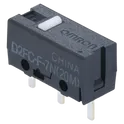
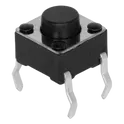
A switch is a device that allows electricity to flow through a circuit by completing or interrupting the connection. It is a common component in electrical and electronic systems and is used in a variety of applications, such as controlling the flow of electricity in a circuit, turning devices on and off, and routing electrical signals. One of the primary use cases for switches is to control the flow of electricity in a circuit. This can be done by manually flipping the switch or by using a control mechanism, such as a timer or a sensor. Another common use for switches is to turn devices on and off. This can be done using a switch that is built into the device or by using a separate switch that is connected to the device. In addition to these basic use cases, switches can also be used to route electrical signals. For example, a switch can be used to route a signal from one device to another or to direct a signal to a specific circuit or component. If you're looking for a wide variety of switches for your projects, flux.ai has the world's largest community-driven public library of them. The library includes footprints, symbols, datasheets, and simulation models for a wide range of switches, making it easy to find the right switch for your needs.
BQ24650RVAR c28a
The BQ24650, developed by Texas Instruments, is a highly integrated switch-mode battery charge controller designed to offer efficient charging solutions for solar power applications and portable instruments. This component stands out for its capability to handle a wide input voltage range from 5 V to 28 V, making it suitable for various solar panel configurations. It features Maximum Power Point Tracking (MPPT) to ensure optimal energy extraction from solar panels by adjusting the input voltage to match the panel's maximum power output. The BQ24650 supports charging for multiple chemistries including Li-Ion/Polymer, LiFePO4, and lead acid batteries, with programmable charge current and voltage regulation to accommodate specific battery requirements. Its synchronous buck controller operates at 600 kHz, enabling compact circuit design due to smaller external components. Additionally, the device includes a host of protection features such as input overvoltage protection, thermal shutdown, and battery temperature sensing for safe operation. The BQ24650 is packaged in a small 3.5 mm x 3.5 mm, 16-pin QFN, offering a compact solution for space-constrained applications. Its diverse range of applications includes solar-powered systems, remote monitoring stations, portable handheld instruments, and 12-V to 24-V automotive systems, highlighting its versatility and adaptability to various power management tasks.
121 Uses1 StarsBlackberry Trackballer Breakout
This is a breakout board for our Blackberry Trackball. The four spindles on the trackball have a tiny circular magnet the end; each of these are paired with an SMD hall effect sensor, which are used to measure up, down, left and right movements of the trackball. An SMD momentary switch is placed under the trackball to give you a select switch. The BTN line will be pulled low when the switch is pressed. #Module
13 Uses1 Stars
450301014042
450301014042 https://datasheet.datasheetarchive.com/originals/distributors/DKDS-9/165080.pdf Mini Slide Switch 10x2.5mm SPDT on / on Through Hole Slide Switch SPDT On-On 100 mA@ 42 V dc Slide Wurth Elektronik 450301014042 710-450301014042 https://www.mouser.co.uk/ProductDetail/Wurth-Elektronik/450301014042?qs=wr8lucFkNMW0uepaR4R%2Fww%3D%3D
1.9k Uses1 Stars
TCA9548A
Multiplexer SOP65P640X120-24N Texas Instruments \n8-channel 1.65- to 5.5-V I2C/SMBus switch with reset & voltage translation\n TSSOP-24 Texas Instruments None https://www.snapeda.com/parts/TCA9548APWR/Texas+Instruments/view-part/?ref=snap TCA9548APWR In Stock https://www.snapeda.com/parts/TCA9548APWR/Texas+Instruments/view-part/?ref=eda
137 Uses1 Stars