Resistors
A resistor is an electronic component that reduces the flow of current in a circuit. It is used to limit the amount of current flowing through a circuit, or to create a voltage drop in a circuit. One of the main uses of resistors is to protect components from too much current, which can cause damage or failure. Flux.ai is the world's largest community-driven public library of resistors, with footprints, symbols, datasheets, and simulation models. Whether you're an engineer working on a new design, or a student learning about electronics, Flux.ai is the go-to resource for all things resistor-related. With a wealth of information and resources available, you'll find everything you need to know about resistors, and more.
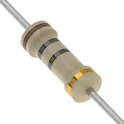
CFR-25JB-52-4K7
4.7kOhms ±5% 0.25W, 1/4W Through Hole Resistor Axial Automotive AEC-Q200 Carbon Film The CFR-25JB-52-4K7 is a through-hole carbon film resistor manufactured by YAGEO. It has a resistance value of 4.7 kΩ with a ±5% tolerance and is designed for general-purpose electronic circuits, including automotive and industrial applications. The resistor uses an axial leaded package and is compliant with AEC-Q200 automotive reliability standards. Key Features Resistance: 4.7 kΩ Tolerance: ±5% Power Rating: 0.25 W (1/4 W) Resistor Type: Carbon Film Package Type: Axial Through-Hole Operating Temperature: -55°C to +155°C Temperature Coefficient: -500 / +350 ppm/°C Automotive Grade: AEC-Q200 qualified Compact body size: approximately 2.4 mm × 6.3 mm Suitable for: General electronics Signal conditioning Pull-up/pull-down circuits Current limiting Automotive electronics #CommonPartLibrary #ThroughHole #Resistor #Axial
40 Uses0 StarsCFR-25JB-52-220R
220 Ohms ±5% 0.25W, 1/4W Through Hole Resistor Axial Automotive AEC-Q200 Carbon Film This component is a fixed-value carbon film resistor intended for general-purpose electronic circuits. It is designed to provide stable resistance with reliable performance under typical operating conditions. The resistor is suitable for applications requiring moderate precision and dependable thermal characteristics, making it appropriate for use in consumer electronics, control circuits, and signal conditioning. Its construction ensures consistent electrical behavior, good noise performance, and durability over time. Electrical Characteristics The nominal resistance value is two hundred twenty ohms. Tolerance is within a standard general-purpose range, suitable for non-critical precision applications. The resistor exhibits stable performance across typical ambient temperature variations, with predictable resistance drift characteristics inherent to carbon film technology. Power Rating The device is rated for low-power dissipation applications, consistent with standard small-form-factor through-hole resistors used in printed circuit board assemblies. Construction and Materials The resistor element is formed from a deposited carbon film on a ceramic substrate, providing a balance between cost, stability, and noise performance. Leads are axial and suitable for through-hole mounting. The body is coated for insulation and environmental protection. Environmental and Reliability Considerations The component is designed to operate reliably under standard environmental conditions, including moderate temperature and humidity ranges. It demonstrates acceptable long-term stability for general electronic use, with resistance changes remaining within specified tolerance limits over time. Applications Suitable for voltage division, current limiting, biasing, and general signal conditioning in analog and digital circuits where high precision is not critical. #CommonPartLibrary #ThroughHole #Resistor #Axial
37 Uses0 StarsCFR-25JB-52-680R
680 Ohms ±5% 0.25W, 1/4W Through Hole Resistor Axial Automotive AEC-Q200 Carbon Film The CFR-25JB-52-680R is a through-hole carbon film resistor manufactured by YAGEO. It provides a resistance value of 680 Ω with ±5% tolerance and is designed for general-purpose electronic circuits, signal conditioning, and current limiting applications. Key Features Resistance: 680 Ω Tolerance: ±5% Power Rating: 0.25 W (1/4 W) Resistor Type: Carbon film resistor Mounting Type: Through-hole / axial lead Package Style: Axial Operating Temperature: -55°C to +155°C Temperature Coefficient: -500 / +350 ppm/°C AEC-Q200 qualified for automotive-grade reliability RoHS compliant Typical Applications Current limiting Voltage divider circuits Pull-up / pull-down resistors General analog and digital electronics Automotive and consumer electronics Physical Characteristics Axial cylindrical body Approximate body size: 2.4 mm diameter × 6.3 mm length 2-terminal leaded package The component belongs to the through-hole resistor category and is commonly used in low-power electronic designs requiring stable and economical resistance values. #CommonPartsLibrary #Resistor #Axial
38 Uses0 StarsWP483GDT
Green 568nm LED Indication - Discrete 2.2V Radial The WP483GDT is a through-hole green light-emitting diode designed for general-purpose visual indication and low-power lighting applications. It emits a visible green wavelength when forward biased and is commonly used in status indicators, signal displays, and basic illumination circuits. The device is built with a durable epoxy lens package that provides mechanical protection and enhances light output visibility. It is suitable for use in a wide range of electronic systems, including consumer electronics, control panels, and embedded designs. Device Overview The component is a standard discrete LED with a two-lead configuration consisting of an anode and a cathode. It operates by converting electrical energy into light through electroluminescence. The emitted color falls within the green spectrum, making it appropriate for applications requiring clear visual signaling without excessive brightness or power consumption. Electrical Characteristics The LED operates under forward bias conditions, with a typical forward voltage in the range expected for green LEDs. It supports low current operation while maintaining consistent luminous output. Reverse voltage tolerance is limited, and proper polarity must be observed to prevent damage. Current-limiting resistors are required in circuit integration to ensure safe operation. Optical Characteristics The device produces a green light output with a defined luminous intensity and viewing angle based on its lens shape and internal structure. The epoxy lens may be diffused or clear, affecting the spread and focus of the emitted light. Brightness is dependent on the forward current applied. Mechanical Characteristics The LED is housed in a standard round through-hole package, compatible with typical PCB mounting. Leads are spaced to fit common board layouts and can be soldered directly. The epoxy body provides insulation and environmental protection while maintaining optical clarity. Thermal Considerations The device is designed for low power dissipation but should be operated within recommended limits to avoid overheating. Adequate spacing and proper current control help maintain thermal stability and prolong device lifespan. Applications The WP483GDT is suitable for indicator lights in electronic devices, status displays in control systems, educational and hobby electronics, and general-purpose signaling applications where green illumination is required. Compliance and Handling The component should be handled using standard ESD precautions. Storage and soldering conditions should follow typical LED handling practices to maintain performance and reliability. #commonpartslibrary #led #green
97 Uses0 StarsLM393N
Comparator Standard (General Purpose) Open-Collector, Rail-to-Rail 8-PDIP The LM393N is a dual independent voltage comparator designed for operation from a single power supply over a wide range of voltages. It can also operate from split power supplies, allowing flexible integration into analog and mixed-signal systems. Each comparator features high gain and low input offset voltage, enabling precise comparison between two input signals. The device is optimized for low power consumption and supports open-collector outputs, making it suitable for interfacing with a variety of logic families and external circuits. Its robust design allows reliable performance across a broad temperature range, making it appropriate for industrial, automotive, and consumer applications. Functional Overview The device contains two separate comparators sharing a common power supply. Each comparator compares the voltage at its inverting and non-inverting inputs and drives the output transistor accordingly. The open-collector output stage allows wired-OR configurations and easy level shifting using an external pull-up resistor. When the non-inverting input voltage exceeds the inverting input voltage, the output transistor turns off, allowing the output to be pulled high externally. When the inverting input is higher, the transistor conducts and pulls the output low. Electrical Characteristics The LM393N operates over a wide supply voltage range and exhibits low input bias current and low input offset voltage, contributing to stable and accurate performance. The input common-mode voltage range includes ground, enabling ground-referenced sensing. The output stage is capable of sinking current sufficient to drive loads such as LEDs, relays (with appropriate buffering), or logic inputs. The device is designed for low supply current, supporting energy-efficient designs. Input and Output Behavior Inputs are high impedance and suitable for direct connection to sensors, reference voltages, or signal conditioning networks. The output requires an external pull-up resistor to define the high logic level. This configuration allows flexibility in selecting output voltage levels independent of the supply voltage, within device limits. The open-collector structure also supports multiple outputs connected together for logical operations. Thermal and Environmental Conditions The device is specified for operation across a wide temperature range, ensuring stable functionality under varying environmental conditions. Proper thermal management and adherence to recommended operating conditions ensure long-term reliability. Packaging and Pin Configuration The LM393N is typically provided in a dual in-line package suitable for through-hole mounting. The pin configuration supports two independent comparator channels, each with inverting input, non-inverting input, and output, along with shared power supply and ground connections. Applications The LM393N is suitable for voltage level detection, threshold sensing, zero-crossing detection, oscillator circuits, pulse generation, and analog-to-digital interfacing. It is commonly used in power management systems, battery monitoring, signal conditioning, and embedded control systems. Design Considerations External components such as pull-up resistors, input filtering networks, and hysteresis feedback may be required depending on the application. Careful layout and noise considerations improve performance in high-sensitivity circuits. The open-collector output requires proper configuration to ensure correct logic levels and switching behavior. #commonpartslibrary #integratedcircuit #comparator
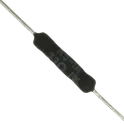
27 Uses0 StarsRS01010R00FE73
10 Ohms ±1% 10W Through Hole Resistor Axial Moisture Resistant Wirewound RS01010R00FE73 is a surface-mount, low-ohmic current sense resistor designed for precision current measurement and power management applications. It features a robust metal element construction that provides excellent thermal stability, low inductance, and high accuracy. This component is commonly used in power supplies, battery management systems, motor control circuits, and DC-DC converters where accurate current sensing is critical. Key Features Ultra-low resistance value for current sensing applications High power rating in compact SMD package Tight tolerance for precision measurement Low temperature coefficient for stable performance Excellent pulse handling capability RoHS compliant and lead-free Electrical Characteristics Resistance Value: 0.010 Ω (10 mΩ) Tolerance: ±1% Power Rating: 1 W Temperature Coefficient (TCR): ±75 ppm/°C (typical) Operating Temperature Range: -55°C to +155°C Mechanical Characteristics Package Type: Surface Mount (SMD) Package Size: 2512 (approx. 6.3 mm × 3.2 mm) Construction: Metal strip / metal element Termination: Nickel barrier with matte tin plating Performance Characteristics Low parasitic inductance for high-frequency applications High thermal conductivity for efficient heat dissipation Stable resistance over temperature and load conditions Suitable for high current measurement Applications Current sensing in power supplies Battery management systems (BMS) Motor control and drive circuits DC-DC converters Automotive electronics #CommonPartsLibrary #Resistor #THT #Axial
1 Uses0 Stars