Memory
A memory IC, or integrated circuit, is a type of electronic device that stores and retrieves data. It is used in a wide range of electronic devices, including computers, smartphones, and other electronic devices. Memory ICs come in a variety of types, including DRAM, SRAM, and Flash memory, and are used for different purposes depending on the device and application. One of the primary use cases for memory ICs is in computer systems, where they are used to store data and instructions that are accessed by the processor. Memory ICs are also used in a variety of other electronic devices, such as digital cameras, MP3 players, and mobile phones, to store data and enable various functions. Flux.ai has the world's largest community-driven public library of memory ICs, with a wide variety of footprints, symbols, datasheets, and simulation models available. This extensive library allows users to easily access and use memory ICs in their projects, making it an invaluable resource for engineers and developers.
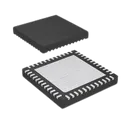
NRF52832-QFAA-R7
IC RF TxRx + MCU Bluetooth Bluetooth v5.3 2.4GHz 48-VFQFN Exposed Pad NRF52832-QFAA-R7 is an ultra-low-power wireless System-on-Chip (SoC) from Nordic Semiconductor, designed for Bluetooth Low Energy (BLE), ANT, NFC, and proprietary 2.4 GHz wireless applications. It integrates a high-performance ARM Cortex-M4F processor, memory, peripherals, and a 2.4 GHz radio into a single chip, making it ideal for IoT devices, wearables, wireless sensors, beacons, and smart peripherals. GHz protocols • 2.4 GHz transceiver • -96 dBm sensitivity in Bluetooth® low energy mode • Supported data rates: 1 Mbps, 2 Mbps Bluetooth® low energy mode • -20 to +4 dBm TX power, configurable in 4 dB steps • On-chip balun (single-ended RF) • 5.3 mA peak current in TX (0 dBm) • 5.4 mA peak current in RX • RSSI (1 dB resolution) • ARM® Cortex®-M4 32-bit processor with FPU, 64 MHz • 215 EEMBC CoreMark® score running from flash memory • 58 μA/MHz running from flash memory • 51.6 μA/MHz running from RAM • Data watchpoint and trace (DWT), embedded trace macrocell (ETM), and instrumentation trace macrocell (ITM) • Serial wire debug (SWD) • Trace port • Flexible power management • 1.7 V–3.6 V supply voltage range • Fully automatic LDO and DC/DC regulator system • Fast wake-up using 64 MHz internal oscillator • 0.3 μA at 3 V in System OFF mode • 0.7 μA at 3 V in System OFF mode with full 64 kB RAM retention • 1.9 μA at 3 V in System ON mode, no RAM retention, wake on RTC • Memory • 512 kB flash/64 kB RAM • 256 kB flash/32 kB RAM • Nordic SoftDevice ready • Support for concurrent multi-protocol • Type 2 near field communication (NFC-A) tag with wakeup-on-field and touchto-pair capabilities • 12-bit, 200 ksps ADC - 8 configurable channels with programmable gain • 64 level comparator • 15 level low power comparator with wakeup from System OFF mode • Temperature sensor • 32 general purpose I/O pins • 3x 4-channel pulse width modulator (PWM) unit with EasyDMA • Digital microphone interface (PDM) • 5x 32-bit timer with counter mode • Up to 3x SPI master/slave with EasyDMA • Up to 2x I2C compatible 2-wire master/slave • I2S with EasyDMA • UART (CTS/RTS) with EasyDMA • Programmable peripheral interconnect (PPI) • Quadrature decoder (QDEC) • AES HW encryption with EasyDMA • Autonomous peripheral operation without CPU intervention using PPI and EasyDMA • 3x real-time counter (RTC) • Single crystal operation • Package variants • QFN48 package, 6 × 6 mm • WLCSP package, 3.0 × 3.2 mm #CommonPartsLibrary #IntegratedCircuit
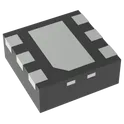
52 Uses0 StarsTMP117AIDRVR
High-Accuracy, Low-Power, Digital Temperature Sensor With SMBus- and I2C-Compatible Interface The TMP117 is a high-precision digital temperature sensor. It is designed to meet ASTM E1112 and ISO 80601 requirements for electronic patient thermometers. The TMP117 provides a 16-bit temperature result with a resolution of 0.0078 °C and an accuracy of up to ±0.1 °C across the temperature range of –20 °C to 50 °C with no calibration. The TMP117 has in interface that is I 2C- and SMBus™-compatible, programmable alert functionality, and the device can support up to four devices on a single bus. Integrated EEPROM is included for device programming with an additional 48-bits memory available for general use. The low power consumption of the TMP117 minimizes the impact of self-heating on measurement accuracy. The TMP117 operates from 1.7 V to 5.5 V and typically consumes 3.5 μA. For non-medical applications, the TMP117 can serve as a single chip digital alternative to a Platinum RTD. The TMP117 has an accuracy comparable to a Class AA RTD, while only using a fraction of the power of the power typically needed for a PT100 RTD. The TMP117 simplifies the design effort by removing many of the complexities of RTDs such as precision references, matched traces, complicated algorithms, and calibration. The TMP117 units are 100% tested on a production setup that is NIST traceable and verified with equipment that is calibrated to ISO/IEC 17025 accredited standards. • TMP117 high-accuracy temperature sensor – ±0.1 °C (maximum) from –20 °C to 50 °C – ±0.15 °C (maximum) from –40 °C to 70 °C – ±0.2 °C (maximum) from –40 °C to 100 °C – ±0.25 °C (maximum) from –55 °C to 125 °C – ±0.3 °C (maximum) from –55 °C to 150 °C • Operating temperature range: –55 °C to 150 °C • Low power consumption: – 3.5-μA, 1-Hz conversion cycle – 150-nA shutdown current • Supply range: – 1.7 V to 5.5 V from –55 °C to 70 °C – 1.8 V to 5.5 V from –55 °C to 150 °C • 16-bit resolution: 0.0078°C (1 LSB) • Programmable temperature alert limits • Selectable averaging • Digital offset for system correction • General-purpose EEPROM: 48 bits • NIST traceability • SMBus™, I2C interface compatibility • Medical grade: meets ASTM E1112 and ISO 80601-2-56 • RTDs replacement: PT100, PT500, PT1000 2 Applications • Electronic thermometers • Wireless environmental sensors • Thermostats • Automotive test equipment • Wearable fitness and activity monitors • Cold chain asset tracking • Gas meters and heat meters • Temperature transmitters #CommonPartsLibrary #Sensor
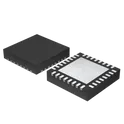
222 Uses0 StarsESP32-C3FH4
The ESP32-C3FH4 is a highly integrated wireless microcontroller designed for Internet of Things, smart devices, industrial automation, consumer electronics, and embedded connectivity applications. It combines a low-power RISC-V processor with integrated Wi-Fi and Bluetooth Low Energy connectivity, providing a cost-effective and secure platform for wireless communication and edge computing. The device incorporates embedded flash memory, advanced security features, low-power operating modes, and a rich set of peripheral interfaces, making it suitable for battery-powered and always-connected systems. Its compact design and comprehensive software ecosystem enable rapid development of connected products while maintaining high reliability and energy efficiency. The ESP32-C3FH4 is widely used in smart sensors, home automation devices, wearable electronics, industrial monitoring systems, wireless control modules, and cloud-connected embedded products. Features Integrated RISC-V microcontroller core Built-in Wi-Fi connectivity Integrated Bluetooth Low Energy support Embedded flash memory Low-power operation for battery-powered applications Hardware cryptographic acceleration Secure boot capability Flash encryption support Multiple GPIO interfaces Integrated UART, SPI, I²C, I²S, PWM, and ADC peripherals Real-time processing capability Wireless networking and cloud connectivity support OTA firmware update support Compact surface-mount package Industrial-grade reliability Electrical Characteristics Wireless microcontroller architecture Integrated RF subsystem Low-power operating modes High-performance embedded processing Secure communication support Multi-protocol wireless connectivity Flexible peripheral expansion capability Optimized power consumption for IoT devices Applications Internet of Things devices Smart home automation Wireless sensor networks Industrial monitoring systems Asset tracking devices Wearable electronics Smart appliances Remote control systems Data acquisition platforms Edge computing applications Connected consumer products Embedded wireless gateways Package Information Surface-mount package Compact footprint for embedded applications Suitable for automated assembly processes Optimized thermal and electrical performance PCB-friendly package design #commonpartslibrary #integratedcircuit #microcontroller #wirelessconnectivity #wifi #bluetoothlowenergy #iot #embeddedsystems #espressif #smartdevices #industrialautomation #edgecomputing #wirelessmodule #internetofthings #electronicsdesign #riscv #embeddedelectronics #lowpowerdesign
144 Uses0 StarsST25DV04K-IER8C3
Dynamic NFC/RFID Tag IC – 4-Kbit EEPROM memory device with I²C and RF interfaces, supporting contactless communication according to ISO/IEC 15693 and NFC Forum Type 5. The ST25DV04K-IER8C3 operates from 1.8 V to 5.5 V, supports 13.56 MHz RF communication, and provides up to 512 bytes of user memory through the I²C interface. It also supports fast transfer mode and energy harvesting from the RF field. The device is housed in an 8-pin UFDFPN 2 × 3 mm package and operates from −40°C to +105°C. #STMicroelectronics #ST25DV04K #NFC #RFID #EEPROM #I2C #ISO15693 #NFCType5 #13_56MHz #EmbeddedSystems
0 Uses0 StarsST-TF-003A
MicroSD / T-Flash Push-Push Card Socket – Surface-mount MicroSD memory card connector designed for data logging, embedded systems, IoT devices, industrial controllers, consumer electronics, GPS modules, multimedia equipment, and microcontroller-based applications. The Suntech ST-TF-003A is a push-push type MicroSD/T-Flash socket that supports standard MicroSD memory cards and provides reliable card insertion, retention, and ejection in compact PCB designs. It features a surface-mount (SMT) configuration with metal shielding, card detect (CD) switch, and mechanical write-protection support depending on system implementation. The connector is rated for 0.5 A and 100 VAC/DC, utilizes gold-plated contacts for reliable signal integrity, and is designed for high-density embedded applications. It operates over a −25°C to +85°C temperature range and is suitable for portable, industrial, and embedded electronic products. #Suntech #STTF003A #MicroSDSocket #TFlashSocket #MemoryCardConnector #MicroSD #CardSocket #SMTConnector #DataLogging #EmbeddedSystems #IoT #PCBConnector
423 Uses0 StarsCFH-L3C1LBL01MN0
CompactFlash (CF) Card Connector with Push-Pull Ejector – Surface-mount memory card connector designed for embedded systems, industrial controllers, data storage, and portable electronic devices. The UMAX CFH-L3C1LBL01MN0 supports CompactFlash cards and features a push-pull card insertion and ejection mechanism with a 6.05 mm height above the PCB. It is designed for surface-mount PCB assembly and does not include additional card-detection pins. LCSC Electronics +1 #UMAX #CFHL3C1LBL01MN0 #CompactFlash #CFCardConnector #MemoryCardSocket #SMDConnector #EmbeddedSystems #PCBDesign
4 Uses0 Stars