Memory
A memory IC, or integrated circuit, is a type of electronic device that stores and retrieves data. It is used in a wide range of electronic devices, including computers, smartphones, and other electronic devices. Memory ICs come in a variety of types, including DRAM, SRAM, and Flash memory, and are used for different purposes depending on the device and application. One of the primary use cases for memory ICs is in computer systems, where they are used to store data and instructions that are accessed by the processor. Memory ICs are also used in a variety of other electronic devices, such as digital cameras, MP3 players, and mobile phones, to store data and enable various functions. Flux.ai has the world's largest community-driven public library of memory ICs, with a wide variety of footprints, symbols, datasheets, and simulation models available. This extensive library allows users to easily access and use memory ICs in their projects, making it an invaluable resource for engineers and developers.
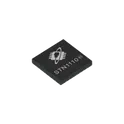
STN1110-I/MM
STN1110-IMM General Description The STN1110-IMM is a multiprotocol OBD-II to UART interpreter integrated circuit designed for automotive diagnostic, telematics, and vehicle communication applications. The device translates OBD-II network traffic into a UART serial data stream for communication with external microcontrollers, embedded processors, and host systems. It supports all legislated OBD-II protocols and provides compatibility with ELM327-based software while offering enhanced processing performance, expanded memory resources, advanced message filtering, firmware upgrade capability, and low-power operation. The device is intended for use in automotive diagnostic tools, fleet management systems, vehicle monitoring equipment, data acquisition systems, and embedded automotive communication products. Engineering Specification Part Number: STN1110-IMM Component Type: OBD-II to UART Interpreter Integrated Circuit Device Category: Automotive Communication Interface IC Package Type: QFN Mounting Type: Surface Mount Device (SMD) Interface Type: * UART * OBD-II Supported Protocols: * ISO 15765-4 CAN * ISO 14230-4 KWP2000 * ISO 9141-2 * SAE J1850 PWM * SAE J1850 VPW Key Features: * Multiprotocol OBD-II support * ELM327 command compatibility * Enhanced ST command extensions * High-speed UART communication * Advanced message filtering * Firmware upgrade capability * Large message buffering * Low-power operation * Automotive diagnostic interface functionality Applications: * OBD-II Scan Tools * Vehicle Diagnostics * Automotive Telematics * Fleet Management Systems * Data Logging Equipment * Embedded Automotive Controllers * Emissions Monitoring Systems * Vehicle Communication Gateways Tags #commonpartslibrary #integratedcircuit #ic #automotive #automotiveelectronics #automotivediagnostics #obdii #obd #uart #vehiclecommunication #telematics #embeddedsystems #communicationinterface #diagnosticinterface #scantool #canbus #kwp2000 #saej1850 #iso9141 #surfaceMount #smd #qfn #electroniccomponent #semiconductor #vehicleelectronics #microcontrollerinterface #datalogging #fleetmanagement #embeddedhardware #hardwaredesign
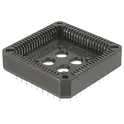
4 Uses0 StarsA-CCS_068-Z-T
ASSMANN WSW A-CCS 068-Z-T ASSMANN ASSMANN A-CCS 020-Z-T PLCC socket connector, 20-pin through-hole (THT) socket for PLCC integrated circuits, 1.27mm pitch contacts, PPS glass-fiber reinforced UL94V-0 housing, phosphor bronze contacts with matte tin plating over nickel, low insertion force design, rated for 1A and 125–250V operation, 200 mating cycles, operating temperature -40°C to +105°C, designed for removable PLCC memory devices, microcontrollers, programmable logic ICs and development hardware. Search Keywords: A-CCS 020-Z-T, ACCS020ZT, ASSMANN A-CCS 020-Z-T, ASS 0981 CO, PLCC socket 20 pin, 20 pin PLCC socket, PLCC IC socket, 1.27mm pitch PLCC socket, through hole PLCC socket, THT PLCC socket, ASSMANN PLCC socket, removable IC socket, PLCC connector Hashtags: #ACCS020ZT #ASSMANN #PLCCSocket #20PinPLCC #PLCCConnector #ICSocket #ThroughHoleSocket #THTSocket #127mmPitch #EmbeddedHardware #ProgrammableLogic #MicrocontrollerSocket #ElectronicsConnector #SocketConnector
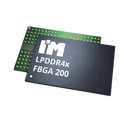
0 Uses0 StarsIM8G32L4JCBG-046I
SDRAM - Mobile LPDDR4X Memory IC 8Gbit Parallel 2.133 GHz 200-FBGA (10x15) The IM8G32L4JCBG-046I is an 8Gb (1GB) LPDDR4X SDRAM memory device designed for high-performance, low-power embedded applications. Organized as 256M × 32 bits, it delivers data rates up to 4266 MT/s, making it suitable for industrial computing, AI edge devices, networking equipment, automotive systems, and other memory-intensive applications. The LPDDR4X architecture reduces power consumption while maintaining high bandwidth and reliable operation across industrial temperature ranges. Key Features 8Gb (Gigabit) LPDDR4X SDRAM Memory organization: 256M × 32 bits High-speed operation up to 4266 MT/s Low-power LPDDR4X interface for reduced energy consumption 32-bit data bus width Industrial operating temperature range: –40°C to +95°C 200-ball FBGA package (10 mm × 15 mm) High bandwidth for demanding embedded applications Optimized for low-power and thermally constrained designs Suitable for industrial, automotive, networking, and edge AI systems #LPDDR4X #SDRAM #MemoryIC #EmbeddedSystems #IndustrialElectronics #EdgeComputing #AIoT #HighSpeedMemory #LowPowerDesign #AutomotiveElectronics #NetworkingHardware #FBGA #HardwareDesign #ElectronicsEngineering #PCBDesign #IntelligentMemory
151 Uses0 StarsGW2ANR-LV18QN88C8_I7
GW2AR-LV18QN88C8/I7 GOWIN GW2ANR series FPGA, non-volatile Arora family FPGA with integrated SDRAM and NOR Flash, fabricated on 55nm SRAM technology, 1.0V core voltage, low-power architecture with dynamic clock control, high-performance DSP resources, high-speed LVDS interfaces, abundant block SRAM memory, hot-swap support, configurable I/O standards including LVCMOS, LVTTL, SSTL, HSTL, PCI, LVDS and MLVDS, programmable drive strength and pull-up/pull-down options, designed for high-speed, low-cost embedded, industrial, communication and signal-processing applications. Search Keywords: GW2ANR, GOWIN GW2ANR, Arora FPGA, GOWIN FPGA, non volatile FPGA, FPGA with SDRAM, FPGA with NOR Flash, 55nm FPGA, low power FPGA, LVDS FPGA, DSP FPGA, embedded FPGA, GW2ANR series, GOWIN Arora family, programmable logic device Hashtags: #GW2ANR #GOWINGW2ANR #GOWINFPGA #AroraFPGA #FPGAFPGA - Field Programmable Gate Array GW2ANR-LV18QN88C8/I7
1 Uses0 Starsrk3566
BGA-565(15.5x14.4) Microcontrollers, Quad-core ARM Cortex-A55 processor The RK3566 is a high-performance, low-power 64-bit application processor developed by Rockchip for AIoT, industrial control, smart displays, tablets, embedded systems, and single-board computers. It integrates a quad-core ARM Cortex-A55 CPU, Mali-G52 GPU, AI acceleration engine (NPU), advanced multimedia processing, and a rich set of connectivity interfaces, making it suitable for Linux- and Android-based applications requiring efficient performance and multimedia capabilities. Key Features Quad-core 64-bit ARM Cortex-A55 processor operating up to 2.0 GHz. ARM Mali-G52 2EE GPU with support for OpenGL ES 3.2, OpenCL 2.0, and Vulkan 1.1. Integrated NPU delivering up to 1 TOPS AI computing performance. Supports DDR3, DDR3L, DDR4, LPDDR3, LPDDR4, and LPDDR4X memory. Hardware video decoding up to 4K@60fps for H.264, H.265, and VP9 formats. Hardware video encoding up to 1080p@60fps for H.264 and H.265. Built-in 8MP ISP with HDR image processing support. Multiple display interfaces including HDMI 2.0, eDP, MIPI-DSI, LVDS, RGB, and E-Ink. High-speed connectivity with USB 3.0, USB 2.0, PCIe, SATA, Gigabit Ethernet, SDIO, and eMMC 5.1. Rich peripheral support including UART, SPI, I²C, PWM, ADC, I²S, PDM, and GPIO. Optimized for Android, Linux, industrial HMI, smart home, edge computing, and AIoT applications. Manufactured using a 22 nm process for improved power efficiency. #RK3566 #Rockchip #ARMCortexA55 #MaliG52 #AIoT #EmbeddedSystems #SingleBoardComputer #Linux #Android #IndustrialControl #SmartDisplay #EdgeComputing #SoC #Processor #NPU #4KVideo #IoT #Electronics #HardwareDesign #PCBDesign
9 Uses0 StarsMT29F256G08AUCABH3-10ITZ:A
SLC NAND Flash Parallel/Serial 3.3V 256G-bit 32G x 8 100-Pin LBGA FLASH - NAND (SLC) Memory IC 256Gbit Parallel 100 MHz 100-LBGA (12x18) The MT29F256G08AUCABH3-10ITZ:A is a high-density 256Gb Single-Level Cell (SLC) NAND Flash memory device from Micron Technology. It provides non-volatile data storage with high reliability, fast read/write performance, and long endurance, making it suitable for industrial, networking, embedded computing, automotive, and data-logging applications. The device supports both asynchronous and synchronous interfaces and complies with the Open NAND Flash Interface (ONFI) standard for enhanced interoperability and performance. It is housed in a compact 100-ball LBGA package (12 mm × 18 mm). • Open NAND Flash Interface (ONFI) 2.2-compliant1 • Single-level cell (SLC) technology • Organization – Page size x8: 8640 bytes (8192 + 448 bytes) – Block size: 128 pages (1024K + 56K bytes) – Plane size: 2 planes x 2048 blocks per plane – Device size: 32Gb: 4096 blocks; 64Gb: 8192 blocks; 128Gb: 16,384 blocks; 256Gb: 32,768 blocks • Synchronous I/O performance – Up to synchronous timing mode 5 – Clock rate: 10ns (DDR) – Read/write throughput per pin: 200 MT/s • Asynchronous I/O performance – Up to asynchronous timing mode 5 – tRC/tWC: 20ns (MIN) – Read/write throughput per pin: 50 MT/s • Array performance – Read page: 35µs (MAX) – Program page: 350µs (TYP) – Erase block: 1.5ms (TYP) • Operating Voltage Range – VCC: 2.7–3.6V – VCCQ: 1.7–1.95V, 2.7–3.6V • Command set: ONFI NAND Flash Protocol • Advanced Command Set – Program cache – Read cache sequential – Read cache random – One-time programmable (OTP) mode – Multi-plane commands – Multi-LUN operations – Read unique ID – Copyback • First block (block address 00h) is valid when shipped from factory. For minimum required ECC, see Error Management (page 114). • RESET (FFh) required as first command after power-on • Operation status byte provides software method for detecting – Operation completion – Pass/fail condition – Write-protect status • Data strobe (DQS) signals provide a hardware method for synchronizing data DQ in the synchronous interface • Copyback operations supported within the plane from which data is read • Quality and reliability – Data retention: JESD47G compliant; see qualification report – Endurance: 60,000 PROGRAM/ERASE cycles • Operating temperature: – Commercial: 0°C to +70°C – Industrial (IT): –40ºC to +85ºC • Package – 52-pad LGA – 48-pin TSOP – 100-ball BGA – 132-ball BGA #Micron #NANDFlash #SLCNAND #FlashMemory #NonVolatileMemory #ONFI #EmbeddedSystems #IndustrialElectronics #DataStorage #MemoryIC #LBGA100 #HighReliability #MT29F256G08AUCABH310ITZA #MicronMemory #ParallelNANDFlash
3 Uses0 StarsATMEGA32U4-AU
Microchip ATmega32U4 high-performance low-power 8-bit AVR microcontroller with integrated USB 2.0 full-speed device controller, up to 16MHz operation, 32KB Flash memory, 2.5KB SRAM and 1KB EEPROM, 12-channel 10-bit ADC, timers, PWM, SPI, TWI/I2C, USART, JTAG debug interface, watchdog timer, brown-out detection and multiple sleep modes, operating voltage range 2.7V to 5.5V, available in TQFP-44 and QFN-44 packages. Search Keywords: ATmega32U4, Microchip ATmega32U4, Atmel ATmega32U4, AVR USB microcontroller, 8-bit AVR MCU, ATmega32U4 USB, ATmega32U4 TQFP44, ATmega32U4 QFN44, 32KB Flash AVR, Arduino Leonardo MCU, Pro Micro MCU, ATmega32U4 datasheet Hashtags: #ATmega32U4 #MicrochipATmega32U4 #AtmelATmega32U4 #AVRMicrocontroller #8bitMCU #USBMicrocontroller #USBFullSpeed #32KBFlash #ArduinoLeonardoMCU #ProMicroMCU #TQFP44 #QFN44MCU AVR 32K FLASH 16MHZ 44-TQFP Atmel ATMEGA32U4-AU, 8bit AVR Microcontroller, 16MHz, 1 kB, 32 kB Flash, 44-Pin TQFP USB-C Pro Micro ATmega32U4 / Elite-C compatible module
19 Uses0 StarsPCA9450CHNY
Power Management IC for iMX8M 5V 6A 6 Buck + 5 LDO The PCA9450CHNY is a highly integrated Power Management Integrated Circuit (PMIC) from NXP Semiconductors, specifically designed to power the i.MX 8M family of application processors, particularly the i.MX 8M Plus. It integrates multiple high-efficiency DC-DC buck converters, LDO regulators, power sequencing logic, load switching, voltage monitoring, and system control functions into a single device. The PCA9450C variant features a configurable dual-phase 6 A buck regulator for powering high-current processor cores while supporting Dynamic Voltage Scaling (DVS) for optimized power efficiency. Key Features Six high-efficiency switching regulators (Buck converters) PCA9450C variant supports a configurable 6 A dual-phase buck regulator Three 3 A buck regulators with Dynamic Voltage Scaling (DVS) Remote-sense capability on major buck outputs for IR-drop compensation Five integrated LDO regulators Supports DDR4, LPDDR4, and DDR3L memory configurations 400 mA load switch with active discharge Dual-channel logic level translator Integrated 32.768 kHz crystal oscillator driver Fast-mode Plus (Fm+) 1 MHz I²C interface Programmable power sequencing and voltage control Power ON/OFF and Standby/Run mode control inputs Protection features including UVLO, thermal shutdown, fault monitoring, and soft-start Operating temperature range: −40°C to +105°C 56-pin HVQFN package (7 mm × 7 mm, 0.4 mm pitch) Optimized for i.MX 8M Mini, Nano, and Plus processors, especially the i.MX 8M Plus for the PCA9450C variant. #CommonPartsLibrary #PCA9450CHNY #PCA9450C #NXP #PMIC #PowerManagementIC #PowerSupply #VoltageRegulator #BuckConverter #LDO #DynamicVoltageScaling #DVS #IMX8M #IMX8MPlus #EmbeddedSystems #IndustrialElectronics #PowerManagement #HVQFN56 #Semiconductor #IntegratedCircuit #IC #CommonPartsLibrary #ElectronicsDesign #HardwareDesign #PCBDesign #EmbeddedLinux #IoT #ProcessorPowerManagement #PowerSequencing #SystemPower #NXPSemiconductors
11 Uses0 StarsMT53E1536M32D4DT-046 WT:A
SDRAM - Mobile LPDDR4 Memory IC 48Gbit 2.133 GHz MT53E1536M32D4DT-046 WT:A is a high-density 48Gb (6GB) LPDDR4/LPDDR4X SDRAM memory device from Micron Technology. It is designed for high-performance, low-power applications requiring fast memory bandwidth and efficient power management. The device features a 32-bit data bus, supports data rates up to 4266 MT/s, and is packaged in a compact 200-ball FBGA, making it suitable for embedded computing, industrial systems, networking equipment, AI edge devices, automotive electronics, and mobile platforms. Key Features 48Gb (6GB) LPDDR4/LPDDR4X SDRAM Organized as 1.5G × 32 bits Data transfer rates up to 4266 MT/s Maximum clock frequency of 2133 MHz Low-power operation with 1.1V core supply 32-bit memory interface 200-ball FBGA package JEDEC LPDDR4-compliant architecture Per-bank refresh support Temperature-compensated refresh Self-refresh and deep power-down modes Partial-array self-refresh capability High bandwidth with reduced power consumption Optimized for compact embedded designs Operating temperature range: –30°C to +85°C Typical Applications Embedded Linux computers Single-board computers (SBCs) AI and edge computing platforms Industrial automation systems Networking and telecommunications equipment Automotive infotainment and control systems Tablets and mobile devices FPGA and SoC-based designs #commonpartslibrary #integratedcircuit #memory #dram #sdram #lpddr4 #lpddr4x #mobiledram #micron #embeddedsystems #embeddedcomputing #industrialelectronics #automotiveelectronics #edgecomputing #artificialintelligence #networking #telecommunications #highspeedmemory #lowpowerdesign #computerhardware #electroniccomponents #semiconductor #datasheet #fbga #memorychip #electronicsdesign #pcbdesign #hardwareengineering #electronicengineering #systemonchip #fpga #iot #internetofthings #computermemory #digitalelectronics #surfaceMount #smt #bga #storage #highperformancecomputing #hpc #mobiledevices #industrialautomation #electronicdesign #componentlibrary #fluxlibrary #parametricpart #eda #schematic #pcb #electronicdesignautomation #chipdesign #embeddedhardware #memorymodule #lowpowerelectronics #highbandwidthmemory #electronics #hardwaredevelopment #engineering #electricalengineering
1 Uses0 StarsSTM32L432KCU6
ST Microelectronics STM32L432KCU6 UFQFPN-32_L5.0-W5.0-P0.50-TL-EP3.5 LCSC Part Number: C1337280 JLCPCB Part Class: Extended Part Manufactured by ST(意法半导体) STMicroelectronics STM32L432KC ultra-low-power 32-bit ARM Cortex-M4 microcontroller with FPU running up to 80MHz, featuring 256KB Flash memory, 64KB SRAM, USB 2.0 Full-Speed device support, Quad-SPI interface, RTC with calendar and alarms, true random number generator (TRNG), DMA controller, CAN 2.0B, UART, LPUART, SPI, I2C, SAI audio interface, 12-bit 5MSPS ADC, dual 12-bit DACs, operational amplifier with PGA, comparators, capacitive sensing channels, advanced timers and ultra-low-power modes. Operates from 1.71V to 3.6V and is optimized for battery-powered, industrial, medical, IoT and portable embedded applications. Search Keywords: STM32L432KC, STM32L432KCU6, STM32L432KCU6TR, STM32L432, STM32L4 series, STM32 Cortex-M4 MCU, STM32 low power microcontroller, STM32 256KB Flash 64KB SRAM, STM32 USB FS MCU, STM32 CAN MCU, STM32 Quad SPI MCU, STM32L432 datasheet, STM32L432 development board, Nucleo-L432KC, ARM Cortex-M4 FPU Hashtags: #STM32L432KC #STM32L432KCU6 #STM32L432 #STM32L4 #STMicroelectronics #CortexM4 #ARMMicrocontroller #LowPowerMCU #EmbeddedSystems #USBFS #CANBus #QuadSPI #ADC12bit #DAC12bit #RTC #TRNG #IoTMCU #IndustrialMCU #MedicalElectronics #NucleoL432KC
46 Uses0 Stars