Memory
A memory IC, or integrated circuit, is a type of electronic device that stores and retrieves data. It is used in a wide range of electronic devices, including computers, smartphones, and other electronic devices. Memory ICs come in a variety of types, including DRAM, SRAM, and Flash memory, and are used for different purposes depending on the device and application. One of the primary use cases for memory ICs is in computer systems, where they are used to store data and instructions that are accessed by the processor. Memory ICs are also used in a variety of other electronic devices, such as digital cameras, MP3 players, and mobile phones, to store data and enable various functions. Flux.ai has the world's largest community-driven public library of memory ICs, with a wide variety of footprints, symbols, datasheets, and simulation models available. This extensive library allows users to easily access and use memory ICs in their projects, making it an invaluable resource for engineers and developers.
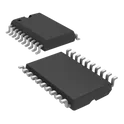
SN74HCT245DWR
SN74HCT245 / SN54HCT245 – octal bus transceiver with 3-state outputs designed for bidirectional data communication between two 8-bit buses. Features direction control (DIR) for selecting data flow direction and output enable (OE) for bus isolation. TTL-compatible inputs, low power consumption, and high-current outputs make it suitable for interfacing microcontrollers, memory devices, processors, FPGAs, LCD modules, industrial controllers, and digital communication systems. Operates from a 4.5 V to 5.5 V supply voltage and supports asynchronous data transfer. Search Keywords: SN74HCT245, SN54HCT245, HCT245, Octal Bus Transceiver, Bidirectional Bus Transceiver, 8 Bit Bus Buffer, 3 State Buffer, Tri State Buffer, TTL Compatible Logic IC, Data Bus Interface, Logic Level Buffer, Microcontroller Interface, Memory Bus Driver, Digital Logic IC, Bus Isolation IC, Direction Controlled Buffer, Parallel Data Interface, Industrial Control Logic, FPGA Interface, Processor Bus Transceiver Hashtags: #SN74HCT245 #SN54HCT245 #HCT245 #BusTransceiver #OctalBusTransceiver #TriStateBuffer #LogicIC #TTLCompatible #DigitalLogic #BusBuffer #MicrocontrollerInterface #FPGA #EmbeddedSystems #MemoryInterface #IndustrialElectronics #DataBus #ElectronicsDesign #PCBDesign #HardwareDesign #TexasInstruments
25 Uses0 Stars74HC238N
3-to-8 line decoder/demultiplexer The 74HC238; 74HCT238 decodes three binary weighted address inputs (A0, A1 and A2) to eight mutually exclusive outputs (Y0 to Y7). The device features three enable inputs (E1 and E2 and E3). Every output will be LOW unless E1 and E2 are LOW and E3 is HIGH. This multiple enable function allows easy parallel expansion to a 1-of-32 (5 to 32 lines) decoder with just four '238 ICs and one inverter. The '238 can be used as an eight output demultiplexer by using one of the active LOW enable inputs as the data input and the remaining enable inputs as strobes. Inputs include clamp diodes. This enables the use of current limiting resistors to interface inputs to voltages in excess of VCC. • Wide supply voltage range from 2.0 to 6.0 V • CMOS low power dissipation • High noise immunity • Demultiplexing capability • Multiple input enable for easy expansion • Ideal for memory chip select decoding • Active HIGH mutually exclusive outputs • Input levels: • For 74HC238: CMOS level • For 74HCT238: TTL level • Complies with JEDEC standards • JESD8C (2.7 V to 3.6 V) • JESD7A (2.0 V to 6.0 V) • Latch-up performance exceeds 100 mA per JESD 78 Class II Level B • ESD protection: • HBM: ANSI/ESDA/JEDEC JS-001 class 2 exceeds 2000 V • CDM: ANSI/ESDA/JEDEC JS-002 class C3 exceeds 1000 V • Multiple package options • Specified from -40 °C to +85 °C and from -40 °C to +125 °C #74HC238N #74HCSeries #CMOSLogic #DecoderIC #Demultiplexer #DigitalLogic #AddressDecoder #ChipSelect #LogicGate #IntegratedCircuit #ElectronicsDesign #EmbeddedSystems
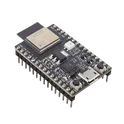
5 Uses0 StarsESP32-C3-DEVKITM-1
ESP32-C3-MINI-1 ESP32-C 802.11 b/g/n (WiFi/WLAN/Wi-Fi 4), Bluetooth® 5.x (BLE) Transceiver 2.4GHz Evaluation Board ESP32-C3-DevKitM-1 is a compact entry-level development board from Espressif Systems based on the ESP32-C3-MINI-1 module. It integrates a 32-bit RISC-V single-core microcontroller, 2.4 GHz Wi-Fi, and Bluetooth Low Energy (BLE) connectivity, making it suitable for IoT devices, embedded applications, smart sensors, and wireless control projects. The board exposes most GPIO pins through headers for easy prototyping and supports programming through USB. Key Features: 32-bit RISC-V Single-Core Processor Based on ESP32-C3 SoC architecture Clock frequency up to 160 MHz Wireless Connectivity Integrated 2.4 GHz Wi-Fi (802.11 b/g/n) Bluetooth 5 Low Energy (BLE) support Memory 4 MB embedded Flash memory inside the ESP32-C3-MINI-1 module GPIO and Peripheral Interfaces Multiple programmable GPIO pins Supports interfaces such as: SPI UART I²C I²S PWM ADC USB Serial/JTAG Development Board Features Built-in ESP32-C3-MINI-1 module with PCB antenna USB interface for programming and power 5 V to 3.3 V onboard voltage regulator Breadboard-friendly pin headers Applications IoT gateways Smart home devices Wireless sensors Industrial automation Wearable electronics Embedded control systems #ESP32C3 #ESP32 #DevKitM1 #Espressif #RISCVD #WiFiMCU #BluetoothLE #IoT #EmbeddedSystems #Microcontroller #WirelessModule #SmartDevices #ElectronicsDesign #Prototyping
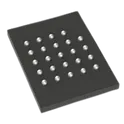
32 Uses0 StarsMX66UM1G45GXDI00
Macronix MX66UM1G45G – 1 Gbit (128 MB) Octal SPI (xSPI) Serial NOR Flash memory designed for high-performance embedded systems. Supports Octal I/O interface for high-speed code execution, firmware storage, data logging, graphics assets, and external memory expansion. Features sector, block, and chip erase operations, page programming, status monitoring, low-power standby mode, and endurance of up to 100,000 program/erase cycles. Suitable for microcontrollers, processors, industrial systems, automotive electronics, networking equipment, IoT devices, HMI displays, and embedded Linux applications. Search Keywords: MX66UM1G45G, Macronix Flash Memory, Octal SPI Flash, OctaFlash, xSPI Flash, Serial NOR Flash, 1Gbit Flash Memory, 128MB Flash, External Flash Memory, Boot Flash, Firmware Storage, Execute In Place Flash, XIP Memory, High Speed Flash Memory, Embedded Storage, Industrial Flash Memory, Automotive Flash Memory, MCU External Memory, Processor Boot Memory, Non Volatile Memory MX66UM1G45G Hashtags: #MX66UM1G45G #Macronix #OctalSPI #OctaFlash #xSPI #NORFlash #SerialFlash #FlashMemory #ExternalMemory #NonVolatileMemory #FirmwareStorage #XIP #EmbeddedSystems #Microcontroller #IndustrialElectronics #AutomotiveElectronics #IoTDevices #ElectronicsDesign #PCBDesign #EmbeddedHardware
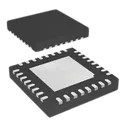
1 Uses0 StarsSTM32G071K8U6
STM32U073 Series – ultra-low-power 32-bit microcontroller based on the Arm Cortex-M0+ core operating up to 56 MHz. Features up to 256 KB Flash memory, 40 KB SRAM, USB Full-Speed interface, integrated LCD controller, advanced analog peripherals, and extremely low power consumption. Designed for battery-powered, portable, industrial, smart metering, IoT, wearable, medical, and consumer electronics applications. Includes ADC, DAC, op-amp, comparators, RTC, DMA, timers, communication interfaces, and multiple low-power operating modes. Search Keywords: STM32U073, STM32U073RBT6, STM32U073CBT6, STM32U073 MCU, STMicroelectronics MCU, Cortex-M0+ Microcontroller, Ultra Low Power MCU, ARM Microcontroller, USB Microcontroller, LCD Controller MCU, Battery Powered MCU, Embedded Controller, IoT Microcontroller, Industrial MCU, Smart Meter MCU, Wearable MCU, 256KB Flash MCU, 40KB SRAM MCU, Low Power Embedded System, STM32U0 Series Hashtags: #STM32U073 #STM32U0 #STM32 #STMicroelectronics #CortexM0Plus #ARMMCU #Microcontroller #UltraLowPower #EmbeddedSystems #USBMCU #LCDController #IoT #WearableElectronics #SmartMeter #IndustrialElectronics #BatteryPowered #FirmwareDevelopment #ElectronicsDesign #PCBDesign #EmbeddedHardwareST Microelectronics STM32G071K8U6 UFQFPN-32_L5.0-W5.0-P0.50-TL-EP3.5 LCSC Part Number: C724237 JLCPCB Part Class: Extended Part Manufactured by ST(意法半导体)
5 Uses0 StarsPLCC68
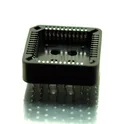
Toby PLCC series DIP socket for PLCC IC packages, through-hole PCB mounting, available for 20/28/32/52/68/84-pin PLCC devices, copper alloy contacts with tin plating over nickel, PPS UL94V-0 insulator, 1A current rating, 1000MΩ minimum insulation resistance, 300VAC dielectric withstand voltage, 20mΩ max contact resistance, -40°C to +105°C operating temperature, suitable for socketing PLCC ICs, memory chips, microcontrollers, programmable logic and embedded hardware. Search Keywords: PLCC socket, Toby PLCC socket, PLCC DIP socket, PLCC through hole socket, PLCC IC socket, 20 pin PLCC socket, 28 pin PLCC socket, 32 pin PLCC socket, 52 pin PLCC socket, 68 pin PLCC socket, 84 pin PLCC socket, PLCC PCB socket, square IC socket, IC socket connector PCF80C552 PLCC68 / PLCC-68 socket Hashtags: #PLCCSocket #TobyPLCCSocket #PLCC-68-R #PLCC-68 #ThroughHoleSocket #PLCCConnector #20PinPLCC #28PinPLCC #32PinPLCC #52PinPLCC #68PinPLCC #84PinPLCC #PPSInsulator #TinPlatedContactsphosphor bronze, tin plated,55C to 85C,1000 M,30 m
0 Uses0 StarsAS4C32M16SB-7TCN
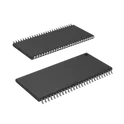
SDRAM Memory IC 512Mbit Parallel 143 MHz 5.4 ns 54-TSOP II The AS4C32M16SB-7TCN is a single-data-rate synchronous dynamic random-access memory (SDR SDRAM) device manufactured by Alliance Memory. It is organized internally as a multi-bank array, allowing concurrent access operations across banks to improve effective memory bandwidth compared to simpler asynchronous DRAM architectures. The device is intended for general-purpose embedded memory applications where a synchronous, clock-driven memory interface is required, including embedded systems, industrial controllers, consumer electronics, networking equipment, and other designs that rely on a parallel SDRAM interface for working memory or buffering. As a drop-in style component within Alliance Memory's broader memory portfolio, this part is designed to be pin- and function-compatible with legacy SDR SDRAM devices originally offered by other manufacturers, allowing designers to source a continued-availability alternative for designs that depend on this memory architecture even as some original suppliers have discontinued production. This makes the device particularly useful in long-lifecycle industrial, embedded, and legacy system designs where a guaranteed supply of a specific memory interface and timing profile is critical to sustaining production over many years. The "B" designation in the part family indicates a specific die revision within the AS4C32M16S product line, reflecting a particular generation of internal silicon design while maintaining functional and pinout compatibility with related die revisions in the same footprint. The device communicates over a standard synchronous SDRAM command interface, using a clock-synchronized protocol for row and column addressing, data burst transfers, and bank management, and it supports the auto-refresh and self-refresh mechanisms typical of SDRAM devices to maintain stored data integrity without requiring constant external refresh management by the host controller. Mechanically, the device is housed in a thin small-outline package suited to space-constrained PCB layouts, and it is built for standard surface-mount assembly processes. The "-7TCN" suffix on this part number reflects a specific speed grade, package style, and temperature grade combination within the product family, with this particular variant intended for commercial temperature range operation. The device is supplied in tray packaging for surface-mount assembly and is compliant with RoHS material restrictions, supporting standard environmental and regulatory requirements for electronic components. Spec Sheet Identification Part Number: AS4C32M16SB-7TCN Device Family: AS4C32M16SB Manufacturer: Alliance Memory, Inc. Die Revision: B-die Functional Classification Device Type: Synchronous DRAM (SDR SDRAM) Memory Organization: Multi-bank array architecture Interface Type: Parallel, clock-synchronous command interface Refresh Capability: Supports auto-refresh and self-refresh modes Electrical Characteristics Supply Voltage: Standard 3.3V-class SDRAM supply rating Clock Frequency: Mid-range SDR SDRAM clock speed class Access Timing: Standard SDR SDRAM access time class for its speed grade Environmental & Qualification Temperature Grade: Commercial ("C" suffix designation) RoHS Compliance: Yes Product Positioning: Long-lifecycle, drop-in replacement memory device Package Package Type: Thin Small Outline Package, TSOP-II style Mounting: Surface mount technology (SMT) Packaging Format Supply Format: Tray packaging #AS4C32M16SB #AllianceMemory #SDRAM #SDRSDRAM #MemoryIC #EmbeddedMemory #TSOP #SurfaceMount #LegacyMemory #DropInReplacement #DRAM #EmbeddedSystems #IndustrialElectronics #SemiconductorIC #EngineeringSpec #ComponentLibrary #CommonPartsLibrary #RoHSCompliant #MemoryComponent #PCBDesign #CommonPartsLibrary #IntegratedCircuit #Memory #AS4C32
15 Uses0 StarsIRLR7843TRPBF
N-Channel 30 V 161A (Tc) 140W (Tc) Surface Mount TO-252AA (DPAK) The IRLR7843TRPBF is an N-channel power MOSFET built on Infineon's HEXFET technology platform, originally developed by International Rectifier. It is designed as a low-voltage, high-current switching device intended for applications where minimizing conduction loss and maximizing efficiency are primary design goals. The part is particularly well suited to synchronous switching topologies, where pairs or arrays of MOSFETs alternately conduct to regulate power flow with minimal energy dissipation. This device targets high-density power conversion applications where board space is limited but current demands are substantial, such as notebook computer power delivery, point-of-load converters used in servers, and advanced telecom and datacom equipment. It is commonly found supporting synchronous buck converter stages that step down a higher input rail to a lower output voltage suitable for powering processors, memory, and other low-voltage digital logic. Its low on-resistance characteristic allows it to carry significant current while generating comparatively little resistive heating, which is essential in compact enclosures with constrained thermal budgets. The transistor is fabricated using a refined trench gate process that improves upon earlier HEXFET generations, offering reduced gate charge and lower switching losses alongside its low conduction resistance. This combination makes it effective in both the high-side and low-side positions of a synchronous switching cell, where fast, clean transitions reduce overlap losses and improve overall converter efficiency. The device also offers well-characterized avalanche energy ratings, giving designers confidence in its ruggedness when exposed to transient overvoltage events that can occur during switching, and it presents a very low gate impedance, allowing it to be driven efficiently by standard gate driver circuitry. Mechanically, the part is housed in a surface-mount power package with an exposed tab for enhanced thermal conduction to the host PCB, allowing heat generated during operation to be efficiently transferred away from the silicon die. This package style is widely used in power-dense designs where through-hole packages would be impractical. The device is supplied in a tape-and-reel format suitable for automated assembly and is compliant with RoHS material restrictions, reflecting current environmental and regulatory standards for electronic components. Spec Sheet Identification Part Number: IRLR7843TRPBF Device Family: HEXFET Power MOSFET Manufacturer: Infineon Technologies Functional Classification Device Type: Power MOSFET Channel Type: N-channel Technology: Trench-gate HEXFET (IR MOSFET legacy technology) Logic Level Compatibility: Logic-level gate drive compatible Electrical Characteristics Drain-to-Source Voltage Rating: Low-voltage class, optimized for sub-30V rail applications On-Resistance: Ultra-low on-resistance class Drain Current Capability: High continuous current class Gate Charge: Low gate charge, optimized for fast switching Gate Impedance: Ultra-low gate impedance Avalanche Characteristics: Fully characterized avalanche voltage and current rating Switching & Application Behavior Primary Application: Synchronous buck converter switching stages Suitable Position: High-side and low-side switch positions Target Use Cases: Point-of-load conversion, notebook power delivery, telecom/datacom power systems Thermal & Mechanical Package Type: Surface-mount power package with exposed thermal tab (DPAK-style) Mounting: Surface mount technology (SMT) Thermal Path: Tab-based conduction to PCB for heat dissipation Environmental & Qualification RoHS Compliance: Yes Lifecycle Status: Active production Packaging Format Supply Format: Tape-and-reel, per part suffix designation #IRLR7843 #Infineon #HEXFET #PowerMOSFET #NChannelMOSFET #SynchronousBuck #PowerElectronics #DCDCConverter #PointOfLoad #PowerConversion #DPAK #SMTPackage #RoHSCompliant #SemiconductorIC #EngineeringSpec #ComponentLibrary #CommonPartsLibrary #PowerDensity #LowRDSon #DiscreteSemiconductor #commonpartslibrary #transistor
3 Uses0 StarsLAN9254-I/JRX
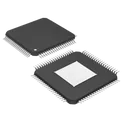
Ethernet Controller 10/100 Base-T/TX Bus Interface 80-TQFP-EP (12x12) The LAN9254-I/JRX is an EtherCAT SubDevice (slave) controller developed by Microchip Technology, designed to serve as the communication backbone for industrial automation devices participating in an EtherCAT network. The device integrates dual Ethernet physical layer transceivers directly on-chip, eliminating the need for external PHY components and simplifying the design of EtherCAT-enabled equipment such as servo drives, sensors, I/O modules, and other field devices used in real-time industrial control systems. Architecturally, the controller can operate as either a two-port or three-port node, depending on the network topology required. In its standard configuration it functions as a two-port device supporting daisy-chain connections typical of EtherCAT line topologies. When configured as a three-port device, it gains an additional management interface port that can connect to an external PHY or to another LAN9254, enabling star or tree network topologies and allowing the device to act as a branching point within a larger EtherCAT installation. Each integrated Ethernet PHY operates in full-duplex mode and supports automatic crossover detection, so the device can use either straight-through or crossover cabling without requiring manual configuration. Beyond pure protocol handling, the LAN9254 includes a substantial set of general-purpose digital input and output lines, allowing it to be used in simple field devices without requiring a separate microcontroller. For more complex applications, the device communicates with an external host processor through an integrated host bus interface that behaves like simple memory-mapped SRAM, supporting both 8-bit and 16-bit data widths along with multiple byte-ordering conventions, which makes it straightforward to interface with a wide range of microcontroller and microprocessor architectures. Internally, dual process data RAM buffers manage the exchange of real-time process data between the host application and the EtherCAT communication engine, while a dedicated interrupt line notifies the host of relevant internal events. A key feature of the device is its built-in distributed clock mechanism, which provides high-precision timing synchronization across all nodes in an EtherCAT network. This capability is essential for motion control and other applications where multiple devices must act in tight temporal coordination. The controller also provides configurable status indication through standard network activity and link LEDs, along with optional error and run-state indicators that give visibility into the health and operational state of the device at a glance. Power architecture on the LAN9254 is simplified through an integrated linear regulator, allowing the device to be operated from a single primary supply rail while internally generating the lower voltage needed for its core logic. This reduces the external power supply complexity that would otherwise be required to support separate core and I/O voltage domains. The "-I" designation on this particular part number indicates an industrial-grade temperature rating, making it suitable for deployment in factory floor and other demanding industrial environments where extended thermal range and long-term reliability are required. The device is housed in a surface-mount package consistent with dense industrial control board layouts and is compliant with RoHS material restrictions. Spec Sheet Identification Part Number: LAN9254-I/JRX Device Family: LAN9254 Manufacturer: Microchip Technology Functional Classification Device Type: EtherCAT SubDevice (slave) controller Network Role: Two/three-port configurable node Integrated PHYs: Dual Ethernet physical layer transceivers, on-chip Auto-MDIX Support: Yes, supports direct and crossover cabling Communication & Protocol Features Protocol: EtherCAT Topology Support: Daisy-chain (line), star, and tree topologies Additional Port Mode: Optional third port for branching/tap configurations Clock Synchronization: Integrated distributed clock for high-precision timing Host Interface Interface Type: SRAM-like host bus interface Data Width Support: Selectable bit-width host bus operation Endianness Support: Multiple byte-ordering modes Process Data Handling: Dual process data RAM buffers Interrupt Support: Configurable host interrupt line Digital I/O General-Purpose I/O: Integrated digital I/O lines for microcontroller-less operation Standalone Mode: Supports operation without external microcontroller for simple device designs Power Architecture Supply Configuration: Single primary supply rail Internal Regulation: Integrated linear regulator for core voltage generation Status Indication LED Support: Standard run and link/activity indicators per port Optional Indicators: Configurable error and run-state status indicators Environmental & Qualification Temperature Grade: Industrial ("-I" suffix) RoHS Compliance: Yes Package Package Type: Surface-mount, quad flat package style Mounting: Surface mount technology (SMT) Packaging Format Supply Format: Tape-and-reel, per part suffix designation #LAN9254 #Microchip #EtherCAT #SlaveController #SubDeviceController #IndustrialEthernet #IndustrialAutomation #MotionControl #EmbeddedSystems #FieldDevice #DigitalIO #HostBusInterface #DistributedClock #TQFP #RoHSCompliant #IndustrialGrade #EngineeringSpec #ComponentLibrary #CommonPartsLibrary #SemiconductorIC
1 Uses0 StarsW25Q02JVSFIM
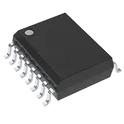
The W25Q02JVSFIM from Winbond Electronics is a 2G-bit (256M x 8) Serial NOR Flash Memory device designed for high-density non-volatile data storage applications. It supports high-speed SPI, Dual/Quad SPI, QPI, and DTR interfaces, providing fast data transfer and efficient memory access for embedded systems. The device operates from a 2.7V to 3.6V supply voltage and is available in a 16-pin SOIC surface-mount package. It is suitable for applications such as firmware storage, boot code memory, industrial controllers, IoT devices, automotive electronics, and embedded systems requiring large-capacity reliable flash memory. Key Features Memory Density: 2G-bit Serial NOR Flash (256M x 8) Flash Technology: Single-Level Cell (SLC) NOR Flash Interface Support: Standard SPI, Dual SPI, Quad SPI, QPI, and DTR modes High-Speed Clock Frequency: Up to 133 MHz operation Fast Access Time: Approximately 7.5 ns Supply Voltage Range: 2.7V to 3.6V Non-Volatile Data Storage: Retains stored data without power Memory Organization: 256M x 8-bit architecture Package Type: 16-pin SOIC (7.50 mm width) surface-mount package Operating Temperature Range: -40°C to +85°C Page Program Time: Approximately 3.5 ms Applications: Embedded firmware storage, BIOS/boot memory, industrial equipment, IoT devices, and consumer electronics Hashtags #W25Q02JVSFIM #Winbond #SerialFlashMemory #NORFlash #SPIFlash #QuadSPI #QPI #DTR #EmbeddedSystems #NonVolatileMemory #FlashMemory #FirmwareStorage #IoT #IndustrialElectronics #Semiconductor #MemoryIC
5 Uses0 Stars