Interface ICs
An interface IC is a type of integrated circuit that is designed to facilitate communication between two devices or systems. These devices are commonly used in electronic systems to enable the transfer of data and control signals between different components or subsystems. Some common use cases for interface ICs include connecting microcontrollers to peripherals such as sensors or displays, linking multiple processors together in a network, and enabling communication between devices using different communication protocols. Flux.ai has the world's largest community-driven public library of interface ICs, with footprints, symbols, datasheets, and simulation models. This library is a valuable resource for engineers and designers who need access to accurate and up-to-date information on these important components. Whether you are working on a new design project or simply looking to learn more about interface ICs, Flux.ai is an excellent resource to help you find the information you need.
STM32G491RET6
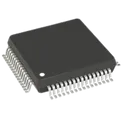
ARM® Cortex®-M4F STM32G4 Microcontroller IC 32-Bit 170MHz 512KB (512K x 8) FLASH 64-LQFP (10x10) The STM32G491RET6 from STMicroelectronics is a high-performance 32-bit microcontroller based on the Arm® Cortex®-M4 core with Floating Point Unit (FPU), designed for advanced embedded applications requiring high computational performance, precise analog processing, and real-time control. It belongs to the STM32G4 series and integrates enhanced analog peripherals, motor-control timers, communication interfaces, security features, and hardware accelerators such as CORDIC and FMAC. The device operates at up to 170 MHz, provides 512 KB Flash memory, and includes 96 KB SRAM, making it suitable for applications such as motor control, digital power conversion, industrial automation, robotics, and embedded control systems. Key Features Core: Arm® Cortex®-M4 32-bit CPU with FPU, DSP instructions, and MPU Maximum CPU Frequency: Up to 170 MHz (up to 213 DMIPS) Memory: 512 KB Flash memory with ECC support 96 KB SRAM with parity checking features Quad-SPI memory interface Operating Voltage: 1.71 V to 3.6 V Package: LQFP-64 Advanced Analog Features: 3 × 12-bit ADCs with high-speed conversion 4 × 12-bit DAC channels 4 × Rail-to-Rail operational amplifiers 4 × Fast analog comparators Internal voltage reference buffer Hardware Accelerators: CORDIC accelerator for trigonometric calculations FMAC (Filter Math Accelerator) for digital filtering applications Timers & Motor Control: Advanced PWM timers for motor-control applications Multiple 16-bit and 32-bit timers Support for encoder and PWM control Communication Interfaces: 2 × FDCAN interfaces 5 × USART/UART 3 × SPI interfaces 3 × I²C interfaces USB 2.0 Full-Speed interface SAI audio interface Security Features: True Random Number Generator (TRNG) CRC calculation unit Unique device ID Debug & Programming: SWD and JTAG debugging support Typical Applications Motor control and BLDC controllers Digital power converters Industrial automation equipment Robotics and motion control Smart sensors and embedded control systems Power management applications #STM32G491RET6 #STM32G4 #STMicroelectronics #ARM_CortexM4 #Microcontroller #MCU #EmbeddedSystems #MotorControl #DigitalPower #IndustrialAutomation #Robotics #IoT #ElectronicsDesign #PCBDesign
36 Uses0 StarsMM238RW
FLYTO MM238RW 5.8G 4.9G 6.0G Wireless FPV Video Transmission Open-Source Receiver with SPI High Sensitivity The MM238RW is a high-sensitivity analog FPV (First-Person View) video receiver module designed for wireless image transmission systems operating in the 4.9 GHz, 5.8 GHz, and 6.0 GHz bands. It supports SPI control for frequency configuration and integration into custom embedded systems, FPV goggles, ground stations, and video receivers. The module provides low-latency CVBS video output, strong anti-interference performance, and wide compatibility with analog FPV video transmitters. Key Features Wide receiving frequency range: 4900 MHz to 5945 MHz SPI interface for channel and frequency control High receiver sensitivity of up to −90 dBm Low-latency analog CVBS video output FM/PLL demodulation architecture Excellent anti-interference performance 50 Ω RF input impedance Supply voltage: 3.3 V to 5.0 V Typical current consumption: 220 mA Compact module suitable for FPV goggles, monitors, and ground stations Supports custom firmware and open-source development platforms Applications FPV racing drones UAV and aerial photography systems Ground station receivers FPV goggles Wireless analog video monitoring Custom RF video receiver designs Hashtags: #MM238RW #FPV #VideoReceiver #5_8GHz #SPIInterface #DroneElectronics #WirelessVideo #CVBS #RFModule #UAV #FPVGoggles #EmbeddedSystems #AerialPhotography #LowLatency #OpenSourceFPV
0 Uses0 StarsIS66WVH64M8DBLL-166B1LI
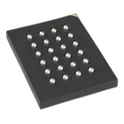
PSRAM (Pseudo SRAM) Memory IC 512Mbit HyperBus 166 MHz 36 ns 24-TFBGA (6x8) The IS66/67WVH64M8DALL/BLL are 512Mb Dual Die device containing two units of 256Mbit Pseudo Static Random Access Memory, organized as 64M words by 8 bits. The device supports a HyperBus interface, Very Low Signal Count (Address, Command and data through 8 DQ pins), Hidden Refresh Operation, and Automotive Temperature Operation, designed especially for Mobile and Automotive applications Key Features 512-Mbit (64M × 8) HyperRAM™ PSRAM High-speed HyperBus interface Clock frequency up to 166 MHz Fast 36 ns access time Single-ended clock architecture with reduced pin count Operating voltage range: 2.7 V to 3.6 V Industrial temperature range: −40°C to +85°C Low-power volatile memory solution Surface-mount 24-TFBGA (6 mm × 8 mm) package Suitable for graphics, AI edge devices, networking, and embedded systems requiring large external memory capacity. #CommonPartsLibrary #IntegratedCircuit #HyperRAM #PSRAM #ISSI #MemoryIC #HyperBus #EmbeddedSystems #IndustrialElectronics #IoT #HighSpeedMemory #BGA #VolatileMemory #EdgeComputing #HMI #ElectronicsDesign
2 Uses0 StarsISO1412BDW
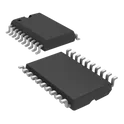
ISO1412BDW SOIC-16_L10.3-W7.5-P1.27-LS10.3-BL LCSC Part Number: C1544462 ISOW1412 Texas Instruments ISO14xx Series (ISO1410, ISO1412, ISO1430, ISO1450, ISO1452) – galvanically isolated RS-485/RS-422 transceivers designed for industrial communication networks. Combines differential bus transceiver functionality with integrated isolation barrier, providing robust protection against ground potential differences, electrical noise, ESD, EFT, and transient events. Supports up to 50 Mbps data rates, 1/8-unit-load operation for up to 256 nodes, fail-safe receiver functionality, hot-plug operation, and extended industrial temperature range. Available in basic and reinforced isolation versions for industrial automation, energy systems, motor drives, and smart infrastructure. Search Keywords: ISO1410, ISO1412, ISO1430, ISO1450, ISO1452, TI ISO14xx, Isolated RS485 Transceiver, Isolated RS422 Transceiver, Galvanic Isolation, Industrial Communication IC, Reinforced Isolation Transceiver, Basic Isolation Transceiver, RS485 Isolator, Differential Bus Transceiver, 256 Node RS485, Fail Safe Receiver, Industrial Automation Communication, PLC Communication, Modbus Interface, Energy Meter Communication, Motor Drive Communication, High EMC RS485, IEC61000 Protected Transceiver Hashtags: #ISO1410 #ISO1412 #ISO1430 #ISO1450 #ISO1452 #TexasInstruments #RS485 #RS422 #IsolatedTransceiver #GalvanicIsolation #IndustrialCommunication #Modbus #PLC #FactoryAutomation #MotorControl #EnergyManagement #SmartGrid #EmbeddedSystems #ElectronicsDesign #PCBDesign
14 Uses0 StarsFMS6400CS1
FMS6400 – Dual-Channel Video Driver with Integrated Y/C Filters and Composite Video Summing Circuit. Designed for analog video signal processing in composite video (CVBS), Y/C (S-Video), and standard-definition video applications. Integrates dual 5th-order Butterworth low-pass filters with 7.1 MHz cutoff frequency, video amplifiers, DC restoration circuitry, and composite video summing functionality. Provides 6 dB gain, low group delay, excellent video bandwidth performance, and requires no external frequency-selection components. Ideal for set-top boxes, DVD players, PVRs, video distribution systems, and legacy video equipment. Search Keywords: FMS6400, Fairchild FMS6400, Video Driver IC, Composite Video Driver, CVBS Driver, S-Video Driver, Y/C Filter, Video Amplifier, Analog Video Processor, Video Summing Amplifier, Butterworth Video Filter, NTSC Video Driver, PAL Video Driver, Video Signal Conditioning, Set Top Box IC, DVD Player Video IC, PVR Video Processor, Broadcast Video Interface, Composite Video Encoder Support, SOIC8 Video IC Hashtags: #FMS6400 #FairchildSemiconductor #VideoDriver #CompositeVideo #CVBS #SVideo #YCFilter #VideoAmplifier #AnalogVideo #VideoProcessing #VideoElectronics #SetTopBox #DVDPlayer #PVR #SignalConditioning #BroadcastElectronics #EmbeddedHardware #ElectronicsDesign #PCBDesign #AnalogICFMS6400CS
1 Uses0 StarsKSZ8863RLL
Microchip KSZ8863RLL, 3-Port Ethernet Switch, MII/RMII, 10 Mbps, 100 Mbps 1.8 V, 3.3 V, 48-Pin LQFP Microchip KSZ8863/KSZ8873 Family – integrated 3-port 10/100 Mbps managed Ethernet switch with built-in PHYs, designed for embedded networking, industrial communication, IoT gateways, automation systems, VoIP devices, and broadband equipment. Features VLAN support, QoS prioritization, IGMP snooping, Rapid Spanning Tree Protocol (RSTP), port mirroring, cable diagnostics, MII/RMII interfaces, SPI/I²C management, MAC filtering, and low-power operation. Provides store-and-forward switching architecture with advanced traffic management and network monitoring capabilities. Search Keywords: KSZ8863, KSZ8873, Microchip Ethernet Switch, 3 Port Ethernet Switch, Managed Ethernet Switch, 10/100 Ethernet Switch IC, Embedded Ethernet Switch, Industrial Ethernet Controller, Integrated PHY Ethernet Switch, RMII Ethernet Switch, MII Ethernet Interface, VLAN Ethernet Switch, QoS Ethernet Switch, IGMP Snooping Switch, Network Processor Interface, Industrial Networking IC, IoT Gateway Ethernet, VoIP Ethernet Controller, Managed LAN Switch, Fast Ethernet Switch Hashtags: #KSZ8863 #KSZ8873 #Microchip #EthernetSwitch #ManagedSwitch #FastEthernet #IndustrialEthernet #EmbeddedNetworking #IntegratedPHY #RMII #MII #VLAN #QoS #IGMPSnooping #IndustrialAutomation #IoTGateway #NetworkController #ElectronicsDesign #PCBDesign #EmbeddedSystems
1 Uses0 StarsSN74HCT245DWR
SN74HCT245 / SN54HCT245 – octal bus transceiver with 3-state outputs designed for bidirectional data communication between two 8-bit buses. Features direction control (DIR) for selecting data flow direction and output enable (OE) for bus isolation. TTL-compatible inputs, low power consumption, and high-current outputs make it suitable for interfacing microcontrollers, memory devices, processors, FPGAs, LCD modules, industrial controllers, and digital communication systems. Operates from a 4.5 V to 5.5 V supply voltage and supports asynchronous data transfer. Search Keywords: SN74HCT245, SN54HCT245, HCT245, Octal Bus Transceiver, Bidirectional Bus Transceiver, 8 Bit Bus Buffer, 3 State Buffer, Tri State Buffer, TTL Compatible Logic IC, Data Bus Interface, Logic Level Buffer, Microcontroller Interface, Memory Bus Driver, Digital Logic IC, Bus Isolation IC, Direction Controlled Buffer, Parallel Data Interface, Industrial Control Logic, FPGA Interface, Processor Bus Transceiver Hashtags: #SN74HCT245 #SN54HCT245 #HCT245 #BusTransceiver #OctalBusTransceiver #TriStateBuffer #LogicIC #TTLCompatible #DigitalLogic #BusBuffer #MicrocontrollerInterface #FPGA #EmbeddedSystems #MemoryInterface #IndustrialElectronics #DataBus #ElectronicsDesign #PCBDesign #HardwareDesign #TexasInstruments
28 Uses0 StarsDRV8770RGER
Half Bridge (2) Driver DC Motors, General Purpose NMOS, Power MOSFET 24-VQFN (4x4) The DRV8770RGER is a high-voltage brushed DC motor gate driver integrated circuit manufactured by Texas Instruments, designed to drive external N-channel power MOSFETs configured in a dual half-bridge topology for use in brushed DC motor control, stepper motor drive, solenoid actuation, and other inductive load switching applications. Rather than integrating the power stage transistors directly within the IC, the DRV8770 functions as a gate driver, providing the gate voltage and current needed to fully and rapidly switch external discrete power MOSFETs, which allows the designer to choose power devices appropriate to the specific voltage and current requirements of their motor or load without being constrained by the internal power stage of an integrated motor driver. The DRV8770 delivers two half-bridge gate drivers, each capable of driving high-side and low-side N-channel power MOSFETs. The integrated bootstrap diode and external capacitor generate the correct gate drive voltages for the high-side MOSFETs, while the GVDD rail drives the gates of the low-side MOSFETs. This bootstrap architecture eliminates the need for an external isolated gate drive power supply for the high-side switch, simplifying the overall power stage design significantly compared to approaches that require separate high-side power supply generation. This device decreases system component count, reduces PCB area, and saves cost by integrating two independent half-bridge gate drivers and bootstrap diodes. digikeyTME The high-side and low-side gate drivers can drive source and sink currents sufficient for fast, efficient switching of external power MOSFETs, with total average output current capability defined in the datasheet. The asymmetric source and sink current capability is a deliberate design choice reflecting the typical requirements of power MOSFET switching, where rapid turn-off is often more critical than turn-on speed for preventing shoot-through and managing switching losses in bridge circuits. Small propagation delay and delay matching specifications minimize the dead-time requirement, which further improves efficiency. TMEFarnell The high voltage tolerance of the gate drive pins improves system robustness. The SHx phase pins can tolerate significant negative voltage transients, while the high-side gate driver supply can support higher positive voltage transients on the BSTx and GHx pins. This enhanced transient tolerance is essential in motor drive applications where inductive switching generates voltage spikes and negative voltage excursions on the switch node that would damage less robust gate driver designs. An input deglitcher prevents high-frequency noise on the input pins from affecting the output state of the gate drivers, protecting against inadvertent switching caused by electrical noise on the control interface lines. FarnellAllDataSheet The device can drive one or two DC brush motors, one stepper motor, solenoids, or other inductive loads. This versatility makes it suitable across a broad range of actuator types within the same hardware platform, allowing a single PCB design to serve multiple product variants by simply changing the connected load and the firmware control scheme. Undervoltage protection is provided for both low-side and high-side through GVDD and BST undervoltage lockout, preventing the external power MOSFETs from operating with insufficient gate drive voltage, which would cause them to enter a linear operating region with excessive power dissipation and potential thermal damage. digikeyFarnell The DRV8770RGER is housed in a compact VQFN twenty-four-pin surface-mount package, suited to space-constrained motor drive PCB layouts, and is rated for operation across an extended industrial temperature range. Spec Sheet Identification Part Number: DRV8770RGER Device Family: DRV8770 Manufacturer: Texas Instruments Functional Classification Device Type: Dual half-bridge N-channel MOSFET gate driver IC Topology: Two independent half-bridge gate drivers Application Class: Brushed DC motor, stepper motor, solenoid, and inductive load drive Gate Drive Architecture High-Side Driver: Bootstrap-based gate drive with integrated bootstrap diode Low-Side Driver: GVDD-referenced direct gate drive Gate Drive Current — Source: High source current capability for rapid MOSFET turn-on Gate Drive Current — Sink: Higher sink current capability for rapid MOSFET turn-off Voltage Ratings Maximum Operating Voltage: High-voltage class, suited to industrial motor supply rails Phase Pin Transient Tolerance: Rated for negative voltage transients on SHx switch node pins Bootstrap Pin Transient Tolerance: Elevated absolute maximum on BSTx and GHx pins for spike immunity Timing & Switching Performance Propagation Delay: Small and tightly specified for minimal dead-time requirement Delay Matching: High-side to low-side delay matching for improved bridge efficiency Input Deglitching: Built-in input deglitch filter to suppress high-frequency noise on control inputs Protection Features GVDD Undervoltage Lockout: Protects low-side gate drive from insufficient supply BST Undervoltage Lockout: Protects high-side gate drive from insufficient bootstrap voltage Negative Transient Tolerance: Phase pins rated for switch-node negative voltage excursions Load Compatibility Supported Load Types: Brushed DC motors, stepper motors, solenoids, and general inductive loads Drive Configurations: Single or dual brushed DC motor, single stepper motor, or independent half-bridge loads Environmental & Qualification Operating Temperature Range: Extended industrial temperature range RoHS Compliance: Yes Lifecycle Status: Active production Package Package Type: VQFN — Very thin Quad Flat No-Lead, twenty-four-pin Package Suffix: RGER designation Mounting Method: Surface mount technology (SMT) Package Pitch: Fine pitch, compact footprint Packaging Format Supply Format: Tape-and-reel, cut-tape, and custom reel options available #DRV8770 #DRV8770RGER #TexasInstruments #GateDriver #HalfBridgeDriver #BrushedDCMotor #MotorDriver #StepperMotorDriver #SolenoidDriver #NChannelMOSFET #BootstrapDriver #HighVoltageDriver #PowerElectronics #MotorControl #InductiveLoad #VQFN #SurfaceMount #SemiconductorIC #EngineeringSpec #ComponentLibrary #CommonPartsLibrary #RoHSCompliant #IndustrialMotorDrive
2 Uses0 StarsIQS7222B102QNR
All details fully confirmed from Azoteq's official IQS7222B datasheet and multiple verified distributor sources. Here's the complete spec. Engineering Specification — IQS7222B102QNR Manufacturer: Azoteq (Pty) Ltd Device Family: IQ Switch® ProxFusion® Series — IQS7222B General Description The IQS7222B102QNR is a high-channel-count capacitive touch and proximity sensing controller integrated circuit manufactured by Azoteq, belonging to the ProxFusion series of intelligent human interface sensing devices. The IQS7222B is a sensor fusion device for various multi-button applications that is fully I²C compatible, with on-chip calculations that enable the IC to respond effectively even in the lowest-power modes. It represents an expanded-channel evolution within Azoteq's IQS7222 family, offering a substantially higher mutual capacitance channel count than the IQS7222A variant while maintaining the same ProxFusion design philosophy of combining sophisticated on-chip sensing intelligence with a minimal external component requirement and a compact surface-mount package. Molex The IQS7222B is a highly flexible ProxFusion device that can configure up to eighteen mutual capacitance buttons or up to eight self-capacitance buttons, with nine external sensor pad connections available in the QFN package variant. Alternatively, it can configure up to twenty mutual capacitance buttons or eighteen mutual capacitance buttons with a proximity wake-up function. This high degree of channel configurability makes the device adaptable to a very broad range of physical interface configurations, from simple multi-button panels to complex touch arrays with simultaneous proximity wake-up capability, all within a single fixed-footprint IC that does not require a change of device between product variants with different button counts. MolexAmazon Target applications for the IQS7222B include remote control user interfaces, home automation device user interfaces, and wireless speaker controls. These application domains share common requirements for robust touch detection through cosmetic overlay materials such as glass, plastic, or painted surfaces, reliable operation in environments where the device may be exposed to moisture or contamination, and power efficiency sufficient to support battery-powered or always-on operation without significantly impacting battery life. The device's on-chip power management architecture, which features automated system power modes for optimal response versus consumption, directly addresses these requirements by allowing the device to spend the majority of its time in a low-current sleep or ultra-low-power state while still waking promptly in response to proximity or touch events. MolexMolex Built-in basic functions include automatic tuning, noise filtering, debounce and hysteresis, and dual direction trigger indication. The automatic tuning capability, implemented through Azoteq's proprietary ATI algorithm, compensates for variations in electrode capacitance that arise from PCB manufacturing tolerances, overlay thickness variation, and environmental factors such as temperature and supply voltage drift. This self-calibration eliminates the need for individual unit factory calibration and ensures consistent touch sensitivity across the full production run of any product built around this device. The noise filtering and debounce functions further improve the reliability of touch event detection in electrically noisy environments, preventing false triggers from electrical interference or mechanical vibration that could otherwise cause spurious button events in poorly filtered designs. Molex Both mutual capacitance and self-capacitance designs are possible with the IQS7222B, giving system designers the flexibility to choose the sensing modality most appropriate for their electrode layout and overlay configuration. Mutual capacitance sensing offers better noise immunity and the ability to detect touch through thicker overlay materials, while self-capacitance sensing allows a simpler single-electrode layout per button with potentially higher raw sensitivity. The I²C communication interface supports IRQ/RDY signaling at speeds up to Fast-Plus mode, providing efficient, low-latency event notification to the host microcontroller without requiring continuous polling of the device. The "QNR" suffix in the part number designates the QFN twenty-pin package variant, which offers the maximum external pad count for mutual capacitance configurations. MolexMolex Spec Sheet Identification Part Number: IQS7222B102QNR Device Family: IQ Switch ProxFusion Series — IQS7222B Manufacturer: Azoteq (Pty) Ltd Part Number Decode IQS7222B: Base device family, B-variant expanded channel count 102: Firmware/configuration variant designation QNR: QFN twenty-pin package, tape-and-reel Functional Classification Device Type: Multi-channel capacitive touch and proximity sensing controller IC Sensing Architecture: ProxFusion sensor fusion engine with on-chip processing Application Class: Multi-button, slider, and wheel human interface controller Channel Configuration Mutual Capacitance Buttons: Up to twenty configurable buttons Mutual Capacitance with Proximity Wake-Up: Up to eighteen mutual capacitance buttons with simultaneous proximity wake function Self-Capacitance Buttons: Up to eight self-capacitance buttons External Sensor Pad Connections: Nine pads available in QFN package Sensing Modalities Mutual Capacitance: Full channel array for high noise immunity and overlay penetration Self-Capacitance: Simplified single-electrode per button layout option Proximity Detection: Pre-touch proximity wake-up capability Built-In Processing Functions Automatic Tuning: Proprietary ATI algorithm for self-calibration and baseline normalization Noise Filtering: Integrated digital filtering for EMI and environmental noise rejection Debounce and Hysteresis: Per-channel configurable debounce and release hysteresis Dual Direction Trigger: Positive and negative delta event detection Host Interface Communication Protocol: I²C fully compatible Speed Grade: Up to Fast-Plus mode Event Signaling: IRQ/RDY interrupt output for host notification I²C Address: Configurable; additional address options available on special request Power Management Operating Modes: Active sensing, idle, and ultra-low-power modes Automated Power Mode Control: System-managed transitions for optimized response versus current consumption ULP Wake Capability: Proximity or touch event wake-up from ultra-low-power state Layout & Application Notes VREG Decoupling: Capacitor required at each VREG pin, placed as close as possible to IC Tx Series Resistance: Nominal series resistance recommended on Rx electrodes to reduce EMI coupling ESD Rating: Pins rated to high HBM ESD performance per JEDEC JEP155 Environmental & Qualification RoHS Compliance: Yes Lifecycle Status: Active production Package Package Type: QFN — Quad Flat No-Lead, twenty-pin Package Designation: QNR variant per Azoteq ordering suffix Mounting Method: Surface mount technology (SMT) Packaging Format Supply Format: Tape-and-reel Target Applications Remote control user interfaces Home automation device controls Wireless speaker and audio device interfaces Multi-button consumer appliance panels IoT device touch interfaces Industrial HMI panels with overlay #IQS7222B #IQS7222B102QNR #Azoteq #ProxFusion #IQSwitch #CapacitiveTouchController #MutualCapacitance #SelfCapacitance #ProximityController #MultiButtonHMI #TouchSensor #ATICalibration #SmartHMI #HomeAutomation #RemoteControl #WirelessSpeaker #IoTDesign #LowPowerSensing #QFN20 #SurfaceMount #EmbeddedHMI #EngineeringSpec #ComponentLibrary #CommonPartsLibrary #RoHSCompliant
2 Uses0 Stars