Interface ICs
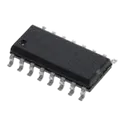
An interface IC is a type of integrated circuit that is designed to facilitate communication between two devices or systems. These devices are commonly used in electronic systems to enable the transfer of data and control signals between different components or subsystems. Some common use cases for interface ICs include connecting microcontrollers to peripherals such as sensors or displays, linking multiple processors together in a network, and enabling communication between devices using different communication protocols. Flux.ai has the world's largest community-driven public library of interface ICs, with footprints, symbols, datasheets, and simulation models. This library is a valuable resource for engineers and designers who need access to accurate and up-to-date information on these important components. Whether you are working on a new design project or simply looking to learn more about interface ICs, Flux.ai is an excellent resource to help you find the information you need.
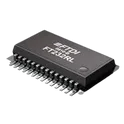
FT232RL
USB to Serial Interface, SSOP-28 FTDI USB Serial SSOP*5.3x10.2mm*P0.65mm* The FT232RL is a full-speed USB 2.0 to asynchronous serial data transfer IC. It integrates all the necessary USB protocol handling and UART interface logic, making it very easy to add USB connectivity to embedded devices without requiring complex firmware development. It is commonly used in development boards (like Arduino clones), USB-to-TTL converters, and debugging interfaces. Key Features USB Interface Fully compliant with USB 2.0 Full-Speed (12 Mbps) Integrated USB transceiver (no external components required) Supports USB suspend/resume modes Internal EEPROM for storing USB descriptors (no external EEPROM needed) Serial (UART) Interface Supports standard UART communication (TX, RX) Configurable baud rates from 300 bps up to 3 Mbps Supports hardware flow control (RTS/CTS, DTR/DSR) Bit-bang mode for simple GPIO control Integrated Components Built-in clock generator (no external crystal required) Internal EEPROM for configuration Integrated voltage regulator (3.3V output available for external use) Power Features Operates from 3.3V to 5V Can be powered directly from USB (bus-powered) Low power consumption with sleep mode Driver Support Virtual COM Port (VCP) drivers available for: Windows Linux macOS Also supports direct D2XX driver for advanced applications Package Typically available in SSOP-28 package Common Applications USB-to-serial converters (TTL/RS232) Microcontroller programming and debugging Embedded system communication Industrial and instrumentation interfaces
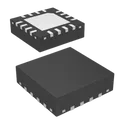
157 Uses1 StarsADXL335BCPZ
Accelerometer X, Y, Z Axis ±3g 1.6kHz (X,Y), 550Hz (Z) 16-LFCSP-LQ (4x4) The ADXL335BCPZ is a small, thin, low-power, complete 3-axis accelerometer with signal-conditioned voltage outputs. It measures acceleration with a minimum full-scale range of ±3 g. The device outputs analog voltages proportional to acceleration in each of the three orthogonal axes (X, Y, and Z). The accelerometer is designed for low power consumption and high resolution, making it suitable for mobile devices, tilt sensing, motion detection, and vibration monitoring. It operates over a wide temperature range and requires minimal external components, enabling easy integration into compact systems. Functional Overview The ADXL335 uses a capacitive sensing structure to detect acceleration. Changes in acceleration result in differential capacitance changes, which are converted into voltage outputs through an internal signal conditioning circuit. Each axis provides an independent analog output that can be directly interfaced with ADC inputs of microcontrollers or other processing units. Bandwidth for each axis can be adjusted using external capacitors, allowing flexibility depending on application requirements. Electrical Characteristics Supply Voltage Range: 1.8 V to 3.6 V Supply Current: Typical: 350 µA Measurement Range: ±3 g Sensitivity (Typical): 300 mV/g Zero-g Bias Level: Approximately mid-supply voltage Bandwidth: User-selectable via external capacitors Typical range: X, Y axes: up to 1600 Hz Z axis: up to 550 Hz Output Characteristics Output Type: Analog voltage (ratiometric to supply voltage) Number of Axes: Three (X, Y, Z) Output Noise: Low noise suitable for precision motion sensing Cross-Axis Sensitivity: Typically ±1% Mechanical Characteristics Package Type: 16-lead LFCSP (Lead Frame Chip Scale Package) Dimensions: Approximately 4 mm × 4 mm × 1.45 mm Mounting: Surface mount Environmental Specifications Operating Temperature Range: −40°C to +85°C Shock Survivability: Up to 10,000 g Interface Requirements External Components: Requires capacitors for bandwidth setting (one per axis) Output Interface: Direct analog output compatible with ADC inputs Applications Mobile devices and handheld electronics Tilt and orientation sensing Vibration monitoring systems Gaming and motion input devices Industrial instrumentation Wearable electronics Key Features Low power consumption Compact form factor High resolution analog outputs User-adjustable bandwidth Wide operating temperature range Simple integration with minimal external components #commonpartslibrary #sensor #transducer #motionsensor #accelerometer
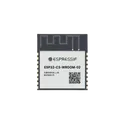
58 Uses1 StarsESP32-C3-WROOM-02-N4
Bluetooth, WiFi 802.11b/g/n, Bluetooth v5.0 Transceiver Module 2.4GHz PCB Trace Surface Mount The ESP32-C3-WROOM-02-N4 is a compact, general-purpose Wi-Fi and Bluetooth Low Energy (BLE) module developed by Espressif Systems. It is built around the ESP32-C3 SoC and integrates RF components, crystal oscillator, flash memory, and PCB antenna in a single module. It is designed for a wide range of applications such as IoT devices, smart home systems, industrial automation, and consumer electronics, offering a balance of performance, low power consumption, and cost efficiency. Key Features MCU & Memory 32-bit RISC-V single-core processor up to 160 MHz 384 KB ROM 400 KB SRAM + 8 KB RTC SRAM Integrated 4 MB SPI flash (N4 variant) Connectivity 2.4 GHz Wi-Fi (802.11 b/g/n) Supports Station, SoftAP, and Station + SoftAP modes Bluetooth 5 (BLE) with mesh support Data rates up to 150 Mbps (Wi-Fi) Peripherals & Interfaces Up to 15 GPIOs Interfaces: SPI, UART, I2C, I2S LED PWM ADC (SAR) Timers & watchdog USB Serial/JTAG support TWAI® (CAN 2.0 compatible) #commonpartslibrary #transceiver #module #wireless #rf
1.2k Uses1 StarsT-Display S3 AMOLED Plus
The T-Display S3 AMOLED Plus is a compact development board built around the ESP32-S3R8 microcontroller and features an integrated high-quality 1.91-inch AMOLED display with touch support. It’s designed to give you a ready-made visual interface and connectivity for advanced projects without needing a separate display shield.
18 Uses1 StarsCH32X035F7P6
The CH32X035/X033 series, developed by WCH, encompasses industrial-grade microcontrollers based on the QingKe RISC-V core. These microcontrollers, including models such as the CH32X035R8T6, CH32X035C8T6, CH32X035G8U6, CH32X035G8R6, CH32X035F8U6, CH32X035F7P6, and CH32X033F8P6, are equipped with integrated USB and PD PHY, supporting USB Host and Device functionalities, as well as PDUSB and Type-C fast charging capabilities. The series features a programmable protocol I/O controller, two groups of operational amplifiers (OPA), three groups of comparators (CMP), four USARTs, I2C, SPI, multiple timers, a 12-bit ADC, and 14-channel capacitive touch-key interfaces, among other peripherals. These microcontrollers offer a comprehensive suite of features, including a 32-bit QingKe RISC-V4C core with support for the RV32IMAC instruction set, fast interrupt handling, and low-power modes, making them suitable for a wide range of embedded applications. With a robust memory architecture comprising 20KB SRAM and 62KB CodeFlash, alongside various power management and security features, the CH32X035/X033 series is designed to deliver high performance and flexibility for industrial applications.
5 Uses1 Stars