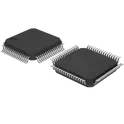
Interface ICs
An interface IC is a type of integrated circuit that is designed to facilitate communication between two devices or systems. These devices are commonly used in electronic systems to enable the transfer of data and control signals between different components or subsystems. Some common use cases for interface ICs include connecting microcontrollers to peripherals such as sensors or displays, linking multiple processors together in a network, and enabling communication between devices using different communication protocols. Flux.ai has the world's largest community-driven public library of interface ICs, with footprints, symbols, datasheets, and simulation models. This library is a valuable resource for engineers and designers who need access to accurate and up-to-date information on these important components. Whether you are working on a new design project or simply looking to learn more about interface ICs, Flux.ai is an excellent resource to help you find the information you need.
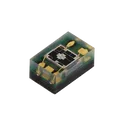
VEML6075
Optical Sensor Ultraviolet (UV) 330nm, 365nm I²C 4-TFLGA UV light sensor with integrated UVA and UVB photodiodes, designed to measure ultraviolet intensity and calculate a UV index through an I²C interface. It operates from a 1.7 V to 3.6 V supply, features a 16-bit ADC, programmable integration time and dynamic range, built-in signal processing with UV compensation, and is housed in a compact 4-pin OPLGA package suitable for space-constrained applications. #commonpartslibrary #sensor #opticalsensor
13 Uses1 StarsLSM6DSO32XTR
LSM6DSO32X is a low-power 6-axis IMU (Inertial Measurement Unit) from STMicroelectronics that integrates a 3-axis accelerometer with up to ±32g full-scale range and a 3-axis gyroscope with selectable ranges up to ±2000 dps. The device features an embedded Machine Learning Core (MLC), Finite State Machine (FSM), pedometer, step detector, tilt detection, motion classification, and smart sensor processing functions, enabling advanced edge AI and sensor fusion applications without continuous MCU intervention. Communication is supported through SPI, I²C, and MIPI I3C interfaces. Designed for wearable devices, smart watches, asset tracking, IoT products, motion analysis, gesture recognition, navigation systems, and low-power embedded applications. Search Keywords: LSM6DSO32X, ST LSM6DSO32X, 6-axis IMU, inertial measurement unit, accelerometer gyroscope combo, 3-axis accelerometer, 3-axis gyroscope, machine learning sensor, embedded AI sensor, motion sensor, MEMS sensor, pedometer sensor, step counter sensor, tilt detection sensor, gesture recognition sensor, SPI IMU, I2C IMU, I3C sensor, wearable sensor, navigation sensor, sensor fusion IMU, smart motion sensor, asset tracking sensor Hashtags: #LSM6DSO32X #STMicroelectronics #IMU #MEMS #Accelerometer #Gyroscope #MotionSensor #MachineLearningCore #EmbeddedAI #SensorFusion #Pedometer #Wearables #IoT #AssetTracking #Navigation #GestureRecognition #I2C #SPI #I3C #ElectronicComponents
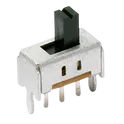
2 Uses1 StarsOS102011MS2QN1
Slide Switch, SPDT, On-On, Through Hole, OS Series, 100mA # OS102011MS2QN1 ## General Description The OS102011MS2QN1 is a miniature slide switch manufactured by C&K, designed for low-power signal switching and control applications in electronic equipment. The switch features a compact mechanical design, reliable contact performance, and through-hole mounting configuration, making it suitable for embedded systems, industrial controls, instrumentation, telecommunications equipment, consumer electronics, and portable devices. Its robust construction ensures dependable operation throughout repeated switching cycles while maintaining stable electrical performance. The device is commonly utilized for mode selection, power control, configuration settings, and user-interface functions within electronic assemblies. ## Key Features ### Mechanical Characteristics * Miniature slide switch construction * Through-hole PCB mounting * Compact form factor * Durable actuator mechanism * Positive switching action * Designed for repeated mechanical operation ### Switching Characteristics * Maintained-contact operation * Reliable position retention * Low-force actuation * Stable contact engagement * Suitable for signal and control switching applications ### Electrical Characteristics * Low contact resistance * Reliable signal transmission * Stable switching performance * Suitable for low-current and low-voltage circuits * Consistent electrical operation throughout service life ### Contact System * High-reliability contact materials * Corrosion-resistant contact surfaces * Long operational durability * Dependable electrical continuity ### Material Construction * High-strength thermoplastic housing * Industrial-grade metallic contacts * Durable actuator assembly * RoHS-compliant materials ### Environmental Characteristics * Suitable for commercial and industrial electronic equipment * Resistant to mechanical wear * Reliable performance under normal operating environments * Designed for long-term service reliability ### Application Areas * Embedded Systems * Industrial Control Equipment * Consumer Electronics * Test and Measurement Instruments * Communication Devices * Medical Electronics * Power Control Circuits * User Interface Controls * Configuration and Mode Selection Functions * Electronic Development Platforms ### Compliance * RoHS Compliant * Lead-Free Compatible * Industrial-Grade Switching Component ## Manufacturer C&K ## Product Family OS Series Miniature Slide Switches #OS102011MS2QN1 #CKSwitches #SlideSwitch #MiniatureSwitch #ElectronicSwitch #PCBSwitch #EmbeddedSystems #IndustrialElectronics #ControlSystems #ConsumerElectronics #HardwareDesign #ElectronicsEngineering #SignalSwitching #PCBAssembly #ElectronicComponents #commonpartslibrary #switch #slide #spdt
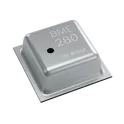
644 Uses1 StarsBME280
Humidity, Pressure, Temperature 0 ~ 100% RH I²C, SPI ±3% 1 s Surface Mount BME280 I2C breakout module The BME280 integrates three sensors—temperature, relative humidity, and pressure—along with a high-performance digital interface. It communicates via I²C or SPI, making it easy to interface with microcontrollers like Arduino, ESP32, and STM32. It is designed for low power consumption, making it suitable for battery-powered applications such as portable weather stations and smart home devices. Key Features Environmental Sensing Measures: Temperature Relative Humidity Barometric Pressure Enables altitude estimation based on pressure readings High Accuracy Temperature: ±1.0°C (typical) Humidity: ±3% RH (typical) Pressure: ±1 hPa (typical) Low Power Consumption Typical current: ~0.6 µA (sleep mode) ~3.6 µA (measurement mode) Ideal for battery-operated devices Communication Interfaces Supports: I²C (up to 3.4 MHz) SPI (3-wire / 4-wire) Easy integration with most microcontrollers Compact Package Small footprint: 2.5 × 2.5 × 0.93 mm LGA package Suitable for space-constrained designs Built-in Features Factory-calibrated coefficients stored in NVM Configurable oversampling and filtering Integrated ADC for high-resolution measurements #commonpartslibrary #sensor #humidity #pressure
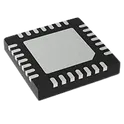
330 Uses1 StarsTMC2209-LA-T
Motor Drivers TMC2209-LA-T QFN-28_L5.0-W5.0-P0.50-BL-EP LCSC Part Number: C2150710 TRINAMIC TMC2209-LA two-phase stepper motor driver IC with STEP/DIR interface, up to 2.8A peak coil current (2A RMS), ultra-quiet StealthChop2 operation, SpreadCycle current control, StallGuard4 sensorless stall detection, CoolStep automatic current reduction, MicroPlyer interpolation up to 256 microsteps, integrated pulse generator, UART configuration interface, internal sense resistor option, low RDS(on) MOSFETs, 4.75V to 29V motor supply range, QFN package with exposed thermal pad, designed for 3D printers, CNC machines, robotics, automation and battery-powered equipment. Search Keywords: TMC2209, TMC2209-LA, Trinamic TMC2209, stepper motor driver, silent stepper driver, StealthChop2, SpreadCycle, StallGuard4, CoolStep, MicroPlyer, UART stepper driver, STEP DIR driver, 2A RMS stepper driver, 2.8A peak motor driver, 3D printer driver, CNC motor driver, QFN stepper driver Hashtags: #TMC2209 #TMC2209LA #Trinamic #StepperDriver #StepperMotorDriver #StealthChop2 #SpreadCycle #StallGuard4 #CoolStep #MicroPlyer #UARTDriver #3DPrinterElectronics #CNCElectronics #MotionControl #MotorDriverIC #SilentStepperDriver
190 Uses1 StarsESP32-CAM
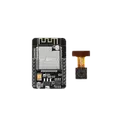
The ESP32-CAM Ai-Thinker is a compact, low-cost Wi-Fi and Bluetooth-enabled camera development module based on the ESP32-S dual-core microcontroller. It integrates an OV2640 2MP camera sensor, onboard Flash memory, PSRAM, and a MicroSD card slot, making it suitable for IoT vision applications, wireless surveillance, image capture, video streaming, face recognition, and smart home projects. The module combines wireless connectivity and image processing capabilities in a small form factor while maintaining low power consumption. Key Features ESP32-S Dual-Core Processor Tensilica Xtensa LX6 dual-core 32-bit CPU Operating frequency up to 240 MHz Computing performance up to 600 DMIPS Integrated Camera Equipped with OV2640 CMOS image sensor Maximum image resolution: 1600 × 1200 (UXGA, 2MP) Supports JPEG image compression and video streaming Memory 4 MB Flash memory External PSRAM for frame buffering and image processing 520 KB internal SRAM Wireless Connectivity 2.4 GHz Wi-Fi (802.11 b/g/n) Bluetooth 4.2 BR/EDR and BLE support Storage Built-in MicroSD/TF card slot Supports local storage of images, videos, and data logs Peripheral Interfaces UART SPI I²C PWM ADC DAC GPIO expansion pins Power Supply Operating voltage: 5 V Low-power operation with deep-sleep capability for battery-powered applications Compact Design Module size approximately 27 mm × 40.5 mm PCB antenna onboard Optional external antenna connection on some variants
189 Uses1 StarsS32K344EHT1VPBST
ARM® Cortex®-M7 S32K3 Microcontroller IC 32-Bit 160MHz 4MB (4M x 8) FLASH 172-QFP (16x16) S32K344EHT1VPBST is an automotive-grade 32-bit microcontroller from NXP Semiconductors based on the Arm Cortex-M7 core architecture. The device is designed for high-performance real-time automotive body, chassis, powertrain, and domain control applications requiring functional safety, security, and advanced communication interfaces. It integrates high-speed processing capability, extensive peripheral integration, hardware security acceleration, and deterministic control functions suitable for safety-critical embedded systems. The microcontroller operates with an Arm Cortex-M7 CPU core running at high frequency with floating-point support and DSP extensions for computationally intensive applications. Integrated flash memory and SRAM provide embedded program and data storage optimized for automotive embedded control systems. The device supports hardware-assisted security features including secure boot, cryptographic acceleration, and tamper protection for secure automotive network communication and firmware integrity. The S32K344EHT1VPBST includes multiple communication peripherals supporting CAN FD, FlexCAN, LIN, SPI, UART, I2C, and Ethernet interfaces for distributed automotive networking and gateway applications. Advanced analog integration includes ADC modules, timers, PWM generators, watchdogs, and motor-control-oriented peripherals enabling precision sensing and control functionality. The device supports functional safety development aligned with ISO 26262 requirements and includes error correction, memory protection, fault monitoring, and safety management features. Power management functionality supports low-power operating modes for energy-efficient automotive electronic control units. The microcontroller is housed in a thermally enhanced LQFP package suitable for automotive operating environments with extended temperature capability and AEC-Q100 qualification for automotive reliability standards. #commonpartslibrary #integratedcircuit #microcontroller #arm #m7
25 Uses1 StarsTMP117AIDRVR
Temperature Sensor Digital, Local -55°C ~ 150°C 16 b 6-WSON (2x2) The TMP117AIDRVR is a high-precision digital temperature sensor manufactured by Texas Instruments. The device provides accurate temperature measurements through an I²C-compatible digital interface and is optimized for applications requiring medical-grade accuracy, low power consumption, and compact PCB footprint. The sensor integrates a precision temperature sensing element, analog-to-digital converter, calibration memory, and digital interface into a single compact package. The device supports continuous conversion and shutdown operating modes, enabling efficient thermal monitoring in battery-powered and always-on systems. Internal calibration minimizes external component requirements while providing highly linear and repeatable temperature measurements across an extended operating range. The TMP117AIDRVR is commonly used in industrial controls, wearable electronics, healthcare equipment, environmental monitoring systems, battery management systems, consumer electronics, and precision instrumentation. Electrical Characteristics Supply voltage supports low-voltage digital systems and portable electronics applications. Ultra-low operating current enables long battery life in energy-sensitive designs. Integrated EEPROM allows programmable offset correction and configuration storage. Digital output eliminates the need for external ADC circuitry. High measurement resolution supports precision thermal monitoring applications. Low self-heating characteristics improve measurement stability and accuracy. Functional Features High-accuracy digital temperature sensing. I²C and SMBus compatible communication interface. Programmable alert functionality for thermal threshold monitoring. Continuous conversion and low-power shutdown operating modes. Integrated non-volatile memory for user configuration storage. Wide operating temperature range for industrial and commercial environments. Fast conversion timing suitable for real-time monitoring systems. Factory-calibrated performance requiring minimal external calibration. Package Information Package type is WSON with compact surface-mount footprint suitable for dense PCB layouts. Moisture-sensitive package designed for automated assembly processes. Lead-free and RoHS-compliant construction. Typical Applications Medical thermometers and patient monitoring systems. Industrial temperature monitoring equipment. Battery-powered portable electronics. HVAC and environmental sensing systems. Data acquisition and instrumentation systems. Server and embedded thermal management applications. Consumer electronics requiring precision thermal sensing. #commonpartslibrary #integratedcircuit #temperaturesensor
402 Uses1 StarsPCA9685PW,118
LED Driver IC 16 Output Linear PWM Dimming 25mA 5.5V 28-TSSOP PCA9685PW,118 is a 16-channel, 12-bit PWM LED controller with an I²C interface designed for LED dimming, RGB/RGBA lighting, and servo motor control applications. It provides independent PWM control for up to 16 outputs, allowing precise brightness or position control while minimizing MCU GPIO usage. The device supports Fast-mode Plus I²C communication up to 1 MHz and operates from a 2.3 V to 5.5 V supply range. It is commonly used in robotics, LED backlighting, automation systems, and PWM expansion modules for microcontrollers such as Arduino, ESP32, and Raspberry Pi. Key Features 16 independent PWM output channels 12-bit PWM resolution (4096 steps) Programmable PWM frequency from approximately 24 Hz to 1526 Hz I²C Fast-mode Plus compatible interface up to 1 MHz Six hardware address pins allowing up to 62 devices on one I²C bus Programmable open-drain or totem-pole outputs Output capability: 25 mA sink current 10 mA source current Internal 25 MHz oscillator with optional external clock input Individual programmable LED ON/OFF timing for reduced EMI and current surges Supports software reset and group addressing (All Call/Sub Call) 5.5 V tolerant inputs and outputs Operating voltage range: 2.3 V to 5.5 V Package: 28-pin TSSOP (PW suffix) #CommonPartsLibrary #IntegratedCircuit #PowerManagement #LEDdriver
91 Uses1 StarsSTM32F405RGT6
ARM® Cortex®-M4 series Microcontroller IC 32-Bit Single-Core 168MHz 1MB (1M x 8) FLASH 64-LQFP (10x10) Arm® Cortex®-M4 32b MCU+FPU, 210DMIPS, up to 1MB flash/192+4KB RAM, USB OTG HS/FS, Ethernet, 17 TIMs, 3 ADCs, 15 comm. interfaces, and camera Includes ST state-of-the-art patented technology • Core: Arm® 32-bit Cortex®-M4 CPU with FPU, Adaptive real-time accelerator (ART Accelerator) allowing 0-wait state execution from flash memory, frequency up to 168 MHz, memory protection unit, 210 DMIPS/ 1.25 DMIPS/MHz (Dhrystone 2.1), and DSP instructions • Memories – Up to 1 Mbyte of flash memory – Up to 192+4 Kbytes of SRAM including 64- Kbyte of CCM (core coupled memory) data RAM – 512 bytes of OTP memory – Flexible static memory controller supporting CompactFlash™, SRAM, PSRAM, NOR and NAND memories • LCD parallel interface, 8080/6800 modes • Clock, reset, and supply management – 1.8 V to 3.6 V application supply and I/Os – POR, PDR, PVD and BOR – 4-to-26 MHz crystal oscillator – Internal 16 MHz factory-trimmed RC (1% accuracy) – 32 kHz oscillator for RTC with calibration – Internal 32 kHz RC with calibration • Low-power operation – Sleep, Stop, and Standby modes –VBAT supply for RTC, 20×32-bit backup registers + optional 4 KB backup SRAM • 3×12-bit, 2.4 MSPS A/D converters: up to 24 channels and 7.2 MSPS in triple interleaved mode • 2×12-bit D/A converters • General-purpose DMA: 16-stream DMA controller with FIFOs and burst support • Up to 17 timers: up to twelve 16-bit and two 32- bit timers up to 168 MHz, each with up to 4 IC/OC/PWM or pulse counter and quadrature (incremental) encoder input • Debug mode – Serial wire debug (SWD) & JTAG interfaces – Cortex-M4 Embedded Trace Macrocell™ • Up to 140 I/O ports with interrupt capability – Up to 136 fast I/Os up to 84 MHz – Up to 138 5 V-tolerant I/Os • Up to 15 communication interfaces – Up to 3 × I2C interfaces (SMBus/PMBus) – Up to 4 USARTs/2 UARTs (10.5 Mbit/s, ISO 7816 interface, LIN, IrDA, modem control) – Up to 3 SPIs (42 Mbits/s), 2 with muxed full-duplex I2S to achieve audio class accuracy via internal audio PLL or external clock – 2 × CAN interfaces (2.0B Active) – SDIO interface • Advanced connectivity – USB 2.0 full-speed device/host/OTG controller with on-chip PHY – USB 2.0 high-speed/full-speed device/host/OTG controller with dedicated DMA, on-chip full-speed PHY and ULPI – 10/100 Ethernet MAC with dedicated DMA: supports IEEE 1588v2 hardware, MII/RMII #commonpartslibrary #integratedcircuit #microcontroller
75 Uses1 Stars