Interface ICs
An interface IC is a type of integrated circuit that is designed to facilitate communication between two devices or systems. These devices are commonly used in electronic systems to enable the transfer of data and control signals between different components or subsystems. Some common use cases for interface ICs include connecting microcontrollers to peripherals such as sensors or displays, linking multiple processors together in a network, and enabling communication between devices using different communication protocols. Flux.ai has the world's largest community-driven public library of interface ICs, with footprints, symbols, datasheets, and simulation models. This library is a valuable resource for engineers and designers who need access to accurate and up-to-date information on these important components. Whether you are working on a new design project or simply looking to learn more about interface ICs, Flux.ai is an excellent resource to help you find the information you need.
RP2350A
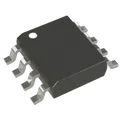
The RP2350, developed by Raspberry Pi Ltd, represents a significant advancement in the field of microcontrollers, building upon the foundation laid by its predecessor, the RP2040. This component is designed to cater to a wide range of applications requiring dual-core processing capabilities, with the option to switch between Dual Cortex-M33 or Hazard3 processors operating at up to 150 MHz. It features an extensive 520 kB of on-chip SRAM distributed across 10 independent banks, alongside 8 KB of one-time-programmable (OTP) storage. External memory interfaces are well-supported, with provisions for up to 16 MB of external QSPI flash/PSRAM, and an additional 16 MB accessible via an optional second chip-select, facilitating extensive code and data storage options. Security features are robust, including options for boot signing enforced by on-chip mask ROM, with key fingerprints stored in OTP, and hardware mitigations against fault injection attacks. The RP2350 also boasts a comprehensive set of peripherals, including 2x UARTs, 2x SPI controllers, 2x I2C controllers, 24x PWM channels, and a USB 1.1 controller with PHY for host and device support, among others. Programmable IO (PIO) state machines enhance its flexibility, enabling the implementation of custom peripherals. For developers, the RP2350 offers low-power operation modes and a built-in boot ROM that supports direct boot from external flash or OTP, serial boot from USB or UART, and secure boot with code signature enforcement. The device is available in QFN-60 (7x7 mm) and QFN-80 (10x10 mm) packages, with or without built-in flash, catering to diverse application requirements. This microcontroller is a compelling choice for sophisticated projects that demand high performance, extensive memory and peripheral support, and advanced security features.
62 Uses2 StarsSTC3115 Module
This project is a Battery Management System (BMS) built around STMicroelectronics' STC3115AIQT battery monitor IC. It uses I2C for communication, features alarm management, and supports battery charging. The power supply, battery connection points, and debug interface are facilitated through connectors. #project #Template #charger #monitor #reusable #module #batterycharger #template #bms #STC3115 #stm
13 Uses2 StarsWio-E5 Dev Kit
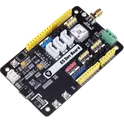
Wio-E5 Dev Kit embedded with Wio-E5 STM32WLE5JC LoRa module that supports Long Range protocol on the global frequency band. It provides full GPIOs, which support various data protocols and interfaces such as RS485, Grove, male/female headers, etc. This makes it user-friendly because it allows for easy and flexible connections to other devices or components. It would be a perfect choice for fast testing and rapid prototyping of your Long Range IoT projects.
8 Uses2 StarsTJA1059TKJ Module
This is a reference design for TJA1059TKJ Dual high-speed CAN transceiver with Standby mode. It offers advanced features, such as wake-up capability and high-speed data rates, making it suitable for automotive and industrial applications. #MCP25612FD #CANbus #transceiver #highspeed #automotive #referenceDesign #Module #CANbus #interface #transceiverCircuit #TJA1059TKJ #reusable #module #canbus #nxp #sublayout
5 Uses2 StarsSN65HVD230 Module
This SN65HVD230DR-based reference design is a CAN bus transceiver circuit that facilitates robust data communication across the CAN network. The design incorporates a variety of capacitors and resistors to maintain signal quality, and it employs a NUP2105L for voltage protection. This circuit is ideally suited for applications that need reliable data communication in automotive or industrial settings. #referenceDesign #Module #CANbus #interface #transceiverCircuit #SN65HVD230 #SN65HVD230DR #reusable #module #canbus #texas-instruments #sublayout
50 Uses2 StarsBLE Door and Window Sensor Module
This project is a BLE door and window sensor design that uses a U-blox BMD-330-A-R for BLE communication, a reed switch as a sensor, a multi-color LED for status display, and is powered by VBAT. There's also a programming interface and reset switch included. #WiFi #BLE #MCU #ReferenceDesign #Module #reusable #module #simple-embedded #ublox #sublayout
26 Uses2 StarsBlues - Note WiFi
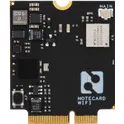
The Wi-Fi Notecard is a version of the Blues Notecard with Wi-Fi connectivity in place of cellular. The device is the same size as all cellular Notecards and follows the same m.2 pinout. What's more, the Wi-Fi Notecard uses the same powerful JSON-based programming interface, meaning that developers can easily add Wi-Fi as a deployment option for their IoT solutions, with minimal impact to their existing host applications. WiFi Version
73 Uses2 Stars