Microcontrollers
A microcontroller is a small, low-cost computer-on-a-chip that can be used to control electronic devices and systems. It consists of a central processing unit (CPU), memory, input/output (I/O) ports, and other peripherals integrated onto a single chip. Microcontrollers are commonly used in a wide range of applications, including automotive systems, home appliances, industrial automation, and consumer electronics. One of the key benefits of microcontrollers is their ability to interact with their environment through sensors and actuators, making them well-suited for use in embedded systems. These systems are often found in devices that require real-time control or data processing, such as medical equipment, aircraft, and factory automation systems. Flux.ai is home to the world's largest community-driven public library of microcontrollers, with footprints, symbols, datasheets, and simulation models for a wide range of devices. Whether you're a professional engineer looking for a specific microcontroller for your next project, or a hobbyist exploring the possibilities of microcontroller-based systems, Flux.ai has the resources you need to get started.
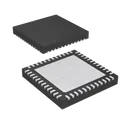
NRF52832-QFAB-R
The NRF52832-QFAB-R is a multiprotocol wireless system-on-chip manufactured by Nordic Semiconductor, designed for low-power Bluetooth and embedded wireless communication applications. This highly integrated microcontroller combines a powerful ARM Cortex-M4 processor with advanced wireless connectivity, low-energy operation, and extensive peripheral functionality within a compact surface-mount package. The device supports Bluetooth Low Energy, proprietary wireless protocols, and advanced embedded processing capabilities, making it suitable for IoT devices, wearable electronics, industrial sensors, medical equipment, smart home products, and battery-powered wireless systems. Its integrated radio architecture and optimized low-power design enable extended battery life while maintaining reliable wireless communication performance. The NRF52832-QFAB-R integrates flash memory, RAM resources, analog and digital peripherals, security features, and flexible GPIO functionality to simplify system-level design and reduce external component requirements. The device is widely used in wireless sensor networks, portable electronics, beacon systems, HID devices, and low-power connected embedded applications. Engineering Specification Device Type Wireless microcontroller system-on-chip Processor Architecture ARM Cortex-M4 embedded processor Wireless Connectivity Bluetooth Low Energy and proprietary wireless communication support Radio Features Integrated low-power wireless transceiver architecture Memory Resources Integrated flash memory and RAM Power Characteristics Ultra-low-power operation optimized for battery-powered devices Communication Interfaces SPI I2C UART PWM ADC GPIO NFC support Wireless Features Low-energy wireless networking and secure communication capability Security Features Hardware-based security and encryption support Processing Features Embedded DSP and floating-point processing capability Package Type QFN surface-mount package Mounting Style Surface mount technology Reliability Features Industrial-grade wireless and embedded system reliability Applications IoT devices Wearable electronics Wireless sensor nodes Smart home systems Medical electronics Industrial automation Beacon devices Portable electronics Human interface devices Embedded wireless systems Manufacturer Nordic Semiconductor #commonpartslibrary #nrf52 #nrf52832 #wirelessmcu #bluetoothlowenergy #iot #embeddedhardware #nordicsemi #wirelesscommunication #microcontroller #surfaceountcomponents #wearableelectronics #smarthome #industrialelectronics #lowpowerelectronics
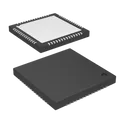
71 Uses0 StarsESP32-S3R8
IC RF TxRx + MCU Bluetooth, WiFi 802.11b/g/n, Bluetooth v5.0 2.412GHz ~ 2.484GHz 56-VFQFN Exposed Pad The ESP32-S3R8 is a high-performance wireless microcontroller system-on-chip manufactured by Espressif Systems. This device integrates dual-core processing, Wi-Fi connectivity, Bluetooth Low Energy communication, embedded memory resources, and advanced peripheral interfaces within a compact package optimized for embedded and IoT applications. The microcontroller is based on the Xtensa LX7 architecture and is designed to support edge computing, wireless communication, human-machine interfaces, audio processing, AI acceleration, and low-power connected systems. The ESP32-S3R8 includes integrated flash and RAM resources, advanced security functions, vector instruction acceleration, and extensive GPIO/peripheral capability for modern embedded development. The device is widely used in IoT devices, industrial automation systems, smart home equipment, wearable electronics, wireless sensor nodes, edge AI applications, USB-enabled embedded systems, and portable consumer electronics. Its integrated wireless functionality and high processing performance reduce external component count while simplifying system-level design for connected embedded platforms. Engineering Specification Device Type Wireless microcontroller system-on-chip Processor Architecture Dual-core Xtensa LX7 microcontroller architecture Wireless Connectivity Integrated Wi-Fi and Bluetooth Low Energy communication Processing Features High-performance embedded processing with vector instruction acceleration Memory Resources Integrated RAM and embedded memory architecture Communication Interfaces SPI I2C UART I2S USB PWM ADC GPIO interfaces Wireless Features Secure wireless networking and low-power communication support USB Capability Integrated USB communication and device functionality AI and DSP Features Vector instruction support for AI and digital signal processing workloads Security Features Hardware encryption and secure boot support Power Characteristics Low-power operating modes for battery-powered systems Package Type QFN surface-mount package Mounting Style Surface mount technology Applications IoT devices Wireless embedded systems Industrial automation Smart home electronics Edge AI applications Wearable devices Consumer electronics USB-enabled systems Sensor networks Embedded communication platforms Manufacturer Espressif Systems #commonpartslibrary #esp32 #esp32s3 #wirelessmcu #microcontroller #iot #embeddedhardware #wifi #bluetoothlowenergy #espressif #surfaceountcomponents #electronicsdesign #edgeai #wirelesscommunication #consumerelectronics
84 Uses0 StarsMAX3232ECWE+T
2/2 Transceiver Full RS232 16-SOIC The MAX3232ECWE+T is a dual-channel RS-232 transceiver manufactured by Analog Devices under the Maxim Integrated product family. This integrated circuit is designed to provide reliable bidirectional communication between TTL or CMOS logic-level devices and RS-232 serial communication interfaces. The device integrates charge-pump voltage converters and line drivers/receivers, enabling full RS-232 signal compliance using a single low-voltage power supply. The transceiver supports high-speed serial data communication while maintaining low power consumption and robust signal integrity. It is widely used in embedded systems, industrial automation equipment, communication interfaces, instrumentation systems, microcontroller platforms, portable electronics, and legacy serial communication applications. The MAX3232ECWE+T enables seamless voltage-level translation between modern low-voltage digital electronics and traditional RS-232 communication standards. Its compact surface-mount package and integrated functionality reduce external component requirements and simplify serial interface implementation in space-constrained electronic systems. Engineering Specification Device Type RS-232 transceiver interface IC Communication Standard RS-232 serial communication interface Channel Configuration Dual driver and dual receiver architecture Logic Compatibility TTL and CMOS logic-level interface support Voltage Conversion Integrated charge-pump voltage generation Data Communication Bidirectional asynchronous serial communication support Signal Characteristics Compliant RS-232 voltage-level transmission and reception Power Characteristics Low-voltage single-supply operation Data Rate Performance High-speed serial communication capability Protection Features Robust communication interface tolerance and stable signal operation Package Type SOIC surface-mount package Mounting Style Surface mount technology Applications Embedded systems Industrial automation Serial communication interfaces Microcontroller systems Instrumentation equipment Portable electronics Communication gateways Legacy serial devices Data acquisition systems RS-232 interface conversion Manufacturer Analog Devices / Maxim Integrated #commonpartslibrary #rs232 #serialcommunication #transceiver #interfaceic #maximintegrated #analogdevices #embeddedhardware #communicationinterfaces #surfaceountcomponents #electronicsdesign #industrialelectronics #microcontroller #datacommunication #signalconversion
71 Uses0 StarsSN74HC14APWR
Inverter IC 6 Channel Schmitt Trigger 14-TSSOP The SN74HC14APWR is a high-speed CMOS hex Schmitt-trigger inverter manufactured by Texas Instruments. This device integrates six independent inverting Schmitt-trigger gates designed to provide clean digital signal transitions from slow-rising or noisy input signals. It is commonly used for waveform shaping, signal conditioning, switch debouncing, pulse generation, and oscillator circuits in embedded systems and digital electronics. The device operates over a wide supply voltage range and offers low power consumption with high noise immunity characteristics. The Schmitt-trigger input architecture provides hysteresis, improving signal stability in noisy environments and ensuring reliable logic switching performance. The SN74HC14APWR is widely used in microcontroller interfaces, communication systems, industrial electronics, consumer devices, and general-purpose digital logic applications. Engineering Specification Device Type Hex Schmitt-Trigger Inverter Logic Function Inverting Schmitt-trigger gate Number of Channels Six independent inverter gates Logic Family High-Speed CMOS (HC) Supply Voltage Range Compatible with standard CMOS voltage levels Input Characteristics Schmitt-trigger inputs with hysteresis for noise immunity Output Characteristics CMOS push-pull outputs capable of driving standard digital loads Propagation Delay High-speed switching performance suitable for digital timing applications Power Consumption Low static and dynamic power consumption Noise Immunity High noise margin due to Schmitt-trigger input structure Operating Temperature Range Industrial operating temperature capability Package Type TSSOP surface-mount package Mounting Type Surface mount technology Applications Signal conditioning Switch debouncing Clock shaping Oscillator circuits Pulse generation Microcontroller interfacing Digital waveform cleanup Industrial control systems Manufacturer Texas Instruments #commonpartslibrary #integratedcircuit #logicic #schmitttrigger #hexinverter #digitalelectronics #embeddedhardware #signalconditioning #texasinstruments #cmoslogic #surfaceountcomponents #electronicsdesign
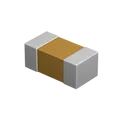
54 Uses0 StarsCL21B106KAYQNNE
10 µF ±10% 25V Ceramic Capacitor X7R 0805 (2012 Metric) CL21B106KAYQNNE is a multilayer ceramic capacitor from Samsung Electro-Mechanics designed for general-purpose decoupling, filtering, and energy storage applications in compact electronic systems. Built using advanced ceramic dielectric technology, this surface-mount capacitor provides stable capacitance characteristics, low equivalent series resistance, and reliable high-frequency performance suitable for modern digital and analog circuits. The component is commonly used in power supply filtering, noise suppression, signal coupling, and bypass applications across embedded systems, consumer electronics, communication devices, industrial controllers, and portable hardware platforms. Its compact package enables efficient use of PCB space while supporting automated high-density surface-mount assembly processes. This capacitor is optimized for stable operation under varying temperature and voltage conditions and is widely integrated into microcontroller power rails, RF circuits, sensor modules, and power management systems requiring dependable passive component performance. #commonpartslibrary #capacitor #mlcc #ceramiccapacitor #passivecomponents #powermanagement #embeddedhardware #electronicscomponents #surfacemountdevice #samsungelectromechanics
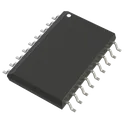
754 Uses0 StarsULN2803ADW
Bipolar (BJT) Transistor Array 8 NPN Darlington 50V 500mA Surface Mount 18-SOIC The ULN2803ADW is a high-voltage, high-current Darlington transistor array designed for interfacing low-level digital logic circuits with high-power loads. The device integrates eight NPN Darlington pairs with common-emitter outputs and suppression diodes for inductive load driving. It is commonly used in relay drivers, LED matrix control, solenoid actuation, motor drivers, lamp control, and industrial automation interfaces. The integrated clamp diodes enable direct driving of inductive loads without requiring additional external protection circuitry. The input stage is compatible with standard TTL and CMOS logic levels, making the device suitable for microcontroller, FPGA, and processor-based systems. The ULN2803ADW provides compact multi-channel switching capability in a wide-body SOIC surface-mount package optimized for automated assembly and high-density PCB layouts. Key Features Eight-channel NPN Darlington transistor array High-current sink driver outputs Integrated flyback suppression diodes TTL and CMOS compatible inputs Open-collector outputs Suitable for inductive and resistive loads High output voltage capability Parallel output operation supported for increased current handling Wide operating voltage range Surface-mount SOIC wide-body package Industrial and embedded control application support Electrical Characteristics Darlington transistor output configuration High DC current gain Low input current requirement Common-cathode clamp diode structure Open-collector output topology Logic-level input compatibility High-voltage output tolerance Multi-channel simultaneous switching support Applications Relay and solenoid drivers Stepper motor interfaces LED and lamp driving Industrial automation systems PLC output stages Embedded control systems Printer and actuator control Automotive electronics Logic buffer and level shifting applications Package Information Package Type: SOIC Wide Body Mounting Type: Surface Mount Multi-pin integrated driver package RoHS compliant options available #commonpartslibrary #integratedcircuit #driveric #darlingtonarray #powermanagement #industrialelectronics #embeddedhardware #relaydriver #motorcontrol #automationelectronics
82 Uses0 StarsMAX17048G+T10
Battery Battery Monitor IC Lithium Ion 8-TDFN-EP (2x2) The MAX17048/MAX17049 ICs are tiny, micropower current fuel gauges for lithium-ion (Li+) batteries in handheld and portable equipment. The MAX17048 operates with a single lithium cell and the MAX17049 with two lithium cells in series. The ICs use the sophisticated Li+ battery-modeling algorithm ModelGauge™ to track the battery relative state-ofcharge (SOC) continuously over widely varying charge and discharge conditions. The ModelGauge algorithm eliminates current-sense resistor and battery-learn cycles required in traditional fuel gauges. Temperature compensation is implemented using the system microcontroller. The ICs automatically detect when the battery enters a low-current state and enters low-power 3µA hibernate mode, while still providing accurate fuel gauging. The ICs automatically exit hibernate mode when the system returns to active state. On battery insertion, the ICs debounce initial voltage measurements to improve the initial SOC estimate, thus allowing them to be located on system side. SOC, voltage, and rate information is accessed using the I2C interface. The ICs are available in a tiny 0.9mm x 1.7mm, 8-bump wafer-level package (WLP), or a 2mm x 2mm, 8-pin TDFN package. ● MAX17048: 1 Cell, MAX17049: 2 Cells ● Precision ±7.5mV/Cell Voltage Measurement ● ModelGauge Algorithm • Provides Accurate State-of-Charge • Compensates for Temperature/Load Variation • Does Not Accumulate Errors, Unlike Coulomb Counters • Eliminates Learning • Eliminates Current-Sense Resistor ● Ultra-Low Quiescent Current • 3μA Hibernate, 23μA Active • Fuel Gauges in Hibernate Mode • Automatically Enters and Exits Hibernate Mode ● Reports Charge and Discharge Rate ● Battery-Insertion Debounce • Best of 16 Samples to Estimate Initial SOC ● Programmable Reset for Battery Swap • 2.28V to 3.48V Range ● Configurable Alert Indicator • Low SOC • 1% Change in SOC • Battery Undervoltage/Overvoltage • VRESET Alert ● I2C Interface ● 8-Bit OTP ID Register (Contact Factory) #CommonPartsLibrary #IntegratedCircuit #PowerManagement #Battery-management #MAX17048
528 Uses0 StarsCFR-25JB-52-680K
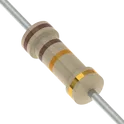
680 kOhms ±5% 0.25W, 1/4W Through Hole Resistor Axial Automotive AEC-Q200 Carbon Film The CFR-25JB-52-680K is a carbon film through-hole resistor designed for general-purpose electronic applications requiring stable resistance characteristics, reliable long-term performance, and cost-effective implementation. This resistor is commonly used in signal conditioning, voltage division, pull-up and pull-down networks, biasing circuits, and low-power analog or digital systems. Its axial leaded construction supports automated insertion and conventional through-hole assembly methods, making it suitable for consumer electronics, industrial controls, instrumentation, and embedded systems. The device utilizes carbon film resistive technology to provide dependable electrical performance with moderate noise characteristics and good environmental stability. The flame-retardant coating enhances mechanical durability and improves resistance against moisture and environmental exposure. The component is optimized for standard operating environments where compact size, stable operation, and economical design are required. Electrical Characteristics Resistance Value: 680 kΩ Resistance Tolerance: ±5% Resistor Technology: Carbon Film Rated Power Dissipation: 1/4 W Maximum Working Voltage: 250 V Maximum Overload Voltage: 500 V Temperature Coefficient: ±350 ppm/°C Insulation Resistance: High reliability insulation structure suitable for general electronic equipment Mechanical Characteristics Package Type: Axial Through-Hole Mounting Style: Through Hole Body Style: Cylindrical Flame-Retardant Coated Body Lead Material: Tin-Plated Copper Lead Configuration: Axial Leads for PCB insertion Environmental Characteristics Operating Temperature Range: −55°C to +155°C Moisture Resistance: Suitable for standard humidity environments Flame Resistance: Flame-retardant protective coating compliant with general safety requirements Applications Signal Conditioning Circuits Voltage Divider Networks Pull-Up and Pull-Down Resistors Industrial Control Electronics Consumer Electronic Products General Analog and Digital Circuitry Embedded Systems and Microcontroller Interfaces #commonpartslibrary #passivecomponents #resistor #carbonfilm #throughhole #axialresistor #powermanagement #analog #digital #industrialelectronics
13 Uses0 StarsMCP9808T-E/MS
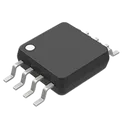
Temperature Sensor Digital, Local -40°C ~ 125°C 10 b 8-MSOP The MCP9808T-E/MS is a high-accuracy digital temperature sensor developed by Microchip Technology for precision thermal monitoring applications. The device communicates through a standard I²C-compatible serial interface and is optimized for low-power embedded systems requiring accurate ambient temperature measurement. It integrates internal temperature sensing, analog-to-digital conversion, programmable alert functionality, and configurable power management within a compact MSOP package. The sensor is designed for applications including industrial monitoring, consumer electronics, IoT devices, thermal management systems, medical instrumentation, and battery-powered portable equipment. Its low operating current and shutdown capability make it suitable for energy-efficient systems where thermal accuracy and minimal power consumption are critical. The device supports programmable temperature limits and interrupt generation for over-temperature events, enabling autonomous thermal supervision without continuous host processor intervention. The MCP9808T-E/MS maintains high measurement accuracy across a wide operating temperature range and offers stable digital output without requiring external calibration components. Electrical Characteristics Supply voltage operation supports low-voltage and standard logic systems. Low operating current enables efficient continuous monitoring. Shutdown mode significantly reduces power consumption during inactive periods. Digital I²C interface supports standard and fast communication modes. Integrated temperature conversion engine provides direct digital temperature output. Temperature Sensing Features High-accuracy ambient temperature measurement. Wide operating temperature range suitable for industrial environments. Programmable resolution for balancing conversion speed and precision. Configurable upper, lower, and critical temperature alert thresholds. Integrated hysteresis control for stable thermal event detection. Communication Interface I²C-compatible serial communication interface. Configurable slave addressing for multi-device bus operation. Supports read and write access to internal configuration registers. Compatible with common microcontrollers and embedded processors. Functional Features Integrated alert output for thermal event signaling. Programmable interrupt and comparator operating modes. Internal registers support temperature monitoring and device configuration. Power-on reset circuitry ensures predictable startup behavior. Device identification registers support system-level verification. Mechanical Characteristics Package type is MSOP with compact surface-mount footprint. Suitable for automated PCB assembly processes. RoHS-compliant and lead-free manufacturing. Typical Applications Industrial temperature monitoring systems. Portable battery-powered electronics. Embedded microcontroller systems. Thermal protection and supervision circuits. Consumer and IoT sensing devices. Medical and laboratory instrumentation. #CommonPartsLibrary #Sensor #Transducer #Temperature-Sensor #MCP9808
29 Uses0 Stars