Microcontrollers
A microcontroller is a small, low-cost computer-on-a-chip that can be used to control electronic devices and systems. It consists of a central processing unit (CPU), memory, input/output (I/O) ports, and other peripherals integrated onto a single chip. Microcontrollers are commonly used in a wide range of applications, including automotive systems, home appliances, industrial automation, and consumer electronics. One of the key benefits of microcontrollers is their ability to interact with their environment through sensors and actuators, making them well-suited for use in embedded systems. These systems are often found in devices that require real-time control or data processing, such as medical equipment, aircraft, and factory automation systems. Flux.ai is home to the world's largest community-driven public library of microcontrollers, with footprints, symbols, datasheets, and simulation models for a wide range of devices. Whether you're a professional engineer looking for a specific microcontroller for your next project, or a hobbyist exploring the possibilities of microcontroller-based systems, Flux.ai has the resources you need to get started.
TMS320F280049CPZQR
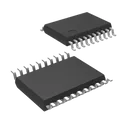
The TMS320F280049CPZQR is a 32-bit real-time microcontroller from Texas Instruments' C2000 Piccolo family, purpose-built for high-performance digital power control, motor control, and other real-time embedded control applications. The device is centered around TI's C28x digital signal processing core, a fixed- and floating-point architecture specifically optimized for the kind of fast, deterministic mathematical computation required in closed-loop control systems such as motor drives, digital power supplies, solar inverters, and electric vehicle subsystems. This particular part number represents the "C" variant within the TMS320F28004x family, which grants access to an integrated Configurable Logic Block, a flexible programmable logic resource that allows engineers to implement custom digital logic functions directly on-chip, such as specialized PWM waveform shaping, custom protocol interfaces, or glue logic that would otherwise require an external FPGA or discrete logic devices. This variant also provides access to a secure ROM library containing TI's InstaSPIN-FOC technology, a field-oriented motor control solution that significantly simplifies the development of sensorless motor control algorithms by handling much of the underlying control theory and tuning complexity in pre-validated, secure firmware. Beyond its core processing capabilities, the device integrates an extensive set of control-oriented peripherals that are characteristic of the C2000 platform, including high-resolution pulse-width modulation outputs, enhanced capture modules, and a multi-channel sigma-delta filter module that enables isolated current and voltage sensing across an isolation barrier without requiring a separate digital isolator and decoder chip. A dedicated Control Law Accelerator runs in parallel with the main processing core, offloading time-critical control loop calculations so that the main core remains free to handle communication, supervisory logic, and other system-level tasks, which is particularly valuable in systems running multiple simultaneous control loops. Connectivity on the device is supported through a broad set of industry-standard communication interfaces, allowing it to interface with a wide range of external sensors, communication networks, and host systems without requiring additional bridge components. The device also supports TI's Fast Serial Interface, a high-speed, robust communication protocol intended to simplify board-to-board and module-to-module communication in multi-controller systems, an increasingly common need in distributed power and motor control architectures. This part is qualified to automotive electronics reliability standards, making it suitable for deployment in vehicle power electronics, traction inverters, onboard chargers, and other automotive systems where component robustness, extended temperature operation, and rigorous quality screening are required. The device also supports TI's functional safety documentation framework, providing the architectural transparency and failure mode analysis resources needed by system designers building safety-critical control systems around the device. It is housed in a surface-mount package suited to dense power electronics board layouts and is supplied in tape-and-reel packaging for automated assembly. Spec Sheet Identification Part Number: TMS320F280049CPZQR Device Family: C2000 Piccolo, TMS320F28004x Manufacturer: Texas Instruments Variant: "C" type — with Configurable Logic Block and secure ROM/InstaSPIN-FOC access Functional Classification Device Type: 32-bit real-time microcontroller Core Architecture: C28x digital signal processing core Math Acceleration: Floating-Point Unit and Trigonometric Math Unit for control-loop computation Parallel Control Processing: Integrated Control Law Accelerator Programmable Logic: Configurable Logic Block (CLB) for custom digital logic functions Motor Control Library: Secure ROM with InstaSPIN-FOC sensorless field-oriented control Memory Program Memory Type: Embedded flash memory Memory Architecture: Supports field reprogramming for firmware updates and calibration data storage Control & Analog Peripherals PWM Capability: Frequency-independent, high-resolution PWM outputs Capture Module: Enhanced capture (eCAP) peripheral Isolated Sensing: Multi-channel sigma-delta filter module (SDFM) for isolated current/voltage sensing Analog Integration: Integrated high-speed analog-to-digital converters and internal digital-to-analog converters Programmable Gain: Integrated programmable gain amplifiers Communication Interfaces Standard Interfaces: SPI, SCI, I2C, LIN, and CAN connectivity Power Management Bus: Fully compliant PMBus support High-Speed Module Interface: Fast Serial Interface (FSI) for board-to-board and module-to-module communication Target Applications Application Domains: Industrial motor drives, solar inverters, digital power supplies, electric vehicle and transportation systems, sensing and signal processing Environmental & Qualification Automotive Qualification: AEC-Q100 qualified Functional Safety Support: Documentation and architecture support for functional safety-compliant system design Lifecycle Status: Active production Package Package Type: Surface-mount quad flat package style (LQFP) Mounting: Surface mount technology (SMT) Packaging Format Supply Format: Tape-and-reel, per part suffix designation #TMS320F280049 #C2000 #Piccolo #TexasInstruments #DigitalSignalController #RealTimeMCU #MotorControl #DigitalPowerControl #InstaSPINFOC #FieldOrientedControl #ConfigurableLogicBlock #AECQ100 #AutomotiveMCU #PowerElectronics #EmbeddedSystems #LQFP #SurfaceMount #SemiconductorIC #EngineeringSpec #ComponentLibrary #CommonPartsLibrary
3 Uses0 StarsIQS7222B102QNR
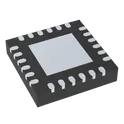
All details fully confirmed from Azoteq's official IQS7222B datasheet and multiple verified distributor sources. Here's the complete spec. Engineering Specification — IQS7222B102QNR Manufacturer: Azoteq (Pty) Ltd Device Family: IQ Switch® ProxFusion® Series — IQS7222B General Description The IQS7222B102QNR is a high-channel-count capacitive touch and proximity sensing controller integrated circuit manufactured by Azoteq, belonging to the ProxFusion series of intelligent human interface sensing devices. The IQS7222B is a sensor fusion device for various multi-button applications that is fully I²C compatible, with on-chip calculations that enable the IC to respond effectively even in the lowest-power modes. It represents an expanded-channel evolution within Azoteq's IQS7222 family, offering a substantially higher mutual capacitance channel count than the IQS7222A variant while maintaining the same ProxFusion design philosophy of combining sophisticated on-chip sensing intelligence with a minimal external component requirement and a compact surface-mount package. Molex The IQS7222B is a highly flexible ProxFusion device that can configure up to eighteen mutual capacitance buttons or up to eight self-capacitance buttons, with nine external sensor pad connections available in the QFN package variant. Alternatively, it can configure up to twenty mutual capacitance buttons or eighteen mutual capacitance buttons with a proximity wake-up function. This high degree of channel configurability makes the device adaptable to a very broad range of physical interface configurations, from simple multi-button panels to complex touch arrays with simultaneous proximity wake-up capability, all within a single fixed-footprint IC that does not require a change of device between product variants with different button counts. MolexAmazon Target applications for the IQS7222B include remote control user interfaces, home automation device user interfaces, and wireless speaker controls. These application domains share common requirements for robust touch detection through cosmetic overlay materials such as glass, plastic, or painted surfaces, reliable operation in environments where the device may be exposed to moisture or contamination, and power efficiency sufficient to support battery-powered or always-on operation without significantly impacting battery life. The device's on-chip power management architecture, which features automated system power modes for optimal response versus consumption, directly addresses these requirements by allowing the device to spend the majority of its time in a low-current sleep or ultra-low-power state while still waking promptly in response to proximity or touch events. MolexMolex Built-in basic functions include automatic tuning, noise filtering, debounce and hysteresis, and dual direction trigger indication. The automatic tuning capability, implemented through Azoteq's proprietary ATI algorithm, compensates for variations in electrode capacitance that arise from PCB manufacturing tolerances, overlay thickness variation, and environmental factors such as temperature and supply voltage drift. This self-calibration eliminates the need for individual unit factory calibration and ensures consistent touch sensitivity across the full production run of any product built around this device. The noise filtering and debounce functions further improve the reliability of touch event detection in electrically noisy environments, preventing false triggers from electrical interference or mechanical vibration that could otherwise cause spurious button events in poorly filtered designs. Molex Both mutual capacitance and self-capacitance designs are possible with the IQS7222B, giving system designers the flexibility to choose the sensing modality most appropriate for their electrode layout and overlay configuration. Mutual capacitance sensing offers better noise immunity and the ability to detect touch through thicker overlay materials, while self-capacitance sensing allows a simpler single-electrode layout per button with potentially higher raw sensitivity. The I²C communication interface supports IRQ/RDY signaling at speeds up to Fast-Plus mode, providing efficient, low-latency event notification to the host microcontroller without requiring continuous polling of the device. The "QNR" suffix in the part number designates the QFN twenty-pin package variant, which offers the maximum external pad count for mutual capacitance configurations. MolexMolex Spec Sheet Identification Part Number: IQS7222B102QNR Device Family: IQ Switch ProxFusion Series — IQS7222B Manufacturer: Azoteq (Pty) Ltd Part Number Decode IQS7222B: Base device family, B-variant expanded channel count 102: Firmware/configuration variant designation QNR: QFN twenty-pin package, tape-and-reel Functional Classification Device Type: Multi-channel capacitive touch and proximity sensing controller IC Sensing Architecture: ProxFusion sensor fusion engine with on-chip processing Application Class: Multi-button, slider, and wheel human interface controller Channel Configuration Mutual Capacitance Buttons: Up to twenty configurable buttons Mutual Capacitance with Proximity Wake-Up: Up to eighteen mutual capacitance buttons with simultaneous proximity wake function Self-Capacitance Buttons: Up to eight self-capacitance buttons External Sensor Pad Connections: Nine pads available in QFN package Sensing Modalities Mutual Capacitance: Full channel array for high noise immunity and overlay penetration Self-Capacitance: Simplified single-electrode per button layout option Proximity Detection: Pre-touch proximity wake-up capability Built-In Processing Functions Automatic Tuning: Proprietary ATI algorithm for self-calibration and baseline normalization Noise Filtering: Integrated digital filtering for EMI and environmental noise rejection Debounce and Hysteresis: Per-channel configurable debounce and release hysteresis Dual Direction Trigger: Positive and negative delta event detection Host Interface Communication Protocol: I²C fully compatible Speed Grade: Up to Fast-Plus mode Event Signaling: IRQ/RDY interrupt output for host notification I²C Address: Configurable; additional address options available on special request Power Management Operating Modes: Active sensing, idle, and ultra-low-power modes Automated Power Mode Control: System-managed transitions for optimized response versus current consumption ULP Wake Capability: Proximity or touch event wake-up from ultra-low-power state Layout & Application Notes VREG Decoupling: Capacitor required at each VREG pin, placed as close as possible to IC Tx Series Resistance: Nominal series resistance recommended on Rx electrodes to reduce EMI coupling ESD Rating: Pins rated to high HBM ESD performance per JEDEC JEP155 Environmental & Qualification RoHS Compliance: Yes Lifecycle Status: Active production Package Package Type: QFN — Quad Flat No-Lead, twenty-pin Package Designation: QNR variant per Azoteq ordering suffix Mounting Method: Surface mount technology (SMT) Packaging Format Supply Format: Tape-and-reel Target Applications Remote control user interfaces Home automation device controls Wireless speaker and audio device interfaces Multi-button consumer appliance panels IoT device touch interfaces Industrial HMI panels with overlay #IQS7222B #IQS7222B102QNR #Azoteq #ProxFusion #IQSwitch #CapacitiveTouchController #MutualCapacitance #SelfCapacitance #ProximityController #MultiButtonHMI #TouchSensor #ATICalibration #SmartHMI #HomeAutomation #RemoteControl #WirelessSpeaker #IoTDesign #LowPowerSensing #QFN20 #SurfaceMount #EmbeddedHMI #EngineeringSpec #ComponentLibrary #CommonPartsLibrary #RoHSCompliant
2 Uses0 StarsBC847
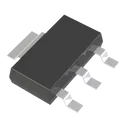
All details fully confirmed across multiple authoritative sources including Nexperia, ROHM, Farnell, and others. Here's the complete spec. Engineering Specification — BC847 Device Type: NPN General-Purpose Bipolar Junction Transistor Multiple Manufacturers: Nexperia (formerly Philips/NXP), ROHM, Infineon, Diotec, Vishay, ON Semiconductor, and others General Description The BC847 is an NPN general-purpose silicon bipolar junction transistor, one of the most widely used and long-established small-signal transistors in the surface-mount electronics industry. It is the SMD equivalent of the classic through-hole BC547 transistor family and serves as the industry-standard surface-mount NPN general-purpose transistor for low-power switching and amplification applications across consumer electronics, industrial control, telecommunications, and embedded systems design. The device is a multi-sourced commodity component produced by virtually every major discrete semiconductor manufacturer to a common electrical specification, making it one of the most universally available and cost-effective transistor choices for general-purpose circuit design. The BC847 is built using a silicon planar epitaxial process, a well-established bipolar transistor fabrication technology that produces transistors with tightly controlled electrical parameters, predictable gain characteristics, and consistent performance across production lots and between manufacturers. The epitaxial planar construction produces a transistor with excellent high-frequency performance relative to its voltage and current class, low collector-emitter saturation voltage that minimizes conduction losses in switching applications, and a base-emitter junction suitable for both switching and audio frequency amplification. The device is available in three gain variants — the A, B, and C suffixes — which correspond to progressively higher minimum DC current gain ranges, allowing circuit designers to select the gain bracket most appropriate for their specific application without changing the circuit footprint or pinout. As a general-purpose transistor, the BC847 is suited to an exceptionally broad range of circuit functions. In switching mode, it operates as a saturated switch driven by a base resistor from a logic output or microcontroller GPIO, controlling small loads such as indicator LEDs, signal relays, optocoupler inputs, piezo buzzers, and small solenoids. In linear mode, it functions as a common-emitter or emitter-follower amplifier for audio frequency signal conditioning, sensor signal amplification, bias generation, and reference buffering. Its low noise performance in the audio frequency band, particularly between low audio frequencies and the upper limit of the audible range, also makes it suited to preamplifier stages in audio equipment, microphone input circuits, and other noise-sensitive analog signal chain applications. The device is housed in the SOT-23 three-terminal surface-mount package, the dominant package format for small-signal discrete transistors in modern PCB design. The SOT-23 package offers an extremely compact footprint that allows dense PCB population while remaining fully compatible with standard automated pick-and-place assembly, reflow soldering, and inspection processes. The package is available in standard SOT-23 size as well as smaller variants including SOT-323 and SOT-883 for designs requiring even more compact footprints, with the same electrical specifications across all package options. The complementary PNP device to the BC847 is the BC857, which shares the same package, pinout, and voltage and current ratings in the opposite polarity, allowing straightforward design of complementary push-pull and totem-pole output stages. Spec Sheet Identification Part Number: BC847 (suffixes A, B, C denote gain groups) Device Family: BC847 series, NPN general-purpose transistor Manufacturer: Multi-sourced commodity part — Nexperia, ROHM, Infineon, Diotec, Vishay, ON Semiconductor, and others PNP Complement: BC857 Functional Classification Device Type: NPN bipolar junction transistor (BJT) Construction: Silicon planar epitaxial Application Class: General-purpose switching and amplification Gain Variants BC847A: Lowest gain range group BC847B: Mid gain range group BC847C: Highest gain range group Absolute Maximum Ratings Collector-Emitter Voltage: Standard low-voltage small-signal transistor class Collector-Base Voltage: Slightly higher than collector-emitter rating Emitter-Base Voltage: Standard emitter-base reverse voltage class Collector Current: Low continuous current class, suitable for signal and small load switching Peak Collector Current: Higher pulsed current capability Total Power Dissipation: Low power dissipation class, standard for SOT-23 package Operating Junction Temperature: Extended range, standard silicon transistor class Electrical Characteristics DC Current Gain: Variant-dependent, high gain class for general-purpose applications Collector-Emitter Saturation Voltage: Low saturation voltage for efficient switching Base-Emitter Saturation Voltage: Standard silicon junction voltage class Collector Cutoff Current: Low leakage class Transition Frequency: High-frequency capable for audio and signal switching applications Noise Figure: Low noise in audio frequency band Package & Mechanical Primary Package: SOT-23 (TO-236AB) Alternate Packages: SOT-323 (SC-70), SOT-883 (DFN1006-3) — same electrical specs Mounting Method: Surface mount technology (SMT) Pin Configuration: Base — Pin 1, Emitter — Pin 2, Collector — Pin 3 Target Applications Logic-level switching of LEDs, relays, and small loads Audio frequency signal amplification and preamplification Sensor signal conditioning and buffering Emitter follower and bias circuits Optocoupler and interface drive circuits General-purpose analog and digital circuit design Environmental & Qualification RoHS Compliance: Yes, lead-free across all manufacturer sources Flammability Rating: UL94 V-0 package material Packaging Supply Format: Tape-and-reel, per manufacturer standard packaging #BC847 #BC847B #BC847C #NPNTransistor #BipolarTransistor #BJT #SmallSignalTransistor #GeneralPurposeTransistor #SOT23 #SurfaceMountTransistor #SwitchingTransistor #AmplifierTransistor #LowPowerTransistor #SiliconEpitaxial #BC857Complement #DiscreteComponent #AnalogCircuit #EmbeddedSystems #EngineeringSpec #ComponentLibrary #CommonPartsLibrary #RoHSCompliant #CommodityPart
14 Uses0 StarsSSQ-110-03-T-D
20 Position Receptacle Connector 0.100" (2.54mm) Through Hole Tin The SSQ-110-03-T-D is a through-hole dual-row socket strip receptacle connector manufactured by Samtec, designed for board-to-board and pin header mating applications using the industry-standard pitch spacing that has been dominant in through-hole PCB interconnect design for decades. It belongs to Samtec's SSQ series, a family of square-post socket strip connectors that accept standard square-pin headers and are widely used across prototyping, instrumentation, test and measurement, embedded systems, industrial control, and general-purpose PCB stacking applications. As a socket strip of the receptacle gender, the SSQ-110-03-T-D is intended to receive a mating male pin header, creating a reliable and separable board-to-board or wire-to-board connection. The dual-row configuration provides a higher contact density within a given board length than a single-row socket, which is why dual-row socket strips in this pitch class are extensively used in applications such as microcontroller and single-board computer expansion connectors, module-to-baseboard interfaces, and other designs where a significant number of signal, power, or ground connections must be made across a single separable connector interface. The connector features square solder tails for through-hole PCB mounting, with the "-T" suffix in the part number designating the square post tail style, which provides a well-defined mechanical footprint and reliable solder joint formation in wave solder and hand-solder assembly processes. The "-D" suffix indicates the dual-row configuration. Contact material is phosphor bronze, a widely used spring-contact alloy chosen for its combination of good electrical conductivity, excellent spring properties that maintain consistent contact force across many mating cycles, and resistance to stress relaxation over time. The contacts are finished with matte tin plating over nickel underplate, providing a solderable, cost-effective contact surface suitable for the majority of general-purpose signal and low-power applications for which this connector class is typically used. The insulator body is molded from black liquid crystal polymer, a high-performance engineering thermoplastic that offers the high dimensional stability, excellent electrical insulation properties, and high-temperature resistance needed to withstand wave soldering and reflow-adjacent thermal exposure during PCB assembly. The material also carries a UL94 V-0 flammability rating, reflecting its self-extinguishing behavior in the event of an ignition source, which is required or preferred in many end-product regulatory compliance frameworks. The SSQ series is widely used in conjunction with Samtec's TSW series male pin headers as a complementary mating pair, and the connector is compatible with a broad range of standard square-pin headers from other manufacturers that conform to the same pitch and pin geometry, making it a versatile choice for general-purpose through-hole header applications. Spec Sheet Identification Part Number: SSQ-110-03-T-D Series: SSQ Manufacturer: Samtec, Inc. Connector Type / Configuration Type: Socket strip receptacle Gender: Female (receptacle) Row Configuration: Dual row Orientation: Straight, vertical Mounting Method: Through-hole, solder tail Contact & Material Properties Contact Material: Phosphor bronze Contact Finish — Mating Zone: Matte tin over nickel Contact Finish — Post/Tail: Tin Contact Type: Forked socket, square post acceptance Post/Tail Style: Square solder tail Mechanical Specifications Contact Pitch: Standard pitch class, widely used through-hole spacing Profile Height: Standard SSQ series mated height class Insulator Color: Black Insulator Material: Liquid crystal polymer (LCP) Flammability Rating: UL94 V-0 Body Orientation: Straight Electrical Ratings Current Rating Per Contact: Mid-range per-pin current class Voltage Rating: High AC and DC voltage rating class for general-purpose signal use Mating Cycles: Rated for repeated mate/unmate cycles Environmental & Qualification Operating Temperature Range: Extended range, suitable for industrial environments RoHS Compliance: Yes Export Classification: EAR99 Mating Compatibility Mates With: Samtec TSW series male pin headers and compatible standard square-pin headers from other manufacturers Application Note: Suitable for board-to-board stacking, module-to-baseboard interfaces, SBC expansion connectors, and general-purpose through-hole header applications Packaging Supply Format: Bulk packaging #SSQ110 #Samtec #SocketStrip #DualRowConnector #ThroughHoleConnector #PCBReceptacle #PinHeader #BoardToBoard #FemaleSockets #PhosphorBronze #LCP #UL94V0 #EmbeddedSystems #Prototyping #InstrumentationConnector #GeneralPurposeConnector #ConnectorDatasheet #EngineeringSpec #ComponentLibrary #CommonPartsLibrary #RoHSCompliant #PCBDesign #CommonPartsLibrary #Connector #Header #Receptacle #Female-Socket #SSQ
29 Uses0 StarsHSCDRRN001ND2A5
Pressure Sensor ±0.04PSI (±0.25kPa) Differential Male - 0.08" (1.93mm) Tube, Dual 12 b 8-DIP (0.524", 13.30mm), Dual Ports, Same Side Excellent — full picture confirmed from multiple sources. The HSCDRRN001ND2A5 is a TruStability HSC Series high accuracy digital I²C sensor with address 0x28, DIP package, dual radial barbed ports on the same side, differential pressure type, rated for ±1 inH₂O, operating on a 5.0 Vdc supply. Here's the complete spec. HIROSE Electric Engineering Specification — HSCDRRN001ND2A5 Manufacturer: Honeywell Sensing and Productivity Solutions Device Family: TruStability HSC Series General Description The HSCDRRN001ND2A5 is a high-accuracy, fully compensated and amplified differential pressure sensor manufactured by Honeywell, belonging to the TruStability HSC Series of board-mount pressure sensing devices. The device is built around a piezoresistive silicon sensing element housed within a ceramic package, combining a mature and proven sensing principle with advanced on-chip signal conditioning that makes the device ready for direct interfacing with a host microcontroller or processor without requiring extensive external analog signal processing circuitry. The defining characteristic of the TruStability HSC series, and of this device in particular, is its fully calibrated and temperature-compensated output, achieved through an integrated application-specific integrated circuit that corrects for sensor offset, sensitivity drift, temperature effects, and pressure nonlinearity across the device's rated operating range. This level of factory compensation allows the device to maintain its specified accuracy across the full compensated temperature range without requiring individual board-level calibration, significantly simplifying the design and production process for equipment that relies on precise low-pressure measurement. This particular configuration uses a digital I²C output interface, communicating pressure readings as high-resolution digital data words over a standard two-wire bus using a fixed I²C device address. This digital output makes it highly compatible with modern embedded system architectures where analog-to-digital conversion resources may be limited or where noise immunity and data integrity over longer trace runs are priorities. The device offers both high resolution and high accuracy within a tight total error band, making it suitable for applications where small differential pressure differences must be resolved reliably over time and temperature variation. The sensor is configured as a differential pressure measurement device, meaning it produces an output proportional to the difference in pressure between its two pneumatic ports rather than to absolute or gauge pressure relative to atmosphere. This makes it particularly well suited to airflow measurement, filter condition monitoring, liquid level detection, spirometry and respiratory measurement, HVAC duct pressure sensing, and other applications where the pressure difference across two points in a system is the relevant physical quantity. The device is housed in a through-hole dual in-line package with two radial barbed pneumatic port fittings located on the same side of the package body, allowing small-bore flexible tubing to be connected directly to each port without requiring additional adapter fittings. The barbed port design provides a secure, friction-held tube connection that resists accidental disconnection during normal handling and operation. The package is designed for standard through-hole PCB mounting, and the device is intended for use with non-corrosive, non-ionic dry gases only, consistent with the silicon and ceramic wetted materials used in its construction. Spec Sheet Identification Part Number: HSCDRRN001ND2A5 Series: TruStability HSC Series Manufacturer: Honeywell Sensing and Productivity Solutions Functional Classification Device Type: Board-mount piezoresistive silicon pressure sensor Sensing Type: Differential pressure Compensation: Fully calibrated and temperature compensated via integrated ASIC Accuracy Class: High accuracy, tight total error band class Output Interface Output Type: Digital I²C I²C Device Address: Fixed address 0x28 Output Resolution: High-resolution digital pressure word Applicable Interface Standards: I²C-compatible digital output Pressure Port Configuration Port Style: Dual radial barbed ports Port Orientation: Same side, both ports on the same face of the package Tubing Connection: Direct small-bore flexible tube connection via barbed fittings Media Compatibility: Non-corrosive, non-ionic dry gases only Pressure Characteristics Pressure Type: Differential Pressure Range: Very low differential pressure class, sub-inch water column range Overpressure Capability: Rated overpressure withstand above operating range Power Supply Supply Voltage: Standard logic-level supply rail class Environmental & Mechanical Operating Temperature Range: Commercial/industrial extended temperature range Compensated Temperature Range: Subset of the full operating temperature range, within which calibrated accuracy is maintained Mount Type: Through-hole Package: DIP (Dual In-line Package), standard pin pitch Application Suitability Target Applications: Airflow measurement, HVAC duct pressure sensing, filter monitoring, respiratory and spirometry equipment, liquid level detection, low-pressure process monitoring Environmental & Qualification RoHS Compliance: Yes Media Restriction: Dry, non-corrosive, non-ionic gases only; no liquid media on Port #HSCDRRN001ND2A5 #Honeywell #TruStability #HSCSeries #PressureSensor #DifferentialPressure #PiezoresistiveSensor #I2CSensor #BoardMountSensor #LowPressureSensor #AirflowSensor #HVACSensor #RespiratoryMedical #ThroughHole #DIPPackage #CompensatedSensor #TemperatureCompensated #SensorDatasheet #EngineeringSpec #ComponentLibrary #CommonPartsLibrary #RoHSCompliant
0 Uses0 StarsLAN9254-I/JRX
Ethernet Controller 10/100 Base-T/TX Bus Interface 80-TQFP-EP (12x12) The LAN9254-I/JRX is an EtherCAT SubDevice (slave) controller developed by Microchip Technology, designed to serve as the communication backbone for industrial automation devices participating in an EtherCAT network. The device integrates dual Ethernet physical layer transceivers directly on-chip, eliminating the need for external PHY components and simplifying the design of EtherCAT-enabled equipment such as servo drives, sensors, I/O modules, and other field devices used in real-time industrial control systems. Architecturally, the controller can operate as either a two-port or three-port node, depending on the network topology required. In its standard configuration it functions as a two-port device supporting daisy-chain connections typical of EtherCAT line topologies. When configured as a three-port device, it gains an additional management interface port that can connect to an external PHY or to another LAN9254, enabling star or tree network topologies and allowing the device to act as a branching point within a larger EtherCAT installation. Each integrated Ethernet PHY operates in full-duplex mode and supports automatic crossover detection, so the device can use either straight-through or crossover cabling without requiring manual configuration. Beyond pure protocol handling, the LAN9254 includes a substantial set of general-purpose digital input and output lines, allowing it to be used in simple field devices without requiring a separate microcontroller. For more complex applications, the device communicates with an external host processor through an integrated host bus interface that behaves like simple memory-mapped SRAM, supporting both 8-bit and 16-bit data widths along with multiple byte-ordering conventions, which makes it straightforward to interface with a wide range of microcontroller and microprocessor architectures. Internally, dual process data RAM buffers manage the exchange of real-time process data between the host application and the EtherCAT communication engine, while a dedicated interrupt line notifies the host of relevant internal events. A key feature of the device is its built-in distributed clock mechanism, which provides high-precision timing synchronization across all nodes in an EtherCAT network. This capability is essential for motion control and other applications where multiple devices must act in tight temporal coordination. The controller also provides configurable status indication through standard network activity and link LEDs, along with optional error and run-state indicators that give visibility into the health and operational state of the device at a glance. Power architecture on the LAN9254 is simplified through an integrated linear regulator, allowing the device to be operated from a single primary supply rail while internally generating the lower voltage needed for its core logic. This reduces the external power supply complexity that would otherwise be required to support separate core and I/O voltage domains. The "-I" designation on this particular part number indicates an industrial-grade temperature rating, making it suitable for deployment in factory floor and other demanding industrial environments where extended thermal range and long-term reliability are required. The device is housed in a surface-mount package consistent with dense industrial control board layouts and is compliant with RoHS material restrictions. Spec Sheet Identification Part Number: LAN9254-I/JRX Device Family: LAN9254 Manufacturer: Microchip Technology Functional Classification Device Type: EtherCAT SubDevice (slave) controller Network Role: Two/three-port configurable node Integrated PHYs: Dual Ethernet physical layer transceivers, on-chip Auto-MDIX Support: Yes, supports direct and crossover cabling Communication & Protocol Features Protocol: EtherCAT Topology Support: Daisy-chain (line), star, and tree topologies Additional Port Mode: Optional third port for branching/tap configurations Clock Synchronization: Integrated distributed clock for high-precision timing Host Interface Interface Type: SRAM-like host bus interface Data Width Support: Selectable bit-width host bus operation Endianness Support: Multiple byte-ordering modes Process Data Handling: Dual process data RAM buffers Interrupt Support: Configurable host interrupt line Digital I/O General-Purpose I/O: Integrated digital I/O lines for microcontroller-less operation Standalone Mode: Supports operation without external microcontroller for simple device designs Power Architecture Supply Configuration: Single primary supply rail Internal Regulation: Integrated linear regulator for core voltage generation Status Indication LED Support: Standard run and link/activity indicators per port Optional Indicators: Configurable error and run-state status indicators Environmental & Qualification Temperature Grade: Industrial ("-I" suffix) RoHS Compliance: Yes Package Package Type: Surface-mount, quad flat package style Mounting: Surface mount technology (SMT) Packaging Format Supply Format: Tape-and-reel, per part suffix designation #LAN9254 #Microchip #EtherCAT #SlaveController #SubDeviceController #IndustrialEthernet #IndustrialAutomation #MotionControl #EmbeddedSystems #FieldDevice #DigitalIO #HostBusInterface #DistributedClock #TQFP #RoHSCompliant #IndustrialGrade #EngineeringSpec #ComponentLibrary #CommonPartsLibrary #SemiconductorIC
1 Uses0 StarsBNO085 Adafruit Breakout Board
BNO085 - Accelerometer, Gyroscope, Magnetometer, 3 Axis Sensor Evaluation Board The BNO085 Evaluation Board is a development platform designed to evaluate and prototype applications using the BNO085 9-axis Inertial Measurement Unit (IMU). It integrates a 3-axis accelerometer, 3-axis gyroscope, and 3-axis magnetometer with an onboard ARM Cortex-M0+ processor running advanced sensor fusion algorithms. The board provides accurate real-time orientation, motion tracking, rotation vectors, and heading information while offloading complex sensor fusion calculations from the host microcontroller. It is widely used in robotics, AR/VR systems, drones, motion tracking devices, navigation systems, and IoT applications. The evaluation board typically supports I²C, SPI, and UART communication interfaces, enabling easy integration with various embedded platforms. Key Features 9-DOF motion sensing with integrated accelerometer, gyroscope, and magnetometer Built-in ARM Cortex-M0+ processor for onboard sensor fusion Real-time orientation output including quaternions, Euler angles, and rotation vectors Supports I²C, SPI, and UART communication interfaces High-speed motion tracking with low latency operation Dynamic calibration for improved accuracy and stability Integrated motion detection features such as step counting and activity tracking Configurable sensor data rates and timestamped sensor reports Low-power operation suitable for battery-powered applications Ideal for robotics, VR/AR, wearable devices, navigation, and industrial motion sensing #BNO085 #IMU #9DOF #SensorFusion #MotionTracking #OrientationSensor #Robotics #EmbeddedSystems #IoT #WearableTech #ARVR #Navigation #EvaluationBoard #Accelerometer #Gyroscope #Magnetometer #commonpartslibrary #developmentboard #accelerometer
202 Uses0 StarsTSW-118-07-G-S
Connector Header Through Hole 18 position 0.100" (2.54mm) # TSW-118-07-G-S ## General Description The TSW-118-07-G-S is a through-hole board-to-board and wire-to-board interconnect header manufactured by Samtec. It belongs to the TSW series of standard terminal strip headers designed for reliable signal transmission in electronic assemblies, embedded systems, industrial controls, telecommunications equipment, instrumentation, and general-purpose printed circuit board applications. The component features precision-machined contacts, robust mechanical construction, and compatibility with a wide range of mating connectors. Its design supports secure electrical connections while maintaining excellent durability during repeated mating cycles and long-term operation in demanding environments. ## Key Features ### Mechanical Characteristics * Through-hole mounting configuration * Single-row terminal strip header design * Straight vertical orientation * Precision-machined contact system * High-reliability board-level interconnection ### Contact System * Gold-plated contact surface * Enhanced conductivity and signal integrity * Corrosion-resistant contact finish * Suitable for repeated insertion and removal cycles ### Electrical Characteristics * Low contact resistance * Reliable signal transmission * Suitable for low-power and signal-level applications * Stable electrical performance across operating conditions ### Material Construction * High-temperature thermoplastic insulator * Durable metallic contact structure * RoHS-compliant materials * Lead-free manufacturing compatibility ### Environmental Characteristics * Industrial-grade operating capability * Resistant to mechanical wear during mating cycles * Suitable for automated and manual assembly processes ### Application Areas * Embedded Systems * Microcontroller Development Boards * Industrial Automation Equipment * Telecommunications Hardware * Test and Measurement Instruments * Medical Electronics * Data Acquisition Systems * Prototyping Platforms * Consumer Electronic Devices * PCB Interconnection Applications ### Compliance * RoHS Compliant * Lead-Free Compatible * Industry-standard connector footprint ## Manufacturer Samtec Inc. ## Product Family TSW Series Terminal Strip Headers #Samtec #TSW11807GS #TerminalStripHeader #PCBConnector #BoardToBoardConnector #WireToBoardConnector #ElectronicsComponents #EmbeddedSystems #IndustrialElectronics #InterconnectSolutions #ThroughHoleConnector #ElectronicDesign #HardwareEngineering #PCBAssembly #CommonPartsLibrary #Connector #Header #TSW pin header 1x18 2.54mm
18 Uses0 Stars