Interface ICs
An interface IC is a type of integrated circuit that is designed to facilitate communication between two devices or systems. These devices are commonly used in electronic systems to enable the transfer of data and control signals between different components or subsystems. Some common use cases for interface ICs include connecting microcontrollers to peripherals such as sensors or displays, linking multiple processors together in a network, and enabling communication between devices using different communication protocols. Flux.ai has the world's largest community-driven public library of interface ICs, with footprints, symbols, datasheets, and simulation models. This library is a valuable resource for engineers and designers who need access to accurate and up-to-date information on these important components. Whether you are working on a new design project or simply looking to learn more about interface ICs, Flux.ai is an excellent resource to help you find the information you need.
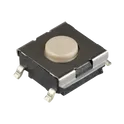
B3FS-1002P
Tactile Switch SPST-NO Top Actuated Surface Mount The B3FS-1002P is a compact, surface-mount tactile switch designed for low-profile input applications. It provides a momentary contact mechanism with a distinct tactile feedback, making it suitable for user interface controls in consumer electronics, industrial devices, and compact embedded systems. The switch features a sealed construction for improved reliability and is optimized for automated PCB assembly processes. Mechanical Characteristics Mounting Type: Surface Mount (SMD) Actuator Style: Top push Actuator Height: Low profile Outline: Rectangular compact body Terminal Type: Gull-wing terminals Sealing: Dust-resistant (sealed construction) Electrical Characteristics Switch Type: Single Pole Single Throw (SPST) Contact Configuration: Normally Open (NO) Rated Voltage: Low voltage DC applications Rated Current: Suitable for signal-level switching Contact Resistance: Low initial contact resistance Insulation Resistance: High insulation resistance between terminals Operating Characteristics Operating Force: Standard tactile force (manufacturer-defined variant) Travel Distance: Short stroke tactile action Operating Life: High durability for repeated actuation cycles Bounce Time: Minimal contact bounce for reliable switching Environmental Characteristics Operating Temperature Range: Wide operating range suitable for consumer and industrial use Storage Temperature Range: Standard electronic component storage conditions Humidity Resistance: Designed to withstand typical ambient humidity conditions Material & Construction Actuator Material: High-strength polymer Housing Material: Heat-resistant plastic Contact Material: Metal alloy with surface plating for durability Terminal Finish: Solderable finish compatible with reflow soldering Packaging Information Packaging Type: Tape and reel Assembly Compatibility: Fully compatible with automated pick-and-place and reflow processes Applications Consumer electronics (keypads, remote controls) Industrial control panels Portable devices Embedded system user interfaces Wearable and compact electronics #commonpartslibrary #switch #tactile
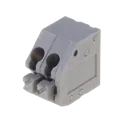
1.6k Uses0 StarsDG250-3.5-02P-11-00A(H)
PCB spring terminal block for wire-to-board connections, featuring a 2-position, 3.5 mm pitch interface with a 45° wire entry and push-in spring connection. It is rated for up to 10 A and 320 V (IEC), accepts 0.2–1.5 mm² (22–16 AWG) conductors, supports PCB through-hole soldering, and operates over a −40°C to +105°C temperature range. #commonpartslibrary #connector #terminalblock #tht
2.3k Uses0 StarsUSB4215-03-A
USB-C (USB TYPE-C) USB 2.0 Receptacle Connector 24 (16+8 Dummy) Position Surface Mount, Right Angle; Through Hole USB Type-C receptacle 16 pin USB2.0 The USB4215-03-A is a USB Type-C receptacle connector designed for USB 2.0 applications. It features a 16-pin configuration supporting reversible plug orientation with standard USB 2.0 differential data lines and configuration channel (CC) pins. The connector is intended for surface-mount PCB assembly with through-hole shell stakes for enhanced mechanical strength. It is widely used in compact embedded systems for power delivery, charging interfaces, and basic data communication. Key Features USB Type-C receptacle (USB 2.0 compliant) 16 functional pins (no SuperSpeed support) Reversible plug orientation Surface-mount contacts with through-hole shell tabs Compact, low-profile design High insertion cycle durability Suitable for automated assembly Electrical Characteristics Rated Current: VBUS: up to 5.0 A (depending on PCB design and cable) Signal pins: 0.25 A max Rated Voltage: 20 V DC max Contact Resistance: ≤ 40 mΩ Insulation Resistance: ≥ 100 MΩ Dielectric Withstanding Voltage: 100 V AC Mechanical Characteristics Mounting Type: Surface Mount (SMT) with Through-Hole Shield Tabs Number of Positions: 16 Mating Cycles: 10,000 cycles (typical) Insertion Force: 5–20 N Extraction Force: 8–20 N Material Specifications Contacts: Copper Alloy Contact Plating: Gold over Nickel Housing: High-temperature thermoplastic (UL94V-0) Shell: Stainless Steel Environmental Characteristics Operating Temperature Range: -25°C to +85°C Storage Temperature Range: -40°C to +85°C RoHS Compliant: Yes Halogen Free: Yes Pin Configuration (USB 2.0 Type-C) VBUS (Power) GND (Ground) D+ / D− (USB 2.0 differential pair) CC1 / CC2 (Configuration channel) SBU pins (optional/unused in USB 2.0 designs) Applications USB power input (5 V / USB-C PD trigger designs) Embedded systems and development boards Consumer electronics Charging interfaces Low-speed USB communication devices Packaging Tape & Reel for automated pick-and-place assembly Compliance & Standards USB Type-C Specification (USB 2.0 interface) RoHS / REACH compliant UL recognized materials #CommonPartsLibrary #Connector #USB-C
2.7k Uses0 StarsTYPE-C-16M-0243MD
The TYPE-C-16M-0243MD is a USB Type-C receptacle connector designed for high-reliability power and data interface applications in compact electronic systems. This surface-mount connector supports reversible plug insertion and is commonly used in embedded hardware, portable electronics, communication devices, industrial systems, and USB-powered equipment requiring modern USB Type-C connectivity. The connector is engineered to provide durable mechanical retention, reliable electrical contact performance, and compact PCB integration for high-density electronic designs. It supports USB power delivery and high-speed signal routing depending on the system implementation. The device is optimized for automated SMT assembly and is widely used in charging interfaces, data communication ports, development boards, consumer electronics, and IoT hardware platforms. Its reinforced shell structure and multiple grounding points improve mechanical robustness and EMI performance, making it suitable for repeated mating cycles and long-term operational reliability. Engineering Specification Device Type USB Type-C receptacle connector Connector Standard USB Type-C interface Mounting Style Surface mount technology Contact Configuration Multi-pin reversible connector interface Orientation Reversible plug insertion support Mechanical Structure Reinforced shell with PCB retention support Electrical Characteristics Designed for USB power and data transmission applications Signal Support Compatible with high-speed differential signal routing Power Capability Supports USB power delivery and charging architectures Shielding Characteristics Integrated grounding and EMI reduction structure Durability Features High mating cycle reliability for repeated insertion applications Package Type SMT mid-mount or hybrid mounting connector structure Assembly Compatibility Optimized for automated PCB manufacturing processes Applications Portable electronics Embedded systems USB charging devices Communication hardware Industrial electronics IoT devices Development boards Consumer electronics Power delivery interfaces Data communication systems Manufacturer Commonly associated with generic and OEM USB connector manufacturers #commonpartslibrary #usbtypec #usbconnector #typecconnector #embeddedhardware #electronicsdesign #communicationinterfaces #surfaceountcomponents #consumerelectronics #iothardware #pcbdesign #powermanagement #datainterface #industrialelectronics #usbpowerdelivery
160 Uses0 Stars15ETYRM-3.5-02P-14-00AH
The 15ETYRM-3.5-02P-14-00AH is a pluggable terminal block connector designed for secure wire-to-board interconnection in industrial and embedded electronic systems. This connector is intended for reliable field wiring applications where compact size, robust mechanical retention, and simplified installation are required. The connector utilizes a screw-clamp or tension-clamp termination structure to provide stable electrical connectivity for power and signal transmission in control systems, industrial automation equipment, instrumentation, communication devices, and power distribution modules. Its pluggable architecture enables convenient maintenance, modular system assembly, and rapid field replacement without direct PCB soldering operations. The device is optimized for through-hole PCB mounting and supports durable operation in electrically demanding industrial environments. The compact pitch spacing and reinforced housing design make it suitable for high-density electronic assemblies requiring dependable terminal connections and long-term operational stability. Engineering Specification Device Type Pluggable terminal block connector Connector Configuration Wire-to-board pluggable terminal interface Number of Positions Dual-position terminal connection Pitch Spacing Compact industrial terminal pitch configuration Termination Method Screw-clamp or spring-tension wire termination Mounting Style Through-hole PCB mounting Connection Characteristics Secure removable field wiring interface Mechanical Features High-retention plug and socket mating structure Electrical Characteristics Suitable for low-voltage power and signal transmission Housing Material Flame-retardant insulated connector body Reliability Features Vibration-resistant electrical connection stability Assembly Compatibility Industrial and automated PCB assembly support Applications Industrial automation Control systems Power distribution modules Embedded hardware Communication equipment Instrumentation systems Signal interface boards Factory automation Power supply connections Field wiring systems Manufacturer Commonly associated with DEGSON or compatible terminal block manufacturers #commonpartslibrary #terminalblock #pluggableconnector #wiretoboard #industrialconnectors #embeddedhardware #electronicsdesign #throughholecomponents #industrialautomation #powerelectronics #signalinterfaces #pcbconnectors #fieldwiring #controlsystems #electromechanical
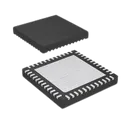
221 Uses0 StarsNRF52832-QFAA-R7
IC RF TxRx + MCU Bluetooth Bluetooth v5.3 2.4GHz 48-VFQFN Exposed Pad NRF52832-QFAA-R7 is an ultra-low-power wireless System-on-Chip (SoC) from Nordic Semiconductor, designed for Bluetooth Low Energy (BLE), ANT, NFC, and proprietary 2.4 GHz wireless applications. It integrates a high-performance ARM Cortex-M4F processor, memory, peripherals, and a 2.4 GHz radio into a single chip, making it ideal for IoT devices, wearables, wireless sensors, beacons, and smart peripherals. GHz protocols • 2.4 GHz transceiver • -96 dBm sensitivity in Bluetooth® low energy mode • Supported data rates: 1 Mbps, 2 Mbps Bluetooth® low energy mode • -20 to +4 dBm TX power, configurable in 4 dB steps • On-chip balun (single-ended RF) • 5.3 mA peak current in TX (0 dBm) • 5.4 mA peak current in RX • RSSI (1 dB resolution) • ARM® Cortex®-M4 32-bit processor with FPU, 64 MHz • 215 EEMBC CoreMark® score running from flash memory • 58 μA/MHz running from flash memory • 51.6 μA/MHz running from RAM • Data watchpoint and trace (DWT), embedded trace macrocell (ETM), and instrumentation trace macrocell (ITM) • Serial wire debug (SWD) • Trace port • Flexible power management • 1.7 V–3.6 V supply voltage range • Fully automatic LDO and DC/DC regulator system • Fast wake-up using 64 MHz internal oscillator • 0.3 μA at 3 V in System OFF mode • 0.7 μA at 3 V in System OFF mode with full 64 kB RAM retention • 1.9 μA at 3 V in System ON mode, no RAM retention, wake on RTC • Memory • 512 kB flash/64 kB RAM • 256 kB flash/32 kB RAM • Nordic SoftDevice ready • Support for concurrent multi-protocol • Type 2 near field communication (NFC-A) tag with wakeup-on-field and touchto-pair capabilities • 12-bit, 200 ksps ADC - 8 configurable channels with programmable gain • 64 level comparator • 15 level low power comparator with wakeup from System OFF mode • Temperature sensor • 32 general purpose I/O pins • 3x 4-channel pulse width modulator (PWM) unit with EasyDMA • Digital microphone interface (PDM) • 5x 32-bit timer with counter mode • Up to 3x SPI master/slave with EasyDMA • Up to 2x I2C compatible 2-wire master/slave • I2S with EasyDMA • UART (CTS/RTS) with EasyDMA • Programmable peripheral interconnect (PPI) • Quadrature decoder (QDEC) • AES HW encryption with EasyDMA • Autonomous peripheral operation without CPU intervention using PPI and EasyDMA • 3x real-time counter (RTC) • Single crystal operation • Package variants • QFN48 package, 6 × 6 mm • WLCSP package, 3.0 × 3.2 mm #CommonPartsLibrary #IntegratedCircuit
52 Uses0 StarsUSB2512B-AEZG
USB Hub Controller USB 2.0 USB Interface 36-QFN (6x6) USB 2.0 high-speed hub controller that expands a single USB upstream connection into two downstream USB 2.0 ports, supporting low-speed (1.5 Mb/s), full-speed (12 Mb/s), and high-speed (480 Mb/s) operation. It operates from a 3.3 V supply with an integrated 5 V to 3.3 V regulator, supports USB Battery Charging Specification 1.1, and provides configurable features through SMBus or EEPROM. #USBHub #USB2_0 #HighSpeedUSB #2PortHub #HiSpeedHub #Microchip #commonpartslibrary #integratedcircuit #usb #hub #controller
53 Uses0 StarsNAU7802SGI
2-Channel Single ADC Delta-Sigma 24-bit Serial 16-Pin SOP 24-Bit Analog-to-Digital Converter (ADC) – NAU7802SGI The NAU7802SGI is a 24-bit high-resolution ADC designed for weigh scale and bridge sensor applications. It integrates a low-noise programmable gain amplifier (PGA), supports differential analog inputs, operates from a 2.7 V to 5.5 V supply, and provides an I²C digital interface. The device includes selectable PGA gain settings from 1 to 128 and operates with an internal or external clock source. #ADC #AnalogToDigitalConverter #24BitADC #I2CInterface #PGA #BridgeSensor #Nuvoton #NAU7802 #PCBComponent #ElectronicComponent #commonpartslibrary #integratedcircuit
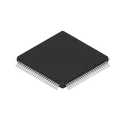
14 Uses0 StarsTMS320F280049CPZQR
The TMS320F280049CPZQR is a 32-bit real-time microcontroller from Texas Instruments' C2000 Piccolo family, purpose-built for high-performance digital power control, motor control, and other real-time embedded control applications. The device is centered around TI's C28x digital signal processing core, a fixed- and floating-point architecture specifically optimized for the kind of fast, deterministic mathematical computation required in closed-loop control systems such as motor drives, digital power supplies, solar inverters, and electric vehicle subsystems. This particular part number represents the "C" variant within the TMS320F28004x family, which grants access to an integrated Configurable Logic Block, a flexible programmable logic resource that allows engineers to implement custom digital logic functions directly on-chip, such as specialized PWM waveform shaping, custom protocol interfaces, or glue logic that would otherwise require an external FPGA or discrete logic devices. This variant also provides access to a secure ROM library containing TI's InstaSPIN-FOC technology, a field-oriented motor control solution that significantly simplifies the development of sensorless motor control algorithms by handling much of the underlying control theory and tuning complexity in pre-validated, secure firmware. Beyond its core processing capabilities, the device integrates an extensive set of control-oriented peripherals that are characteristic of the C2000 platform, including high-resolution pulse-width modulation outputs, enhanced capture modules, and a multi-channel sigma-delta filter module that enables isolated current and voltage sensing across an isolation barrier without requiring a separate digital isolator and decoder chip. A dedicated Control Law Accelerator runs in parallel with the main processing core, offloading time-critical control loop calculations so that the main core remains free to handle communication, supervisory logic, and other system-level tasks, which is particularly valuable in systems running multiple simultaneous control loops. Connectivity on the device is supported through a broad set of industry-standard communication interfaces, allowing it to interface with a wide range of external sensors, communication networks, and host systems without requiring additional bridge components. The device also supports TI's Fast Serial Interface, a high-speed, robust communication protocol intended to simplify board-to-board and module-to-module communication in multi-controller systems, an increasingly common need in distributed power and motor control architectures. This part is qualified to automotive electronics reliability standards, making it suitable for deployment in vehicle power electronics, traction inverters, onboard chargers, and other automotive systems where component robustness, extended temperature operation, and rigorous quality screening are required. The device also supports TI's functional safety documentation framework, providing the architectural transparency and failure mode analysis resources needed by system designers building safety-critical control systems around the device. It is housed in a surface-mount package suited to dense power electronics board layouts and is supplied in tape-and-reel packaging for automated assembly. Spec Sheet Identification Part Number: TMS320F280049CPZQR Device Family: C2000 Piccolo, TMS320F28004x Manufacturer: Texas Instruments Variant: "C" type — with Configurable Logic Block and secure ROM/InstaSPIN-FOC access Functional Classification Device Type: 32-bit real-time microcontroller Core Architecture: C28x digital signal processing core Math Acceleration: Floating-Point Unit and Trigonometric Math Unit for control-loop computation Parallel Control Processing: Integrated Control Law Accelerator Programmable Logic: Configurable Logic Block (CLB) for custom digital logic functions Motor Control Library: Secure ROM with InstaSPIN-FOC sensorless field-oriented control Memory Program Memory Type: Embedded flash memory Memory Architecture: Supports field reprogramming for firmware updates and calibration data storage Control & Analog Peripherals PWM Capability: Frequency-independent, high-resolution PWM outputs Capture Module: Enhanced capture (eCAP) peripheral Isolated Sensing: Multi-channel sigma-delta filter module (SDFM) for isolated current/voltage sensing Analog Integration: Integrated high-speed analog-to-digital converters and internal digital-to-analog converters Programmable Gain: Integrated programmable gain amplifiers Communication Interfaces Standard Interfaces: SPI, SCI, I2C, LIN, and CAN connectivity Power Management Bus: Fully compliant PMBus support High-Speed Module Interface: Fast Serial Interface (FSI) for board-to-board and module-to-module communication Target Applications Application Domains: Industrial motor drives, solar inverters, digital power supplies, electric vehicle and transportation systems, sensing and signal processing Environmental & Qualification Automotive Qualification: AEC-Q100 qualified Functional Safety Support: Documentation and architecture support for functional safety-compliant system design Lifecycle Status: Active production Package Package Type: Surface-mount quad flat package style (LQFP) Mounting: Surface mount technology (SMT) Packaging Format Supply Format: Tape-and-reel, per part suffix designation #TMS320F280049 #C2000 #Piccolo #TexasInstruments #DigitalSignalController #RealTimeMCU #MotorControl #DigitalPowerControl #InstaSPINFOC #FieldOrientedControl #ConfigurableLogicBlock #AECQ100 #AutomotiveMCU #PowerElectronics #EmbeddedSystems #LQFP #SurfaceMount #SemiconductorIC #EngineeringSpec #ComponentLibrary #CommonPartsLibrary
5 Uses0 Stars