Sensors
A sensor is a device that detects and measures a physical property or phenomenon, such as temperature, pressure, or motion. Sensors are used in a wide range of applications, including industrial automation, environmental monitoring, healthcare, and transportation. Flux.ai is the world's largest community-driven public library of sensors, with footprints, symbols, datasheets, and simulation models. Our extensive collection of sensors covers a variety of use cases and industries, making it easy to find the perfect sensor for your application. Whether you need a temperature sensor for HVAC systems, a pressure sensor for automotive applications, or a motion sensor for security systems, Flux.ai has you covered. Our comprehensive library of sensors is constantly updated with the latest and most innovative technologies, ensuring that you have access to the best sensors available. So, if you need a sensor for your next project, be sure to check out Flux.ai and take advantage of our extensive collection and expert support.
MMR920C04ARE
Pressure Sensor -0.57PSI ~ 0.57PSI (-3.92kPa ~ 3.92kPa) Gauge Male - 0.1" (2.5mm) Tube 7 b 12-SMD, No Lead, Top Port The MMR920C04ARE, manufactured by Mitsumi Electric, is a surface-mount pressure sensor that measures low differential (gauge) pressure with high accuracy. It integrates sensing, signal conditioning, and digital output in a single package, making it easy to interface with microcontrollers. Sensor Type: MEMS-based gauge pressure sensor Pressure Range: ±0.57 PSI (±3.92 kPa) Output Interface: Digital (supports I²C and SPI) Resolution: 7-bit output (internally higher-resolution processing available) Supply Voltage: 3.0 V to 3.6 V Accuracy: حوالي ±0.65% full scale Package: 12-SMD, no-lead, top-port (compact ~7×7×7.2 mm) Port Type: 2.5 mm tube (barbless) for airflow or gas connection Features: Built-in temperature compensation Fast sampling capability Factory-calibrated digital output #CommonPartsLibrary #Sensor #Pressure-Sensor #Transducer
0 Uses0 StarsAFE881H1RRUR
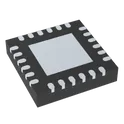
2 Channel AFE 16 Bit 24-UQFN (4x4) The AFE881H1RRUR is a highly integrated analog front-end (AFE) designed for multi-channel data acquisition systems. It combines precision analog signal conditioning with high-speed analog-to-digital conversion, making it suitable for applications such as medical instrumentation, industrial measurement, and test and measurement equipment. The device integrates low-noise amplifiers, programmable gain stages, anti-aliasing filters, and high-resolution ADCs into a compact package, reducing system complexity and board space. Key Features Multi-channel analog front-end integration High-resolution analog-to-digital conversion Low-noise input stage for precision measurements Programmable gain amplifier (PGA) Integrated anti-aliasing filters High sampling rate capability Serial digital interface (SPI-compatible) Low power consumption for portable systems Compact surface-mount package Electrical Characteristics (Typical – refer to datasheet for exact values) Supply Voltage: ~1.8 V to 3.3 V (analog/digital domains) Input Voltage Range: Dependent on configuration Resolution: Up to 16-bit or higher (device dependent) Sampling Rate: Up to several MSPS (depending on mode) Power Consumption: Optimized for performance/power balance Functional Blocks Low-noise input buffer Programmable gain amplifier (PGA) Anti-aliasing filter High-speed ADC core Digital control interface (SPI) Clock management circuitry Package Information Package Type: QFN / VQFN (exact variant per TI RRU package code) Mounting Type: Surface Mount Pin Count: Typically 40+ pins (refer to datasheet for exact count) Applications Medical imaging and instrumentation Industrial data acquisition systems Oscilloscopes and test equipment Communication systems Precision sensor interfaces Advantages High integration reduces external components Improved signal integrity due to low-noise design Flexible configuration via programmable gain Compact footprint for dense PCB layouts Notes Exact electrical parameters, pin configuration, and performance metrics must be verified in the official Texas Instruments datasheet. Proper PCB layout (grounding, shielding, and decoupling) is critical for optimal performance. #commonpartslibrary #integratedcircuit
1 Uses0 StarsLBES5PL2EL-923
802.15.4, Bluetooth, WiFi 802.11a/b/g/n/ac/ax, Bluetooth v5.3, Zigbee® Transceiver Module 2.4GHz, 5GHz Antenna Not Included, U.FL/MHF, PCB Trace Surface Mount The LBES5PL2EL-923 is a compact, low-power Bluetooth® Low Energy (BLE) module developed by Murata. It integrates a Nordic Semiconductor SoC (nRF52 series) with an onboard antenna, providing a complete RF solution for wireless connectivity in embedded systems. The module is designed for IoT, wearable, and low-power wireless applications, offering reliable communication, small footprint, and minimal external component requirements. Key Features Integrated Bluetooth® Low Energy (BLE) 5.x compliant module Based on Nordic Semiconductor nRF52 series SoC Built-in chip antenna (no external antenna required) Ultra-low power consumption suitable for battery-powered devices Integrated RF matching and shielding Supports multiple BLE roles (Central, Peripheral, Broadcaster, Observer) Compact surface-mount package Pre-certified RF module (reduces certification effort) Electrical Characteristics Supply Voltage Operating Voltage: 1.7 V to 3.6 V Current Consumption TX Mode: ~5–10 mA (depending on output power) RX Mode: ~5 mA Sleep Mode: < 2 µA RF Characteristics Frequency Band: 2.4 GHz ISM (2400–2483.5 MHz) Output Power: up to +4 dBm Sensitivity: approx. -96 dBm Interfaces UART SPI I²C (TWI) GPIO (multiplexed) ADC inputs PWM Mechanical Specifications Package Type: Surface Mount Module (SMD) Dimensions: ~10 mm × 7 mm × 1.4 mm (approx.) Integrated antenna and shielding Environmental Ratings Operating Temperature: -40°C to +85°C Storage Temperature: -40°C to +125°C Compliance & Certifications Bluetooth SIG qualified FCC / IC / CE (module-level certification, varies by variant) RoHS compliant Applications IoT devices Wearables Smart home products Wireless sensors Industrial monitoring systems Pin Configuration (Summary) Power: VDD, GND Communication: UART, SPI, I²C GPIOs: Configurable digital I/O RF: Integrated antenna (no RF pin required) Design Considerations Follow recommended PCB layout for antenna clearance Avoid copper under antenna region Provide stable power supply with proper decoupling capacitors Ensure proper grounding for RF performance #commonpartslibrary #integratedcircuit #transceiver #wireless #rf
22 Uses0 StarsTSOP38238
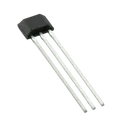
Remote Receiver Sensor 38.0kHz 45m Through Hole This IR receiver series is optimized for long burst remote control systems in different environments. The customer can chose between different IC settings (AGC variants), to find the optimum solution for his application. The higher the AGC, the better noise is suppressed, but the lower the code compatibility. The devices contain a PIN diode and a preamplifier assembled on a lead frame. The epoxy package contains an IR filter. The demodulated output signal can be directly connected to a microprocessor for decoding. These components have not been qualified to automotive specifications. Individual IC settings to reach maximum performance • Immunity against noise (lamps, LCD TV, Wi-Fi) • Low supply current • Photo detector and preamplifier in one package • Supply voltage: 2.0 V to 5.5 V VS1838B #CommonPartsLibrary #Sensor #Transducer #Optical-Sensor #Photo-Detectors #Remote-Receiver #TSOP38238
252 Uses0 StarsSDP31-500Pa
Pressure Sensor -0.07PSI ~ 0.07PSI (-0.5kPa ~ 0.5kPa) Differential Male - 0.08" (2.00mm) Tube, Dual 16b 16-SMD Module, Dual Top Ports The SDP31-500PA belongs to the SDP3x series and uses Sensirion’s CMOSens® technology to deliver accurate and stable pressure measurements. It is optimized for applications where small size, fast response, and high accuracy are critical. This sensor measures bidirectional differential pressure up to ±500 Pa, making it suitable for airflow and gas flow monitoring systems. It provides a fully calibrated, temperature-compensated digital output via I²C, simplifying integration with microcontrollers. Pressure type: Differential (±500 Pa range) High accuracy: حوالي ±3% of measured value Digital output: I²C interface with 16-bit resolution Fast response time: suitable for real-time measurements No zero-point drift: ensures long-term stability Compact size: ~8.5 × 5.5 × 5.15 mm Low voltage operation: typically 3.0–3.6 V Temperature compensated: reliable from −40°C to +85°C #CommonPartsLibrary #Sensor #SDP3x
20 Uses0 StarsTDA4VM88TGCALFR
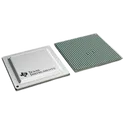
System On Chip (SOC) IC It integrates multiple processing units including CPUs, DSPs, AI accelerators, and GPU into a single chip to handle vision processing, deep learning, sensor fusion, and real-time control in automotive and industrial systems. • C7x floating point, vector DSP, up to 1.0GHz, 80 GFLOPS, 256 GOPS • Deep-learning matrix multiply accelerator (MMA), up to 8 TOPS (8b) at 1.0GHz • Vision Processing Accelerators (VPAC) with Image Signal Processor (ISP) and multiple vision assist accelerators • Depth and Motion Processing Accelerators (DMPAC) • Dual 64-bit Arm® Cortex®-A72 microprocessor subsystem at up to 2.0GHz – 1MB shared L2 cache per dual-core Cortex®- A72 cluster – 32KB L1 DCache and 48KB L1 ICache per Cortex®-A72 core • Six Arm® Cortex®-R5F MCUs at up to 1.0GHz – 16K I-Cache, 16K D-Cache, 64K L2 TCM – Two Arm® Cortex®-R5F MCUs in isolated MCU subsystem – Four Arm® Cortex®-R5F MCUs in general compute partition • Two C66x floating point DSP, up to 1.35GHz, 40GFLOPS, 160GOPS • 3D GPU PowerVR® Rogue 8XE GE8430, up to 750MHz, 96GFLOPS, 6Gpix/sec • Custom-designed interconnect fabric supporting near max processing entitlement Memory subsystem: • Up to 8MB of on-chip L3 RAM with ECC and coherency – ECC error protection – Shared coherent cache – Supports internal DMA engine • External Memory Interface (EMIF) module with ECC – Supports LPDDR4 memory types – Supports speeds up to 4266MT/s – 32-bit data bus with inline ECC • General-Purpose Memory Controller (GPMC) • 512KB on-chip SRAM in MAIN domain, protected by ECC #CommonPartsLibrary #IntegratedCircuit
2 Uses0 StarsTCS3448
The ams OSRAM TCS3448 is a highly versatile, multi-purpose spectral light sensor designed to sense the spectral components of ambient light in the visible range. This 14-channel sensor is optimized for applications requiring precise color sensing and ambient light classification, making it ideal for enhancing camera performance through improved color temperature (CCT), automatic white balance (AWB), and exposure time adjustments. The TCS3448 features individual channels covering approximately 380 nm to 1000 nm, including 11 channels centered in the visible spectrum, one near-infrared (NIR) channel, and a clear channel. Additionally, it integrates a flicker detection channel that can automatically flag ambient light flicker at 50/60 Hz and buffer data for calculating other flicker frequencies. The sensor's high-precision optical interference filters are directly deposited on photodiodes embedded in CMOS silicon, ensuring accurate spectral data. With a built-in aperture, programmable digital GPIO, and LED driver, the TCS3448 offers robust control and synchronization capabilities. The device is available in an ultra-low profile package, making it suitable for a wide range of applications, from industrial automation to mobile and wearable devices. Features: 14-channel spectral sensing Visible range coverage (380 nm to 1000 nm) 11 visible spectrum channels Near-infrared (NIR) channel Clear channel Flicker detection up to 1 kHz Integrated aperture for increased accuracy High-precision optical interference filters Programmable digital GPIO LED driver for light source control Serial I²C interface (1.2 V/1.8 V) Ultra-low profile package (3.1 mm x 2 mm x 1 mm) Field of view (FOV) ±40° 0.18 µ process technology Compatible with AS7343 software #CommonPartsLibrary #IntegratedCircuit #Sensor #Transducers #Optical-Sensor #Ambient-Light #IR #UV-Sensor
6 Uses0 Stars