Sensors
A sensor is a device that detects and measures a physical property or phenomenon, such as temperature, pressure, or motion. Sensors are used in a wide range of applications, including industrial automation, environmental monitoring, healthcare, and transportation. Flux.ai is the world's largest community-driven public library of sensors, with footprints, symbols, datasheets, and simulation models. Our extensive collection of sensors covers a variety of use cases and industries, making it easy to find the perfect sensor for your application. Whether you need a temperature sensor for HVAC systems, a pressure sensor for automotive applications, or a motion sensor for security systems, Flux.ai has you covered. Our comprehensive library of sensors is constantly updated with the latest and most innovative technologies, ensuring that you have access to the best sensors available. So, if you need a sensor for your next project, be sure to check out Flux.ai and take advantage of our extensive collection and expert support.
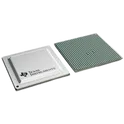
TDA4VM88TGCALFR
System On Chip (SOC) IC It integrates multiple processing units including CPUs, DSPs, AI accelerators, and GPU into a single chip to handle vision processing, deep learning, sensor fusion, and real-time control in automotive and industrial systems. • C7x floating point, vector DSP, up to 1.0GHz, 80 GFLOPS, 256 GOPS • Deep-learning matrix multiply accelerator (MMA), up to 8 TOPS (8b) at 1.0GHz • Vision Processing Accelerators (VPAC) with Image Signal Processor (ISP) and multiple vision assist accelerators • Depth and Motion Processing Accelerators (DMPAC) • Dual 64-bit Arm® Cortex®-A72 microprocessor subsystem at up to 2.0GHz – 1MB shared L2 cache per dual-core Cortex®- A72 cluster – 32KB L1 DCache and 48KB L1 ICache per Cortex®-A72 core • Six Arm® Cortex®-R5F MCUs at up to 1.0GHz – 16K I-Cache, 16K D-Cache, 64K L2 TCM – Two Arm® Cortex®-R5F MCUs in isolated MCU subsystem – Four Arm® Cortex®-R5F MCUs in general compute partition • Two C66x floating point DSP, up to 1.35GHz, 40GFLOPS, 160GOPS • 3D GPU PowerVR® Rogue 8XE GE8430, up to 750MHz, 96GFLOPS, 6Gpix/sec • Custom-designed interconnect fabric supporting near max processing entitlement Memory subsystem: • Up to 8MB of on-chip L3 RAM with ECC and coherency – ECC error protection – Shared coherent cache – Supports internal DMA engine • External Memory Interface (EMIF) module with ECC – Supports LPDDR4 memory types – Supports speeds up to 4266MT/s – 32-bit data bus with inline ECC • General-Purpose Memory Controller (GPMC) • 512KB on-chip SRAM in MAIN domain, protected by ECC #CommonPartsLibrary #IntegratedCircuit
2 Uses0 StarsTCS3448
The ams OSRAM TCS3448 is a highly versatile, multi-purpose spectral light sensor designed to sense the spectral components of ambient light in the visible range. This 14-channel sensor is optimized for applications requiring precise color sensing and ambient light classification, making it ideal for enhancing camera performance through improved color temperature (CCT), automatic white balance (AWB), and exposure time adjustments. The TCS3448 features individual channels covering approximately 380 nm to 1000 nm, including 11 channels centered in the visible spectrum, one near-infrared (NIR) channel, and a clear channel. Additionally, it integrates a flicker detection channel that can automatically flag ambient light flicker at 50/60 Hz and buffer data for calculating other flicker frequencies. The sensor's high-precision optical interference filters are directly deposited on photodiodes embedded in CMOS silicon, ensuring accurate spectral data. With a built-in aperture, programmable digital GPIO, and LED driver, the TCS3448 offers robust control and synchronization capabilities. The device is available in an ultra-low profile package, making it suitable for a wide range of applications, from industrial automation to mobile and wearable devices. Features: 14-channel spectral sensing Visible range coverage (380 nm to 1000 nm) 11 visible spectrum channels Near-infrared (NIR) channel Clear channel Flicker detection up to 1 kHz Integrated aperture for increased accuracy High-precision optical interference filters Programmable digital GPIO LED driver for light source control Serial I²C interface (1.2 V/1.8 V) Ultra-low profile package (3.1 mm x 2 mm x 1 mm) Field of view (FOV) ±40° 0.18 µ process technology Compatible with AS7343 software #CommonPartsLibrary #IntegratedCircuit #Sensor #Transducers #Optical-Sensor #Ambient-Light #IR #UV-Sensor
3 Uses0 StarsQTR-8A
The 8-channel analog line tracking module, ideal for line robots, accurately detects the path through infrared sensors. It operates at 5V, provides analog outputs that are easy to read by the microcontroller, allows for fine contrast calibration and interpretation, and the QTR8 configuration covers different bandwidths for stable and fast tracking. QRE1113GR series Phototransistor Sensor Evaluation Board QTR8A QTR8 QTR QTR-8RC Reflectance Sensor Array
10 Uses0 Stars