Sensors
A sensor is a device that detects and measures a physical property or phenomenon, such as temperature, pressure, or motion. Sensors are used in a wide range of applications, including industrial automation, environmental monitoring, healthcare, and transportation. Flux.ai is the world's largest community-driven public library of sensors, with footprints, symbols, datasheets, and simulation models. Our extensive collection of sensors covers a variety of use cases and industries, making it easy to find the perfect sensor for your application. Whether you need a temperature sensor for HVAC systems, a pressure sensor for automotive applications, or a motion sensor for security systems, Flux.ai has you covered. Our comprehensive library of sensors is constantly updated with the latest and most innovative technologies, ensuring that you have access to the best sensors available. So, if you need a sensor for your next project, be sure to check out Flux.ai and take advantage of our extensive collection and expert support.
WA8351-ALD
WA8351-AL ultrasonic sensor transformer, 3.0mH ±10% inductance, 1:1:8.4 turns ratio, 500Vrms isolation, 25.2µH max leakage inductance, DCR 0.74Ω/0.74Ω/7.56Ω max, ferrite core, AEC-Q200 Grade 1 qualified, -40°C to +125°C operating range, optimized for PGA460-Q1 automotive ultrasonic driver, compact 8.2 x 6.6 x 5.4mm surface-mount package.
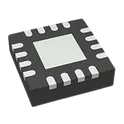
2 Uses0 StarsBQ25302RTER
Charger IC Lithium Ion/Polymer 16-WQFN (3x3) The BQ25302RTER is a highly integrated single-cell lithium-ion and lithium-polymer battery charger and power-path management IC developed by Texas Instruments. The device is optimized for compact portable and wearable applications requiring efficient battery charging from USB or low-voltage DC power sources. It integrates a switching charger, power-path management, system voltage regulation, battery FET, and protection features into a compact package suitable for space-constrained designs. The device supports programmable charging current and voltage regulation while maintaining high power conversion efficiency through its switching charger architecture. Integrated power-path management allows the system load to operate simultaneously while charging the battery, improving system reliability and startup behavior when the battery is deeply discharged or absent. The BQ25302RTER includes input current limiting, thermal regulation, battery temperature monitoring support, and multiple safety timers to ensure safe charging operation. The charger automatically manages preconditioning, fast charging, charge termination, and recharge cycles for lithium-based battery chemistries. The device also supports USB-compliant input operation and includes configurable features through an I2C-compatible interface. Its compact WQFN package and high integration level reduce external component count and PCB area, making it suitable for wearable electronics, portable medical devices, IoT products, handheld instruments, wireless accessories, and battery-powered embedded systems. Electrical Characteristics Input operating voltage supports standard USB and low-voltage DC input sources suitable for portable electronics applications. Supports single-cell lithium-ion and lithium-polymer battery charging with programmable charge voltage regulation. Integrated high-efficiency switching charger architecture minimizes power dissipation and improves thermal performance compared to linear chargers. Programmable fast-charge current supports flexible battery capacity scaling and application-specific charging requirements. Integrated power-path management allows simultaneous battery charging and system power delivery. Includes programmable input current limiting to support USB current compliance and adapter protection. Automatic charge cycle management includes precharge, fast charge, termination, and recharge operation. Supports battery temperature qualification using external thermistor monitoring. Integrated thermal regulation dynamically reduces charge current during high-temperature operating conditions. Low quiescent current operation improves standby battery life in portable products. Protection Features Integrated overvoltage protection for input power safety. Battery overcurrent and short-circuit protection enhance system reliability. Thermal shutdown circuitry protects the device during excessive junction temperature conditions. Safety timers monitor charging duration and prevent abnormal charging operation. Input current limiting protects USB ports and weak power adapters from overload conditions. Undervoltage lockout prevents improper operation during insufficient input supply conditions. Interface and Control I2C-compatible serial interface enables configuration and monitoring of charger parameters. Status reporting supports system-level battery and charging management. Programmable charging parameters allow firmware-controlled optimization for different battery chemistries and capacities. Interrupt and status functions support embedded power management architectures. Package Information Supplied in a compact WQFN package optimized for portable and space-constrained PCB layouts. Package design supports efficient thermal dissipation and automated surface-mount assembly processes. RoHS-compliant and suitable for modern lead-free manufacturing requirements. Typical Applications Wearable electronics Wireless earbuds and audio accessories Portable medical devices IoT and embedded battery-powered systems Handheld consumer electronics Portable instrumentation Rechargeable sensor modules Compact USB-powered battery charging systems #CommonPartsLibrary #IntegratedCircuit #PowerManagement #battery charger
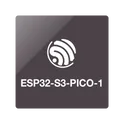
4 Uses0 StarsESP32-S3-PICO-1-N8R8
The ESP32-S3-PICO-1-N8R8 is a highly integrated System-in-Package (SiP) module from Espressif based on the ESP32-S3 SoC. It is designed for compact, low-power IoT applications requiring strong wireless performance, rich peripherals, and minimal external components. This variant (N8R8) integrates 8 MB of SPI flash and 8 MB of PSRAM, making it suitable for memory-intensive applications such as AIoT, voice processing, and graphical user interfaces. The module integrates RF circuitry, crystal oscillator, power management, and memory into a single package, significantly reducing PCB size and BOM cost while improving reliability. ⚡ Key Features Processor & Performance Dual-core Xtensa LX7 microprocessor Up to 240 MHz clock speed Hardware acceleration for AI/ML and vector operations Memory 8 MB SPI Flash 8 MB PSRAM Internal SRAM for fast access tasks Wireless Connectivity 2.4 GHz Wi-Fi 802.11 b/g/n Bluetooth 5 (LE) support Integrated RF front-end Peripherals GPIO, SPI, I2C, UART, ADC, PWM USB 1.1 OTG support RMT, I2S, SD/MMC interface Touch sensor support Power & Efficiency Low-power sleep modes for battery-powered devices Integrated power management circuitry (SiP-level integration) Wide operating voltage: 3.0V – 3.6V Integration Advantages Built-in crystal oscillator Integrated RF matching components Reduced external component count (SiP design) Compact footprint for space-constrained designs 📌 Typical Applications Smart home devices IoT sensors and controllers Voice-enabled AI devices Wearables HMI (Human Machine Interface) Industrial monitoring systems
5 Uses0 StarsBME690
Gas, Humidity, Pressure, Temperature Sensor Digital Output The BME690 is a compact 4-in-1 environmental sensor from Bosch Sensortec designed for advanced indoor air-quality monitoring. It integrates gas, humidity, temperature, and barometric pressure sensing into a single low-power MEMS device. The sensor is optimized for battery-powered and high-condensation environments, making it suitable for smart home, industrial, wearable, and IoT applications. Key Features 4-in-1 environmental sensing: Gas sensing Relative humidity Temperature Barometric pressure Detects: Volatile Organic Compounds (VOCs) Volatile Sulfur Compounds (VSCs) Other air-quality-related gases Supports indoor air quality (IAQ) monitoring Provides: IAQ index bVOC equivalent CO₂ equivalent outputs Improved robustness for high-condensation environments Ultra-small package: 3.0 × 3.0 × 0.93 mm 8-pin metal LGA package Low power consumption suitable for battery-powered devices Interfaces: I²C up to 3.4 MHz SPI up to 10 MHz Wide operating range: Temperature: −40°C to +85°C Humidity: 0–100% RH Pressure: 300–1100 hPa Supply voltage: VDDIO: 1.2 V to 3.6 V VDD: 1.71 V to 3.6 V Humidity accuracy: ±3% RH Temperature accuracy: ±0.5°C Pressure accuracy: ±0.5 hPa absolute Supports AI-based gas classification using Bosch BME AI-Studio Pin-compatible evolution of the BME688 platform Designed for: Smart home devices HVAC systems Air-quality mapping Food freshness monitoring Wearables Industrial sensing applications #CommonPartsLibrary #Sensor
12 Uses0 StarsOPA4391PWR
Standard (General Purpose) Amplifier 4 Circuit Push-Pull, Rail-to-Rail 14-TSSOP The OPA4391PWR is a precision quad operational amplifier designed for low-noise, high-speed signal conditioning in a wide range of analog applications. It integrates four independent amplifier channels within a single compact package, making it suitable for space-constrained designs that require consistent performance across multiple signal paths. The device offers a combination of low offset voltage, wide bandwidth, and fast slew rate, enabling accurate amplification of both small and rapidly changing signals. It is commonly used in instrumentation, data acquisition systems, active filtering, and audio signal processing where stability and signal integrity are critical. Functional Overview The device consists of four matched operational amplifiers that share common power supply connections while maintaining independent signal paths. Each amplifier is capable of operating in standard configurations such as inverting, non-inverting, differential, and buffer modes. The architecture supports rail-to-rail output swing, allowing efficient use of the available supply voltage. Internal design optimization ensures low distortion and stable operation across a broad range of load conditions. Electrical Characteristics The OPA4391PWR is optimized for low input offset voltage and low input bias current, contributing to high accuracy in precision applications. It features wide gain bandwidth and a high slew rate, supporting fast transient response and high-frequency operation. The amplifier maintains low noise performance, making it suitable for sensitive analog front-end designs. Power consumption is balanced to provide efficient operation without compromising dynamic performance. Operating Conditions The device operates over a wide supply voltage range, supporting both single-supply and dual-supply configurations. It is designed to function reliably across an extended temperature range, ensuring consistent performance in varying environmental conditions. Proper decoupling and layout practices are recommended to maintain stability and minimize noise coupling. Package and Mechanical Characteristics The OPA4391PWR is provided in a compact surface-mount package suitable for automated assembly processes. The package is designed to facilitate efficient thermal dissipation and reliable electrical connections. Pin configuration allows straightforward integration into standard PCB layouts for quad operational amplifiers. Applications This device is intended for use in precision analog circuits including signal conditioning, sensor interfaces, active filters, audio amplification, and data acquisition systems. Its combination of low noise, high speed, and multi-channel integration makes it well-suited for both industrial and consumer electronics applications. Design Considerations Careful PCB layout is recommended to optimize performance, including short signal paths, proper grounding, and adequate power supply decoupling. Input and output traces should be routed to minimize interference and crosstalk between channels. Thermal management should be considered in high-performance or high-density designs to ensure long-term reliability. #commonpartslibrary #integratedcircuit #linearamplifier #opamp
6 Uses0 StarsRFFM6901
The RFFM6901 is a single-chip RF front-end module (FEM) designed for 868 MHz to 928 MHz ISM-band wireless communication applications. It integrates a high-power power amplifier (PA), low-noise amplifier (LNA), antenna diversity switch, and matching circuitry into a compact package, helping reduce external components, PCB space, and overall system cost. It is commonly used in smart energy systems, wireless metering, industrial monitoring, alarm systems, and other Sub-1 GHz wireless devices. Key Features Operating frequency range: 868 MHz to 928 MHz Integrated 1 W power amplifier Up to +30 dBm transmit output power Integrated low-noise amplifier with bypass mode Dual-port antenna diversity switch Separate 50 Ω transmit and receive interfaces Compact 32-pin LGA package (6 mm × 6 mm) Supply voltage range: 2.8 V to 4.2 V Typical LNA gain: 17 dB Low receiver noise figure: 1.5 dB Designed for portable and battery-powered wireless systems RoHS compliant Typical Applications Smart energy and smart metering Wireless alarm and security systems ISM-band communication devices Industrial wireless sensors Portable RF equipment IoT Sub-1 GHz wireless systems Search across more sources
2 Uses0 StarsPEC11J-9015F-S0024
Rotary Encoder Incremental 24 Quadrature (Incremental) User Selectable 10 mA @ 5 VDC,-10 C to +70 C The PEC11J-9015F-S0024 is a compact surface-mount incremental rotary encoder from the Bourns PEC11J series, designed for user interface applications requiring precise rotational input and long operational life. It features a quadrature output with 24 pulses per revolution and includes an integrated momentary push-button switch, making it suitable for menu navigation, volume control, tuning systems, and industrial control panels. Its rugged metal shaft construction and high durability make it reliable for both consumer and professional electronic equipment. Key Features Incremental rotary encoder with 2-bit quadrature output 24 pulses per revolution (24 PPR) resolution Integrated momentary push-button switch Surface-mount gull-wing terminals Compact 12 mm encoder body Durable metal shaft and bushing Long rotational life of up to 100,000 cycles No detents for smooth continuous rotation Supports up to 60 RPM operating speed Operating temperature range: -10 °C to +70 °C IP40 rated enclosure Flatted shaft design for secure knob attachment Suitable for: Audio equipment Lighting consoles Consumer appliances Communication devices Test and measurement equipment Component Category #Sensor #Encoder #Transducer #PEC11J
78 Uses0 StarsDS90UB953-Q1
2 MP MIPI® CSI-2 FPD-Link III serializer for 2MP/60fps cameras & radar The DS90UB953-Q1 is an automotive-grade high-speed serializer designed to convert parallel image sensor data into a high-speed serial stream for transmission over a single differential pair using FPD-Link III technology. It is intended for use in camera-based systems where compact cabling, high data integrity, and low latency are required. The device interfaces directly with image sensors through a MIPI CSI-2 input and transmits video, control, and GPIO data over a single coaxial or shielded twisted pair cable. Integrated clocking and control features allow synchronization with remote deserializers, enabling robust communication in electrically noisy environments typical of automotive and industrial applications. Functional Description The device receives image data from a connected sensor through a MIPI CSI-2 interface and serializes this data for transmission over a high-speed differential link. In addition to video data, bidirectional control communication is supported through an embedded control channel, allowing configuration and monitoring of remote devices using an I²C interface. The serializer incorporates programmable GPIO functionality that can be used for control signaling or sensor monitoring, with the ability to transport these signals across the link. Internal clock generation and phase-locked loop circuitry support multiple clocking modes, enabling flexible system design with either local or remote reference clocks. The device also includes pattern generation capabilities for system testing and validation. Electrical Characteristics The component operates from multiple power domains supporting core logic, I/O, and phase-locked loop functions. It is designed to provide stable high-speed signal transmission with controlled impedance outputs and low jitter characteristics. The differential serial output supports reliable long-distance communication over coaxial or twisted-pair media. Input interfaces are optimized for compatibility with standard MIPI CSI-2 signaling, ensuring seamless integration with modern image sensors. The control interface uses an open-drain I²C protocol for configuration and communication. Mechanical Characteristics The device is provided in a compact quad flat no-lead package suitable for high-density PCB designs. The package includes an exposed thermal pad that serves both as a heat dissipation path and a low-impedance electrical ground connection. The small footprint and low profile make it well suited for space-constrained applications such as camera modules and embedded vision systems. Environmental Characteristics The DS90UB953-Q1 is qualified for automotive applications and is designed to operate reliably over extended temperature ranges and under conditions of electrical noise, vibration, and mechanical stress. The device is compatible with standard surface-mount assembly processes, including lead-free reflow soldering. Materials and construction comply with relevant environmental and reliability standards for automotive-grade electronic components. Materials and Construction The package body is constructed from high-temperature thermally stable materials suitable for reflow soldering. Electrical contacts are formed from copper-based alloys with plated finishes to ensure long-term conductivity, corrosion resistance, and mechanical durability. The exposed pad is designed to interface directly with the PCB ground plane for improved thermal and electrical performance.
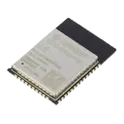
6 Uses0 StarsESP32-WROOM-32E (16MB)
The ESP32-WROOM-32E (16MB) is a highly integrated Wi-Fi + Bluetooth + Bluetooth Low Energy (BLE) module developed by Espressif. It is based on the ESP32-D0WD-V3 chip and features a dual-core processor, rich peripherals, and large flash memory—making it ideal for IoT, embedded systems, and wireless applications. This module is part of the upgraded WROOM-32E series, offering improved RF performance, better stability, and enhanced reliability compared to earlier versions like the 32D. Key Features (16MB Variant) Processor & Memory Dual-core Xtensa® 32-bit LX6 CPU, up to 240 MHz 520 KB SRAM + 448 KB ROM 16 MB SPI Flash (large storage for firmware/data) Optional variants with PSRAM for memory-intensive tasks Connectivity 2.4 GHz Wi-Fi (802.11 b/g/n) Bluetooth v4.2 (BR/EDR + BLE) Integrated PCB antenna (no external antenna needed) Peripherals & Interfaces Up to 26–38 GPIOs (depending on usage) Supports: UART, SPI, I2C, I2S PWM (LED & motor control) ADC, DAC Capacitive touch sensors SD/SDIO/MMC, CAN (TWAI) Electrical & Physical Operating voltage: 3.0V – 3.6V Operating temperature: –40°C to +85°C (industrial range) Compact size: 18 × 25.5 × 3.1 mm Typical Applications Smart home devices (lighting, appliances) IoT sensors and gateways Industrial automation systems Wearables and smart gadgets Audio/voice processing (thanks to dual-core + large flash) #module #ESP32 #16MB
91 Uses0 Stars