Microcontrollers
A microcontroller is a small, low-cost computer-on-a-chip that can be used to control electronic devices and systems. It consists of a central processing unit (CPU), memory, input/output (I/O) ports, and other peripherals integrated onto a single chip. Microcontrollers are commonly used in a wide range of applications, including automotive systems, home appliances, industrial automation, and consumer electronics. One of the key benefits of microcontrollers is their ability to interact with their environment through sensors and actuators, making them well-suited for use in embedded systems. These systems are often found in devices that require real-time control or data processing, such as medical equipment, aircraft, and factory automation systems. Flux.ai is home to the world's largest community-driven public library of microcontrollers, with footprints, symbols, datasheets, and simulation models for a wide range of devices. Whether you're a professional engineer looking for a specific microcontroller for your next project, or a hobbyist exploring the possibilities of microcontroller-based systems, Flux.ai has the resources you need to get started.
2472
Adafruit 2472 BNO055 breakout Adafruit BNO055 Absolute Orientation Sensor is a 9-DoF intelligent motion tracking module based on the Bosch BNO055 system-in-package sensor. The device integrates a 3-axis accelerometer, 3-axis gyroscope, 3-axis magnetometer, and an onboard ARM Cortex-M0 microcontroller running Bosch sensor fusion algorithms. Unlike traditional IMUs, the BNO055 directly outputs absolute orientation data in Euler angles, quaternions, linear acceleration, gravity vectors, and calibration information, eliminating the need for complex sensor fusion calculations on the host MCU. The sensor communicates via I²C or UART interfaces and is widely used in robotics, drones, autonomous vehicles, VR/AR systems, motion tracking, navigation, balancing robots, wearable devices, and orientation sensing applications. Search Keywords: BNO055, Adafruit BNO055, Absolute Orientation Sensor, 9DOF Sensor, IMU Sensor, Bosch BNO055, Sensor Fusion IMU, Orientation Sensor, Quaternion Sensor, Euler Angle Sensor, Motion Tracking Sensor, Accelerometer Gyroscope Magnetometer, AHRS Sensor, Robotics IMU, Drone Orientation Sensor, Wearable Motion Sensor, Navigation Sensor, I2C IMU Sensor, UART IMU Sensor, Absolute Position Sensor Hashtags: #BNO055 #Adafruit #BoschSensortec #IMU #9DOF #OrientationSensor #MotionTracking #SensorFusion #Quaternion #AHRS #Accelerometer #Gyroscope #Magnetometer #Robotics #DroneTechnology #EmbeddedSystems #IoTDevices #ElectronicsDesign #PCBDesign #HardwareEngineering
9 Uses0 Stars1782
MCP9808 - Temperature Sensor Evaluation Board The Adafruit 1782 MCP9808 Temperature Sensor Breakout is a compact sensor evaluation board that enables high-accuracy digital temperature measurement using the MCP9808 sensor IC. It supports an I²C communication interface, allowing simple connection to microcontrollers while maintaining high precision over a wide operating temperature range. Key Features High Accuracy Temperature Sensing: Typical accuracy of ±0.25°C for reliable temperature monitoring. Wide Temperature Range: Measures temperatures from -40°C to +125°C. Digital I²C Interface: Simple two-wire communication interface for easy integration with embedded systems. High Resolution: Provides temperature resolution up to 0.0625°C. Wide Supply Voltage Range: Operates from 2.7V to 5.5V, compatible with common logic levels. Multiple Device Addressing: Configurable address pins allow multiple sensors to share the same I²C bus. Compact Breakout Board Design: Includes supporting components and headers for quick prototyping. Low Power Consumption: Suitable for battery-powered and portable applications. Applications IoT environmental monitoring Weather stations Industrial temperature monitoring Battery management systems Data logging equipment Embedded control systems Hashtags #Adafruit1782 #MCP9808 #TemperatureSensor #DigitalSensor #I2C #EmbeddedSystems #IoT #Arduino #RaspberryPi #SensorModule #ElectronicsDesign #HardwareDevelopment
1 Uses0 StarsPLCC68
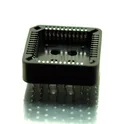
Toby PLCC series DIP socket for PLCC IC packages, through-hole PCB mounting, available for 20/28/32/52/68/84-pin PLCC devices, copper alloy contacts with tin plating over nickel, PPS UL94V-0 insulator, 1A current rating, 1000MΩ minimum insulation resistance, 300VAC dielectric withstand voltage, 20mΩ max contact resistance, -40°C to +105°C operating temperature, suitable for socketing PLCC ICs, memory chips, microcontrollers, programmable logic and embedded hardware. Search Keywords: PLCC socket, Toby PLCC socket, PLCC DIP socket, PLCC through hole socket, PLCC IC socket, 20 pin PLCC socket, 28 pin PLCC socket, 32 pin PLCC socket, 52 pin PLCC socket, 68 pin PLCC socket, 84 pin PLCC socket, PLCC PCB socket, square IC socket, IC socket connector PCF80C552 PLCC68 / PLCC-68 socket Hashtags: #PLCCSocket #TobyPLCCSocket #PLCC-68-R #PLCC-68 #ThroughHoleSocket #PLCCConnector #20PinPLCC #28PinPLCC #32PinPLCC #52PinPLCC #68PinPLCC #84PinPLCC #PPSInsulator #TinPlatedContactsphosphor bronze, tin plated,55C to 85C,1000 M,30 m
0 Uses0 StarsTPS48100QDGXRQ1
High-Side Gate Driver IC Non-Inverting 19-VSSOP The TPS48100QDGXRQ1 is an automotive-grade dual high-side gate driver integrated circuit manufactured by Texas Instruments. It is designed to drive external N-channel power MOSFETs configured as high-side switches, providing the gate-drive voltage and current needed to turn the switches fully on and off with controlled timing. The device targets automotive and other harsh-environment power switching applications where a robust, low quiescent current solution is needed to control loads such as motors, relays, solenoids, lighting, and other inductive or resistive loads powered from a vehicle battery rail. As a member of TI's automotive low-IQ high-side driver portfolio, the device is built to tolerate the wide voltage swings and transient conditions characteristic of automotive electrical systems, including load dump events and cold-crank voltage sags, while maintaining very low standby current draw when the driven loads are not active. This low quiescent current characteristic is particularly valuable in always-on automotive modules, where minimizing parasitic battery drain during vehicle-off states is a key design requirement. The device's two independent driver channels operate synchronously, allowing coordinated control of dual high-side switches from a shared set of control and protection circuitry, which is useful in applications such as dual-channel load switching, H-bridge-adjacent driver stages, or redundant power path control. The non-inverting input structure means that the gate driver outputs follow the logic state of the input control signals directly, simplifying integration with microcontroller-based control logic without requiring additional inverting stages. Internally, the device manages the charge pump or bootstrap circuitry needed to generate a gate voltage above the battery rail, which is necessary to fully enhance an N-channel MOSFET configured in the high-side position. This internal voltage generation simplifies the external bill of materials compared to discrete charge-pump driver implementations. The device is qualified to automotive electronics reliability standards, reflecting the rigorous stress testing and quality requirements expected of components used in vehicle electrical and powertrain-adjacent systems. It is housed in a small-outline surface-mount package suited to space-constrained automotive control module designs, and it is supplied in tape-and-reel or cut-tape packaging formats to support both high-volume automated assembly and lower-volume prototyping needs. Spec Sheet Identification Part Number: TPS48100QDGXRQ1 Device Family: TPS48100-Q1 Manufacturer: Texas Instruments Functional Classification Device Type: Dual high-side gate driver IC Driven Configuration: High-side Channel Type: Synchronous, dual independent drive channels Gate Type Driven: N-channel power MOSFET Input Logic: Non-inverting Electrical Characteristics Supply Voltage Range: Wide automotive-class supply range Quiescent Current: Low-IQ class, optimized for always-on automotive modules Output Drive Current: Symmetric source and sink peak output current Internal Gate Drive Generation: Integrated charge pump/bootstrap-style high-side gate drive generation Protection & Diagnostics Application Context: Suited for protected high-side switching designs typical of the automotive driver family Robustness: Designed to tolerate automotive transient and load-dump conditions Environmental & Qualification Temperature Grade: Extended automotive operating temperature range Automotive Qualification: AEC-Q100 qualified RoHS Compliance: Yes Package Package Type: Small-outline surface-mount package, VSSOP style Mounting: Surface mount technology (SMT) Packaging Format Supply Format: Tape-and-reel, cut-tape, or reel-on-demand packaging options #TPS48100 #TexasInstruments #GateDriver #HighSideDriver #AutomotiveIC #AECQ100 #PowerManagement #MOSFETDriver #LowIQ #VSSOP #SurfaceMount #AutomotiveElectronics #PowerSwitching #SemiconductorIC #EngineeringSpec #ComponentLibrary #CommonPartsLibrary #RoHSCompliant #VehicleElectronics #PCBDesign
21 Uses0 StarsLAN9254-I/JRX
Ethernet Controller 10/100 Base-T/TX Bus Interface 80-TQFP-EP (12x12) The LAN9254-I/JRX is an EtherCAT SubDevice (slave) controller developed by Microchip Technology, designed to serve as the communication backbone for industrial automation devices participating in an EtherCAT network. The device integrates dual Ethernet physical layer transceivers directly on-chip, eliminating the need for external PHY components and simplifying the design of EtherCAT-enabled equipment such as servo drives, sensors, I/O modules, and other field devices used in real-time industrial control systems. Architecturally, the controller can operate as either a two-port or three-port node, depending on the network topology required. In its standard configuration it functions as a two-port device supporting daisy-chain connections typical of EtherCAT line topologies. When configured as a three-port device, it gains an additional management interface port that can connect to an external PHY or to another LAN9254, enabling star or tree network topologies and allowing the device to act as a branching point within a larger EtherCAT installation. Each integrated Ethernet PHY operates in full-duplex mode and supports automatic crossover detection, so the device can use either straight-through or crossover cabling without requiring manual configuration. Beyond pure protocol handling, the LAN9254 includes a substantial set of general-purpose digital input and output lines, allowing it to be used in simple field devices without requiring a separate microcontroller. For more complex applications, the device communicates with an external host processor through an integrated host bus interface that behaves like simple memory-mapped SRAM, supporting both 8-bit and 16-bit data widths along with multiple byte-ordering conventions, which makes it straightforward to interface with a wide range of microcontroller and microprocessor architectures. Internally, dual process data RAM buffers manage the exchange of real-time process data between the host application and the EtherCAT communication engine, while a dedicated interrupt line notifies the host of relevant internal events. A key feature of the device is its built-in distributed clock mechanism, which provides high-precision timing synchronization across all nodes in an EtherCAT network. This capability is essential for motion control and other applications where multiple devices must act in tight temporal coordination. The controller also provides configurable status indication through standard network activity and link LEDs, along with optional error and run-state indicators that give visibility into the health and operational state of the device at a glance. Power architecture on the LAN9254 is simplified through an integrated linear regulator, allowing the device to be operated from a single primary supply rail while internally generating the lower voltage needed for its core logic. This reduces the external power supply complexity that would otherwise be required to support separate core and I/O voltage domains. The "-I" designation on this particular part number indicates an industrial-grade temperature rating, making it suitable for deployment in factory floor and other demanding industrial environments where extended thermal range and long-term reliability are required. The device is housed in a surface-mount package consistent with dense industrial control board layouts and is compliant with RoHS material restrictions. Spec Sheet Identification Part Number: LAN9254-I/JRX Device Family: LAN9254 Manufacturer: Microchip Technology Functional Classification Device Type: EtherCAT SubDevice (slave) controller Network Role: Two/three-port configurable node Integrated PHYs: Dual Ethernet physical layer transceivers, on-chip Auto-MDIX Support: Yes, supports direct and crossover cabling Communication & Protocol Features Protocol: EtherCAT Topology Support: Daisy-chain (line), star, and tree topologies Additional Port Mode: Optional third port for branching/tap configurations Clock Synchronization: Integrated distributed clock for high-precision timing Host Interface Interface Type: SRAM-like host bus interface Data Width Support: Selectable bit-width host bus operation Endianness Support: Multiple byte-ordering modes Process Data Handling: Dual process data RAM buffers Interrupt Support: Configurable host interrupt line Digital I/O General-Purpose I/O: Integrated digital I/O lines for microcontroller-less operation Standalone Mode: Supports operation without external microcontroller for simple device designs Power Architecture Supply Configuration: Single primary supply rail Internal Regulation: Integrated linear regulator for core voltage generation Status Indication LED Support: Standard run and link/activity indicators per port Optional Indicators: Configurable error and run-state status indicators Environmental & Qualification Temperature Grade: Industrial ("-I" suffix) RoHS Compliance: Yes Package Package Type: Surface-mount, quad flat package style Mounting: Surface mount technology (SMT) Packaging Format Supply Format: Tape-and-reel, per part suffix designation #LAN9254 #Microchip #EtherCAT #SlaveController #SubDeviceController #IndustrialEthernet #IndustrialAutomation #MotionControl #EmbeddedSystems #FieldDevice #DigitalIO #HostBusInterface #DistributedClock #TQFP #RoHSCompliant #IndustrialGrade #EngineeringSpec #ComponentLibrary #CommonPartsLibrary #SemiconductorIC
1 Uses0 StarsSTM32WLE5JC
STM32WLE5JC is an ultra-low-power wireless microcontroller from STMicroelectronics that combines an Arm Cortex-M4 processor with an integrated Sub-GHz radio transceiver in a single chip. Designed for long-range, low-power IoT and LPWAN applications, it supports LoRa®, (G)FSK, (G)MSK, and BPSK modulation schemes, making it ideal for smart metering, industrial monitoring, agriculture, asset tracking, and remote sensing applications. The device offers a high level of integration, robust security features, and extensive peripheral support while maintaining very low power consumption. Key Features Arm Cortex-M4 32-bit MCU running at up to 48 MHz Integrated Sub-GHz radio transceiver (150 MHz to 960 MHz) Supports LoRa®, LoRaWAN®, (G)FSK, (G)MSK, and BPSK modulations Up to 256 KB Flash memory and 64 KB SRAM Ultra-low-power operation with multiple low-power modes Programmable RF output power up to +22 dBm High receiver sensitivity down to -148 dBm (LoRa mode) Hardware AES-256 encryption and True Random Number Generator (RNG) Public Key Accelerator (PKA) for enhanced security 12-bit ADC, 12-bit DAC, comparators, and DMA controllers Multiple communication interfaces: USART, LPUART, SPI, I²C Operating voltage range: 1.8 V to 3.6 V Operating temperature range: -40°C to +105°C Available in compact UFQFPN, UFBGA, and WLCSP packages #STM32WLE5JC #STM32WL #LoRa #LoRaWAN #SubGHz #WirelessMCU #CortexM4 #LPWAN #IoT #SmartMetering #IndustrialIoT #EmbeddedSystems #STMicroelectronics
0 Uses0 StarsJDY-23
JDY-23 is an ultra-low-power Bluetooth 5.0 BLE transparent transmission module operating in the 2.4GHz ISM band using GFSK modulation. The module supports wireless UART-to-BLE communication, enabling seamless data exchange between a microcontroller and smartphones, tablets, or other BLE-enabled devices. It provides up to +4dBm transmit power and a communication range of up to 60 meters under optimal conditions. The module supports configurable AT commands for changing device name, baud rate, advertising parameters, and communication settings. JDY-23 is designed for low-power IoT devices, wireless sensors, smart home equipment, industrial monitoring, wearable electronics, and battery-powered embedded applications requiring simple BLE connectivity. Search Keywords: JDY-23, JDY23, Bluetooth 5.0 module, BLE module, Bluetooth Low Energy module, UART BLE module, transparent transmission module, serial Bluetooth module, wireless UART bridge, 2.4GHz BLE transceiver, AT command BLE module, IoT Bluetooth module, low power Bluetooth module, embedded BLE module, MCU Bluetooth interface, Bluetooth serial communication, smart home BLE module, sensor BLE module, battery powered BLE module Hashtags: #JDY23 #Bluetooth5 #BLE #BluetoothLowEnergy #UARTBLE #BluetoothModule #WirelessCommunication #IoT #EmbeddedSystems #Microcontroller #SmartHome #WearableElectronics #SensorNode #LowPowerDesign #WirelessUART #ATCommands #2_4GHz #Electronics #PCBDesign #ElectronicComponents
2 Uses0 StarsBNO085
Accelerometer, Gyroscope, Magnetometer, 9 Axis Sensor I2C, SPI, UART Output The BNO085 is a high-performance 9-axis absolute orientation sensor system-in-package (SiP) that integrates a 3-axis accelerometer, 3-axis gyroscope, 3-axis magnetometer, and a low-power ARM Cortex-M0+ microcontroller running CEVA/Hillcrest SH-2 sensor fusion firmware. It provides accurate real-time orientation, motion tracking, and activity detection while offloading complex sensor fusion calculations from the host processor. The device is widely used in robotics, AR/VR systems, wearables, drones, IoT devices, and navigation applications. Key Features 9-axis motion sensing with integrated accelerometer, gyroscope, and magnetometer Built-in SH-2 sensor fusion engine for accurate orientation tracking ARM Cortex-M0+ processor for onboard motion processing Outputs quaternion, rotation vector, linear acceleration, gravity vector, angular velocity, and magnetic field data Advanced motion detection including tap, step, shake, and significant motion detection Activity classification and stability detection capabilities Low-latency rotation vectors optimized for AR/VR applications Supports I²C, SPI, and UART communication interfaces Configurable output data rates and timestamps Low-power operation suitable for battery-powered devices Compact 28-pin LGA package (5.2 mm × 3.8 mm) Operating temperature range: -40°C to +85°C Backward compatible with BNO080 designs while adding support for future application-specific libraries Applications Robotics and autonomous systems Virtual Reality (VR) and Augmented Reality (AR) Wearable devices and fitness trackers Drones and UAVs Head-mounted displays (HMDs) Industrial motion tracking IoT and smart devices Navigation and positioning systems #BNO085 #IMU #9AxisSensor #MotionTracking #SensorFusion #OrientationSensor #Robotics #AR #VR #IoT #Wearables #EmbeddedSystems #CEVA #HillcrestLabs #MotionDetection #Quaternion #InertialMeasurementUnit
42 Uses0 StarsBNO085 Adafruit Breakout Board
BNO085 - Accelerometer, Gyroscope, Magnetometer, 3 Axis Sensor Evaluation Board The BNO085 Evaluation Board is a development platform designed to evaluate and prototype applications using the BNO085 9-axis Inertial Measurement Unit (IMU). It integrates a 3-axis accelerometer, 3-axis gyroscope, and 3-axis magnetometer with an onboard ARM Cortex-M0+ processor running advanced sensor fusion algorithms. The board provides accurate real-time orientation, motion tracking, rotation vectors, and heading information while offloading complex sensor fusion calculations from the host microcontroller. It is widely used in robotics, AR/VR systems, drones, motion tracking devices, navigation systems, and IoT applications. The evaluation board typically supports I²C, SPI, and UART communication interfaces, enabling easy integration with various embedded platforms. Key Features 9-DOF motion sensing with integrated accelerometer, gyroscope, and magnetometer Built-in ARM Cortex-M0+ processor for onboard sensor fusion Real-time orientation output including quaternions, Euler angles, and rotation vectors Supports I²C, SPI, and UART communication interfaces High-speed motion tracking with low latency operation Dynamic calibration for improved accuracy and stability Integrated motion detection features such as step counting and activity tracking Configurable sensor data rates and timestamped sensor reports Low-power operation suitable for battery-powered applications Ideal for robotics, VR/AR, wearable devices, navigation, and industrial motion sensing #BNO085 #IMU #9DOF #SensorFusion #MotionTracking #OrientationSensor #Robotics #EmbeddedSystems #IoT #WearableTech #ARVR #Navigation #EvaluationBoard #Accelerometer #Gyroscope #Magnetometer #commonpartslibrary #developmentboard #accelerometer
203 Uses0 Stars