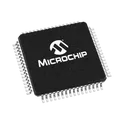
Microcontrollers
A microcontroller is a small, low-cost computer-on-a-chip that can be used to control electronic devices and systems. It consists of a central processing unit (CPU), memory, input/output (I/O) ports, and other peripherals integrated onto a single chip. Microcontrollers are commonly used in a wide range of applications, including automotive systems, home appliances, industrial automation, and consumer electronics. One of the key benefits of microcontrollers is their ability to interact with their environment through sensors and actuators, making them well-suited for use in embedded systems. These systems are often found in devices that require real-time control or data processing, such as medical equipment, aircraft, and factory automation systems. Flux.ai is home to the world's largest community-driven public library of microcontrollers, with footprints, symbols, datasheets, and simulation models for a wide range of devices. Whether you're a professional engineer looking for a specific microcontroller for your next project, or a hobbyist exploring the possibilities of microcontroller-based systems, Flux.ai has the resources you need to get started.
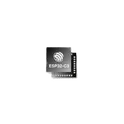
ESP32-C3
Bluetooth, WiFi 802.11b/g/n, Bluetooth v5.0 Transceiver Module 2.402GHz ~ 2.48GHz Antenna Not Included Surface Mount The ESP32-C3 is a low-power, highly integrated 32-bit microcontroller (MCU) from Espressif Systems that combines 2.4 GHz Wi-Fi and Bluetooth® 5 Low Energy (BLE) connectivity in a single chip. Built around a single-core RISC-V processor running at up to 160 MHz, it is designed for secure, cost-effective IoT and embedded applications. The ESP32-C3 offers excellent wireless performance, low power consumption, robust security features, and a rich set of peripherals, making it ideal for smart home devices, industrial automation, wearable electronics, wireless sensors, and consumer IoT products. Key Features 32-bit RISC-V single-core CPU running up to 160 MHz Integrated 2.4 GHz Wi-Fi (802.11 b/g/n) and Bluetooth® 5 LE Low-power architecture with multiple sleep modes for battery-powered devices Advanced security features including Secure Boot, Flash Encryption, AES, SHA, RSA, HMAC, and hardware random number generator (RNG) Rich peripheral set including GPIO, UART, SPI, I²C, I²S, PWM, ADC, TWAI (CAN), USB Serial/JTAG, and timers Supports external QSPI flash memory and OTA (Over-the-Air) firmware updates Compact package options suitable for space-constrained embedded designs Fully supported by the ESP-IDF, Arduino, and MicroPython development ecosystems #ESP32C3 #Espressif #RISCV #WiFi #BluetoothLE #IoT #EmbeddedSystems #Microcontroller #WirelessMCU #LowPower #SmartHome #IndustrialIoT #SecureMCU #EdgeComputing #FirmwareDevelopment
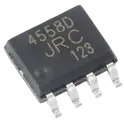
12 Uses0 StarsCH9101N
USB to Serial Port Chip CH9101 CH9101N is a high-speed USB-to-UART bridge IC developed by WCH (Qinheng Electronics). It converts a USB 2.0 Full-Speed interface into a standard asynchronous UART serial interface, enabling seamless communication between a computer and microcontrollers, embedded systems, industrial equipment, and other UART-based devices. The device features an integrated clock oscillator and power-on reset circuitry, minimizing external components and simplifying PCB design. Housed in a compact SOP-8 package, the CH9101N supports UART logic voltages from 1.8 V to 5 V, making it suitable for a wide range of low-power and mixed-voltage applications. It is commonly used for USB debugging, firmware downloading, serial communication, and IoT development. Key Features USB 2.0 Full-Speed compliant device interface USB-to-UART bridge with baud rates up to 3 Mbps Supports 1.8 V, 2.5 V, 3.3 V, and 5 V UART I/O levels Integrated clock oscillator (no external crystal required) Built-in power-on reset circuitry Full-duplex UART communication Supports hardware flow control (RTS/CTS) Compatible with standard virtual COM port (VCP) drivers Compact SOP-8 package with minimal external components Suitable for MCU programming, debugging, and serial communication applications #CH9101N #WCH #USBtoUART #USBBridge #UART #USB20 #SerialCommunication #EmbeddedSystems #Microcontroller #IoT #IndustrialAutomation #Debugging #FirmwareDownload #SOP8 #InterfaceIC
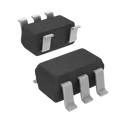
0 Uses0 StarsLP2985IM5X-3.3
Linear Voltage Regulator IC Positive Fixed 1 Output 150mA SOT-23-5 The LP2985IM5X-3.3 specification defines the engineering requirements for a low-dropout linear voltage regulator integrated circuit designed to provide a regulated 3.3 V output for precision analog and digital electronic systems. This specification establishes the functional, electrical, mechanical, thermal, environmental, and quality requirements necessary to ensure stable voltage regulation, low output noise, and long-term operational reliability. The device is intended for use in embedded systems, industrial automation, portable electronics, instrumentation, communication equipment, and battery-powered applications requiring a low-noise and highly stable power supply. Its low dropout voltage, high power supply rejection, and integrated protection features make it suitable for powering microcontrollers, sensors, analog circuitry, and other sensitive electronic devices. Engineering Requirements The low-dropout voltage regulator shall be manufactured using qualified semiconductor fabrication processes and high-quality materials to ensure consistent electrical performance, low quiescent current, and dependable long-term reliability. The device shall maintain stable operation under specified input voltage, output load, temperature, and environmental operating conditions. Electrical characteristics shall provide accurate output voltage regulation, low dropout voltage, excellent line and load regulation, high power supply rejection, and low output noise. The regulator shall maintain stable output performance during startup, shutdown, transient load changes, and supply voltage variations without compromising system operation. The integrated control architecture shall support reliable voltage regulation while incorporating protection mechanisms such as current limiting and thermal shutdown to safeguard both the device and the powered system during abnormal operating conditions. The regulator shall maintain stable performance throughout continuous operation and dynamic load transitions. Thermal performance shall support continuous operation within the specified junction temperature range while maintaining electrical integrity and long-term reliability. The package shall be suitable for automated surface-mount assembly and compatible with standard solder reflow manufacturing processes. Mechanical construction shall withstand thermal cycling, vibration, mechanical handling, and environmental exposure without degradation of electrical or mechanical performance. Workmanship shall be free from defects including contamination, package cracking, bond failures, lead deformation, plating irregularities, or structural inconsistencies that could adversely affect functionality or reliability. Inspection, validation, and testing shall be performed using calibrated equipment and controlled quality procedures to verify compliance with engineering and manufacturing requirements. Any deviation from this specification shall require formal engineering evaluation, documented technical justification, and approval through the established engineering change control process before implementation. Documentation Supporting documentation shall include engineering drawings, electrical performance specifications, thermal characterization reports, application guidelines, qualification records, inspection reports, reliability data, material declarations, and revision-controlled manufacturing documentation. All documentation shall be maintained under formal configuration management and quality assurance systems to ensure complete product traceability. Revision Control Any modification to this specification shall be managed through the formal engineering change management process. All revisions shall undergo technical review, validation, and approval before release to ensure continued compliance with design intent and applicable engineering standards. #EngineeringSpecification #LowDropoutRegulator #LDO #VoltageRegulator #PowerManagement #EmbeddedSystems #IndustrialElectronics #Semiconductor #QualityAssurance #EngineeringDocumentation
0 Uses0 StarsTXU0202DTTR
Voltage Level Translator Unidirectional 1 Circuit 2 Channel 200Mbps 8-X1SON (1.95x1) The TXU0202DTTR specification defines the engineering requirements for a dual-bit voltage level translator integrated circuit designed for bidirectional logic-level conversion between digital interfaces operating at different supply voltages. This specification establishes the functional, electrical, mechanical, thermal, environmental, and quality requirements necessary to ensure reliable signal translation, high-speed communication, and long-term operational stability in embedded electronic systems. The device is intended for use in embedded controllers, microprocessor and microcontroller systems, communication interfaces, industrial automation equipment, consumer electronics, and portable devices requiring voltage compatibility between digital subsystems. It enables seamless signal transfer while preserving logic integrity, minimizing propagation delay, and supporting low-power operation in compact electronic designs. Engineering Requirements The voltage level translator shall be manufactured using qualified semiconductor fabrication processes and high-quality materials to ensure consistent electrical performance, low power consumption, and dependable long-term reliability. The device shall maintain stable operation under specified voltage, temperature, and environmental operating conditions. Electrical characteristics shall provide accurate bidirectional logic-level translation with low propagation delay, high noise immunity, and reliable input and output switching performance. The device shall maintain signal integrity during continuous operation, power sequencing, and dynamic switching conditions without introducing excessive distortion or timing errors. The integrated translation architecture shall support independent voltage domains while ensuring reliable communication between connected digital devices. The device shall maintain stable performance across varying supply voltages and logic frequencies while minimizing leakage current and preserving overall system efficiency. Thermal performance shall support continuous operation within the specified junction temperature range while maintaining electrical integrity and long-term reliability. The package shall be suitable for automated surface-mount assembly and compatible with standard solder reflow manufacturing processes. Mechanical construction shall withstand thermal cycling, vibration, mechanical handling, and environmental exposure without degradation of electrical or mechanical performance. Workmanship shall be free from defects including contamination, package cracking, bond failures, lead deformation, or structural inconsistencies that could adversely affect functionality or reliability. Inspection, validation, and testing shall be performed using calibrated equipment and controlled quality procedures to verify compliance with engineering and manufacturing requirements. Any deviation from this specification shall require formal engineering evaluation, documented technical justification, and approval through the established engineering change control process before implementation. Documentation Supporting documentation shall include engineering drawings, electrical performance specifications, timing diagrams, application guidelines, qualification reports, inspection records, reliability data, material declarations, and revision-controlled manufacturing documentation. All documentation shall be maintained under formal configuration management and quality assurance systems to ensure complete product traceability. Revision Control Any modification to this specification shall be managed through the formal engineering change management process. All revisions shall undergo technical review, validation, and approval before release to ensure continued compliance with design intent and applicable engineering standards. #EngineeringSpecification #VoltageLevelTranslator #LogicLevelShifter #DigitalInterface #EmbeddedSystems #Semiconductor #SignalIntegrity #IndustrialElectronics #QualityAssurance #EngineeringDocumentation
41 Uses0 StarsMCP3204-CI/SL
12 Bit Analog to Digital Converter 2, 4 Input 1 SAR 14-SOIC The MCP3204-CI/SL specification defines the engineering requirements for a multi-channel analog-to-digital converter integrated circuit designed to provide high-accuracy conversion of analog signals into digital data for embedded electronic systems. This specification establishes the functional, electrical, mechanical, thermal, environmental, and quality requirements necessary to ensure precise signal acquisition, reliable data conversion, and long-term operational stability. The device is intended for use in embedded control systems, industrial automation, instrumentation, data acquisition equipment, sensor interfaces, medical electronics, and portable devices requiring accurate analog signal measurement. It supports multiple analog input channels and serial digital communication, enabling efficient integration with microcontrollers and digital processing systems. Engineering Requirements The analog-to-digital converter shall be manufactured using qualified semiconductor fabrication processes and high-quality materials to ensure consistent conversion accuracy, low power consumption, and dependable long-term reliability. The device shall maintain stable operation under specified voltage, temperature, and environmental conditions. Electrical characteristics shall provide accurate analog-to-digital conversion with low noise, excellent linearity, and stable reference performance. The converter shall maintain repeatable sampling characteristics and consistent digital output while supporting reliable serial communication with compatible host controllers. The conversion architecture shall provide predictable sampling behavior, low conversion error, and reliable channel selection while maintaining signal integrity throughout the specified operating range. The device shall support continuous and intermittent data acquisition without degradation of conversion performance. Thermal performance shall support continuous operation within the specified junction temperature range while maintaining electrical characteristics and long-term reliability. The package shall be suitable for automated surface-mount assembly and compatible with standard solder reflow manufacturing processes. Mechanical construction shall withstand thermal cycling, vibration, mechanical handling, and environmental exposure without degradation of functionality. Workmanship shall be free from defects including contamination, package cracking, bond failures, lead deformation, or structural inconsistencies that could adversely affect electrical or mechanical performance. Inspection, validation, and testing shall be performed using calibrated equipment and controlled quality procedures to verify compliance with engineering and manufacturing requirements. Any deviation from this specification shall require formal engineering evaluation, documented technical justification, and approval through the established engineering change control process before implementation. Documentation Supporting documentation shall include engineering drawings, electrical performance specifications, timing diagrams, application guidelines, qualification reports, inspection records, reliability data, material declarations, and revision-controlled manufacturing documentation. All documentation shall be maintained under formal configuration management and quality assurance systems to ensure complete product traceability. Revision Control Any modification to this specification shall be managed through the formal engineering change management process. All revisions shall undergo technical review, validation, and approval before release to ensure continued compliance with design intent and applicable engineering standards. #EngineeringSpecification #AnalogToDigitalConverter #ADC #DataAcquisition #SignalConditioning #EmbeddedSystems #IndustrialElectronics #Semiconductor #QualityAssurance #EngineeringDocumentation
4 Uses0 StarsABM8G-24.000MHZ-18-D2Y-T
24 MHz ±20ppm Crystal 18pF 60 Ohms 4-SMD, No Lead The ABM8G-24.000MHZ-18-D2Y-T is a compact 24.000 MHz surface-mount quartz crystal from Abracon's ABM8G series, designed to provide a stable and accurate clock reference for digital electronic systems. Housed in a miniature 3.2 × 2.5 mm, 4-pad SMD package, it is optimized for space-constrained applications while delivering reliable frequency performance over a wide operating temperature range. This crystal is commonly used in microcontrollers, wireless modules, communication equipment, networking devices, industrial electronics, and precision timing circuits. It operates in the fundamental mode with an 18 pF load capacitance, making it suitable for a broad range of oscillator circuits. Key Features 24.000 MHz fundamental-mode quartz crystal Compact 3.2 × 2.5 × 1.0 mm 4-pad SMD package 18 pF load capacitance ±20 ppm frequency tolerance ±30 ppm frequency stability Maximum 60 Ω ESR Wide operating temperature range: −40°C to +85°C Glass-sealed ceramic package for high reliability Compatible with standard IR reflow soldering processes Low-profile design suitable for compact PCB layouts Ideal for embedded systems, communications, wireless devices, and clock generation applications. #Abracon #QuartzCrystal #24MHz #ABM8G #SMDCrystal #TimingDevice #ClockSource #EmbeddedSystems #WirelessElectronics #IndustrialElectronics #PCBDesign #ElectronicsComponents
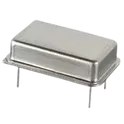
157 Uses0 StarsECS-100AX-018
1.8432 MHz XO (Standard) TTL Oscillator 5V 14-DIP, 4 Leads (Full Size, Metal Can) 1.8432 MHz 5V DIP-4 oscillator The ECS-100AX-018 is a 1.8432 MHz crystal-based TTL clock oscillator from ECS Inc. designed to provide a stable and accurate clock source for digital systems. It operates from a 5 V supply and delivers a TTL-compatible output, making it suitable for microprocessors, microcontrollers, UART/serial communication circuits, industrial controllers, and legacy digital logic applications. The device is housed in a 14-pin DIP metal can package (4 active leads) for through-hole PCB mounting. Key Features 1.8432 MHz fixed output frequency Crystal-based XO (Crystal Oscillator) architecture 5 V supply voltage TTL-compatible output Frequency stability of ±100 ppm Low maximum supply current of 15 mA Through-hole 14-DIP (4-lead metal can) package Operating temperature range: 0°C to +70°C Suitable for clock generation in digital and communication systems RoHS compliant #ECSInc #ClockOscillator #CrystalOscillator #TTL #1_8432MHz #5V #ThroughHole #DIP14 #TimingDevice #DigitalClock #EmbeddedSystems #IndustrialElectronics #PCBDesign
1 Uses0 StarsMCP120T-450I/TT
Supervisor Open Drain or Open Collector 1 Channel SOT-23-3 The MCP120T-450I/TT is a microcontroller supervisory (voltage reset) IC from Microchip Technology designed to monitor the system supply voltage and ensure reliable startup and operation of microcontroller-based systems. It keeps the microcontroller in the reset state until the supply voltage reaches a safe operating level and automatically asserts a reset signal if the supply voltage falls below the preset threshold, protecting the system from brown-out and power-failure conditions. The device features an open-drain active-low RESET output, a 4.375 V threshold, and is housed in a compact SOT-23-3 package, making it suitable for space-constrained embedded applications. Key Features Monitors a single supply voltage with a 4.375 V reset threshold Open-drain, active-low RESET output Holds the microcontroller in reset during power-up until VDD is stable Automatically resets the system during brown-out or power-loss events 150 ms minimum reset timeout after VDD exceeds the threshold Supports 3 V, 3.3 V, and 5 V system supervision Low operating current (typically 45 µA) Wide operating temperature range: −40°C to +85°C Compact SOT-23-3 surface-mount package Hashtags #Microchip #MCP120 #VoltageSupervisor #ResetIC #BrownOutProtection #PowerOnReset #PMIC #EmbeddedSystems #Microcontroller #SOT23 #PowerManagement #CircuitProtection
17 Uses0 StarsMS580314BA01-00
Pressure Sensor 203.05PSI (1400kPa) Absolute 24 b 8-SMD Module The MS580314BA01-00 is a high-resolution digital absolute pressure sensor module from TE Connectivity Measurement Specialties. It integrates a precision MEMS pressure sensing element, a 24-bit ΔΣ ADC, and factory-calibrated coefficients to provide highly accurate digital pressure and temperature measurements. The sensor supports both I²C and SPI communication interfaces, making it easy to interface with a wide range of microcontrollers while requiring minimal external components. It is designed for low-power, high-accuracy applications such as altimeters, depth measurement systems, weather monitoring, industrial pressure sensing, and portable instrumentation. Key Features Digital absolute pressure sensor with integrated MEMS sensing element High-resolution 24-bit ΔΣ ADC with factory calibration Supports I²C and SPI digital interfaces Pressure range up to 14 bar (1400 kPa / 203 psi) Supply voltage: 1.8 V to 3.6 V Integrated temperature measurement for compensation and monitoring Low power consumption, suitable for battery-powered devices Operating temperature range: −40°C to +85°C Excellent long-term stability with low hysteresis Compact 8-SMD module for surface-mount PCB assembly Requires few or no external components for operation #PressureSensor #MEMS #AbsolutePressure #DigitalSensor #24BitADC #I2C #SPI #LowPower #IndustrialElectronics #Altimeter #DepthMeasurement #WeatherMonitoring #TEConnectivity #SurfaceMount #EmbeddedSystems
11 Uses0 Stars