Microcontrollers
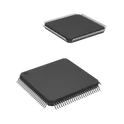
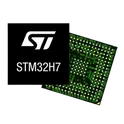
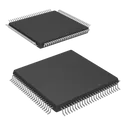
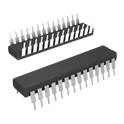
A microcontroller is a small, low-cost computer-on-a-chip that can be used to control electronic devices and systems. It consists of a central processing unit (CPU), memory, input/output (I/O) ports, and other peripherals integrated onto a single chip. Microcontrollers are commonly used in a wide range of applications, including automotive systems, home appliances, industrial automation, and consumer electronics. One of the key benefits of microcontrollers is their ability to interact with their environment through sensors and actuators, making them well-suited for use in embedded systems. These systems are often found in devices that require real-time control or data processing, such as medical equipment, aircraft, and factory automation systems. Flux.ai is home to the world's largest community-driven public library of microcontrollers, with footprints, symbols, datasheets, and simulation models for a wide range of devices. Whether you're a professional engineer looking for a specific microcontroller for your next project, or a hobbyist exploring the possibilities of microcontroller-based systems, Flux.ai has the resources you need to get started.
AO3400A
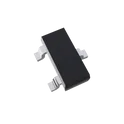
N-Channel 30 V 5.7A (Ta) 1.4W (Ta) Surface Mount SOT-23-3 The AO3400A N-Channel MOSFET is a 30V N-channel enhancement-mode MOSFET designed using trench MOSFET technology. It is widely used for load switching, DC-DC converters, motor driving, and PWM control applications due to its very low on-resistance and compact SOT-23 package. It is especially popular in small electronics and embedded systems because it can be driven directly by 3.3V or 5V logic signals, making it ideal for microcontroller-based designs. Key Features Drain-Source Voltage (VDS): 30V Continuous Drain Current (ID): up to 5.7A (at 25°C) Ultra-low RDS(on): ~26.5 mΩ @ VGS = 10V ~32 mΩ @ VGS = 4.5V ~48 mΩ @ VGS = 2.5V Logic-level gate drive (works well with MCU GPIOs) Fast switching performance (ns-range switching times) Low gate charge (~6–7 nC) → efficient switching Compact SOT-23 package for space-saving PCB design Low power dissipation (~1.4W typical at 25°C ambient) Operating temperature: −55°C to +150°C Typical Applications Load switching (LEDs, sensors, small motors) Power management in battery-powered devices DC-DC converters PWM control circuits Fan and heater control in embedded systems #AO3400A #MOSFET #NChannelMOSFET #PowerElectronics #SOT23 #LoadSwitch #EmbeddedSystems #ElectronicsComponents #TrenchMOSFET #Commonpartslibrary #Transistor #FET
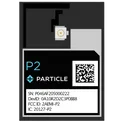
3.6k Uses3 StarsESP32-C6-WROOM-1-N4
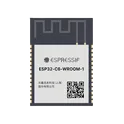
802.15.4 Bluetooth, Wi-Fi Bluetooth v5.0, ZigBee® Transceiver Module 2.4GHz PCB Trace Surface Mount The ESP32-C6-WROOM-1-N4 is based on the ESP32-C6 single-core RISC-V microcontroller, integrating advanced wireless standards and secure connectivity in a small module format. It is designed for next-generation IoT devices that require Wi-Fi 6 efficiency, mesh networking, and Bluetooth Low Energy support. Processor: 32-bit RISC-V single-core CPU (up to 160 MHz) Wireless Connectivity: Wi-Fi 6 (802.11ax, 2.4 GHz) Bluetooth LE 5.0 IEEE 802.15.4 (Thread / Zigbee support) Memory (N4 variant): 4 MB Flash Security: Secure boot Flash encryption Cryptographic hardware acceleration #commonpartslibrary #rf #wireless #transceiver #module #zigbee
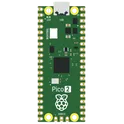
400 Uses3 StarsRaspberry Pi Pico 2 Shield
The Raspberry Pi Pico 2 is now equipped with the RP2350, a cutting-edge, high-performance microcontroller designed with enhanced security and versatility in mind. Every element of its design has been upgraded, from the advanced CPU cores to the innovative PIO (Programmable I/O) interfacing subsystem. #raspberrypi #newpico #pipico2 #pipico #rp2350 #shield
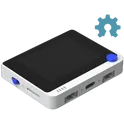
342 Uses3 StarsSeeed Studio Wio Terminal.
The Wio Terminal is a SAMD51-based microcontroller with Wireless Connectivity powered by Realtek RTL8720DN that’s compatible with Arduino and MicroPython. Currently, wireless connectivity is only supported by Arduino. It runs at 120MHz (Boost up to 200MHz), 4MB External Flash and 192KB RAM. It supports both Bluetooth and Wi-Fi providing backbone for IoT projects. This repository contains all the necessary documentation you need to manufacture Wio Terminal: https://github.com/Seeed-Studio/OSHW-WioTerminal
10 Uses3 Stars