LEDs
A LED (light-emitting diode) is a small, energy-efficient light source that is commonly used in a variety of applications. LED technology has advanced significantly in recent years, making it a popular choice for a wide range of lighting needs. LEDs are known for their low power consumption, long lifespan, and ability to produce a bright, directional light. One of the primary use cases for LEDs is in general lighting, where they are used in everything from residential and commercial lighting to automotive and aviation lighting. LEDs are also commonly used in electronic displays, such as TVs, computer monitors, and smartphones, as well as in signaling and indication applications, such as traffic lights and exit signs. If you are looking for high-quality LED resources, flux.ai has the world's largest community-driven public library of LED footprints, symbols, datasheets, and simulation models. Whether you are a designer, engineer, or manufacturer, you can find the resources you need to work with LEDs in your projects.
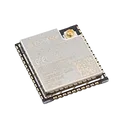
ESP32-WROOM-32UE-N16
2.4GHz -98dBm SMD,19.2x18mm RF Transceiver Modules and Modems RoHS The ESP32-WROOM-32UE-N16 is a 2.4 GHz wireless MCU module built around the ESP32 SoC. It combines a dual-core processor, integrated Wi-Fi (802.11 b/g/n) and Bluetooth 4.2 (Classic + BLE), along with rich peripherals. The “UE” variant specifically uses a U.FL / IPEX connector for an external antenna, making it ideal for applications that require better RF performance or flexible antenna placement (e.g., enclosed products or long-range communication). The “N16” indicates 16 MB external flash memory, suitable for large firmware, OTA updates, and data-heavy applications. Processing Dual-core Xtensa LX6 32-bit CPU Clock speed up to 240 MHz Memory 16 MB Flash (N16 variant) ~520 KB SRAM + 448 KB ROM Connectivity Wi-Fi: 802.11 b/g/n (up to 150 Mbps) Bluetooth: v4.2 (BR/EDR + BLE) Frequency: 2.4 GHz band Antenna External antenna via U.FL connector Better range and flexibility vs PCB antenna Interfaces / Peripherals GPIO (≈26 usable pins) UART, SPI, I2C, I2S, SDIO ADC, DAC PWM (LED & motor control) Capacitive touch sensing Security Hardware encryption: AES, SHA, RSA Secure boot & flash encryption support Power Operating voltage: 3.0V – 3.6V (typ. 3.3V) Multiple low-power modes for battery applications Environmental Operating temperature: -40°C to +85°C Physical Surface-mount module (~38 pins / 52 pads depending on reference) Compact and RF-shielded design Typical Applications Smart home devices (IoT) Industrial automation Wireless sensors and data loggers Wearables and consumer electronics Remote monitoring systems #Module #ESP32
49 Uses0 StarsESP32-S3-WROOM-1-N8R2
WiFi 802.11a/b/g/n, Bluetooth v5.0 Transceiver Module 2.4GHz PCB Trace The ESP32-S3-WROOM-1-N8R2 is a compact, low-power Wi-Fi and Bluetooth® Low Energy (BLE) module developed by Espressif Systems. It is based on the ESP32-S3 system-on-chip (SoC), which integrates a dual-core Xtensa® LX7 processor optimized for high performance and edge AI processing. This module includes 8 MB of external SPI flash memory and 2 MB of PSRAM, enabling efficient handling of memory-intensive applications such as graphical interfaces, buffering, and embedded machine learning workloads. Designed for flexibility and scalability, the module integrates RF components, power management, and a wide range of peripherals into a surface-mount package suitable for IoT, industrial, and consumer electronics applications. Key Features Dual-core Xtensa® LX7 processor operating up to 240 MHz Integrated 2.4 GHz Wi-Fi (802.11 b/g/n) Bluetooth 5 Low Energy support Embedded 8 MB SPI flash memory Integrated 2 MB PSRAM AI acceleration through vector instruction support USB OTG (full-speed) capability Multiple low-power operating modes Built-in hardware security features Extensive peripheral interface support Functional Overview The module consists of several integrated subsystems, including a dual-core processing unit, memory subsystem (flash and PSRAM), RF subsystem for wireless communication, peripheral interface controllers, power management circuitry, and a hardware-based security engine. Electrical Characteristics Operating voltage range: 3.0 V to 3.6 V (typical 3.3 V) Operating temperature range: -40°C to +85°C RF operating frequency: 2.4 GHz Current consumption varies depending on operating mode, ranging from microamp levels in deep sleep to hundreds of milliamps during active transmission Processor and Memory The module features a dual-core Xtensa® LX7 CPU capable of running at frequencies up to 240 MHz. It includes approximately 512 KB of internal SRAM, supplemented by 8 MB of external flash memory and 2 MB of PSRAM for extended data storage and processing. Wireless Connectivity The ESP32-S3-WROOM-1-N8R2 supports Wi-Fi communication compliant with 802.11 b/g/n standards in the 2.4 GHz band. It also supports Bluetooth 5 Low Energy for short-range wireless communication. The module includes an integrated PCB antenna and supports RF output power up to approximately +20 dBm. Peripheral Interfaces The module provides a wide range of interfaces, including general-purpose input/output (GPIO) pins, SPI, I2C, UART, and I2S for audio applications. It also supports PWM for LED control, a 12-bit analog-to-digital converter (ADC), and USB OTG functionality. Pin functions are multiplexed to maximize flexibility. Power Management Power efficiency is achieved through multiple operating modes, including active mode, modem sleep, light sleep, and deep sleep. The module includes an RTC subsystem for low-power timekeeping and supports dynamic frequency scaling to optimize performance and energy consumption. Security Features The module incorporates several hardware-based security mechanisms, including secure boot, flash encryption, and digital signature verification. It also includes a hardware random number generator and cryptographic accelerators supporting AES, SHA, RSA, and ECC algorithms. Mechanical Characteristics The module is designed for surface-mount integration and measures approximately 18 mm by 25.5 mm. It includes an onboard PCB antenna and is suitable for compact embedded designs. Pin Configuration Overview GPIO pins are multiplexed to support various peripheral functions such as analog inputs, communication interfaces, and control signals. Dedicated pins are provided for power supply, module enable, and boot configuration. Typical Applications Internet of Things (IoT) devices Smart home systems Industrial automation and monitoring Edge AI and machine learning applications Wearable electronics Audio and multimedia systems USB-enabled embedded devices Compliance The module is designed to meet Wi-Fi and Bluetooth standards and is compliant with RoHS requirements. Certification such as FCC or CE may apply depending on the specific module variant and deployment. Ordering Information The ESP32-S3-WROOM-1-N8R2 variant includes 8 MB of flash memory and 2 MB of PSRAM. #commonpartslibrary #integratedcircuit #transceiver #wireless #rf
362 Uses0 StarsLTST-S270GKT
Green 569nm LED Indication - Discrete 2.1V 0603 (1608 Metric) The LTST-S270GKT is a green, right-angle (side-looking) SMD LED in a 0603 (1608 metric) package, optimized for space-constrained PCB designs. It emits light parallel to the PCB surface, making it ideal for panel indicators, backlighting, and edge illumination. Color: Green (dominant wavelength ~569 nm) Package: 0603 (1.6 × 1.15 × 0.6 mm) ultra-compact size Mounting Type: Surface-mount, right-angle (side-view) Forward Voltage: ~2.1 V (typical) Forward Current: 20 mA (test condition) Luminous Intensity: ~10 mcd Viewing Angle: Wide (~130°) Lens Type: Clear, colorless rectangular lens Additional Characteristics Side-emitting design for edge lighting or light pipes Compatible with automated assembly (tape & reel packaging) RoHS compliant / lead-free (environment-friendly) Operating temperature: −30°C to +85°C Typical Applications Status indicators on compact PCBs Backlighting (LCDs, buttons, icons) Consumer electronics and portable devices Industrial control panels #commonpartslibrary #optoelectronic #led #SMD
368 Uses0 StarsMMBT3904LT1G
Bipolar (BJT) Transistor NPN 40V 200 mA 300MHz 300 mW Surface Mount SOT-23-3 (TO-236) The MMBT3904LT1G is a general-purpose NPN bipolar junction transistor designed for switching and amplification applications. It is housed in a compact SOT-23 surface-mount package, making it suitable for high-density PCB designs. This transistor is widely used in low-power signal processing, digital switching, and analog amplification circuits due to its reliable performance and fast switching characteristics. Key Features General-purpose NPN transistor Compact SOT-23 surface-mount package Fast switching speed Low saturation voltage Suitable for low-current and low-power applications High reliability and stability Pb-free, Halogen-free, and RoHS compliant Electrical Characteristics (Typical @ 25°C unless otherwise specified) Collector-Emitter Voltage (VCEO): 40 V Collector-Base Voltage (VCBO): 60 V Emitter-Base Voltage (VEBO): 6 V Collector Current (IC): 200 mA (max) DC Current Gain (hFE): 100 – 300 Collector-Emitter Saturation Voltage (VCE(sat)): 0.2 V (typ) Transition Frequency (fT): ~300 MHz Absolute Maximum Ratings Collector Current (Continuous): 200 mA Power Dissipation: ~225 mW Junction Temperature: +150°C (max) Operating Temperature Range: -55°C to +150°C Storage Temperature Range: -55°C to +150°C Mechanical Characteristics Package Type: SOT-23 (TO-236AB) Mounting Type: Surface Mount Number of Pins: 3 Marking Code: Dependent on lot/manufacturer marking Applications General-purpose switching circuits Signal amplification Digital logic interfacing LED drivers and small load switching Audio and RF signal processing #CommonPartsLibrary #TransistorBJT #MMBT2222
1.8k Uses0 StarsSML-LX0603GW-TR
Green LED Indication - Discrete 2.2V 0603 (1608 Metric) The SML-LX0603GW-TR is a surface-mount white LED in a compact 0603 (1608 metric) package, designed for indicator and backlighting applications. It offers high brightness with low power consumption and wide viewing angle, making it suitable for portable and space-constrained electronic devices. The device is optimized for automated assembly and is supplied in tape-and-reel packaging. Key Features White LED (cool white emission) Compact 0603 (1.6 mm × 0.8 mm) SMD package High luminous intensity with low forward current Wide viewing angle (~120° typical) Low power consumption Compatible with reflow soldering Tape & reel packaging for automated assembly Optical Characteristics (Typical values) Emission Color: White Luminous Intensity: ~100 to 300 mcd @ 20 mA Color Temperature: ~6000K to 8000K Viewing Angle: 120° Electrical Characteristics (Typical values unless otherwise specified) Forward Voltage (VF): Typ: 3.0 V Max: 3.4 V @ 20 mA Forward Current (IF): 20 mA (continuous) Reverse Voltage (VR): 5 V Power Dissipation: ~75 mW Absolute Maximum Ratings Forward Current: 25 mA (continuous) Peak Forward Current: 100 mA (pulse, short duration) Operating Temperature: -40°C to +85°C Storage Temperature: -40°C to +100°C Mechanical Characteristics Package Type: 0603 (1608 metric) Dimensions: ~1.6 mm × 0.8 mm × 0.8 mm Mounting Type: Surface mount (SMT) Polarity: Cathode marking on package Material Specifications Lens: Epoxy resin (diffused) LED Chip: InGaN (Indium Gallium Nitride) Lead Frame: Copper alloy with silver plating Packaging Information Packaging Type: Tape & Reel (TR) Reel Quantity: Typically 3,000–5,000 pcs per reel RoHS Compliant: Yes Lead-Free: Yes Typical Applications Status indicators Backlighting (LCD, keypad, buttons) Consumer electronics Portable devices Automotive interior lighting (low-power) #commonpartslibrary #optoelectronic #led #SML-LX0603
1.3k Uses0 StarsPCA9632DP1,118
40 power reduction compared to PCA9633 4 LED drivers. Each output programmable at: Off On Programmable LED brightness Programmable group dimming/blinking mixed with individual LED brightness 1 MHz Fast-mode Plus I2C-bus interface with 30 mA high drive capability on SDA output for driving high capacitive buses 256-step (8-bit) linear programmable brightness per LED output varying from fully off (default) to maximum brightness using a 1.5625 kHz PWM signal in Individual brightness m
4 Uses0 StarsKTD2027BEWE-TR
LED Lighting Driver ICs LED Lighting Drivers 4-Channel RGBW Driver, I2C, 1.5x1.5mm TDFN The KTD2027BEWE-TR is a highly integrated, low-power RGB LED driver designed for portable and battery-powered applications. It features a compact WLCSP package and provides precise current control for up to three LED channels. The device includes an I²C-compatible interface, enabling flexible control of brightness, color mixing, and lighting effects. Integrated features such as programmable current sinks, dimming control, and built-in protection mechanisms make it suitable for indicators, backlighting, and decorative lighting in consumer electronics. Key Features Triple-channel constant current LED driver (RGB support) I²C-compatible digital interface Independent brightness control per channel Programmable current up to ~24 mA per channel Built-in PWM dimming and pattern generation Low quiescent current for power-sensitive applications Wide input voltage range Thermal shutdown and overcurrent protection Small WLCSP package (suitable for compact designs) Applications Mobile devices and wearables Status indicators and notification LEDs Backlighting and decorative lighting IoT and portable electronics Absolute Maximum Ratings Supply Voltage (VDD): −0.3 V to +6.0 V Logic Input Voltage: −0.3 V to VDD + 0.3 V Operating Temperature Range: −40°C to +85°C Storage Temperature Range: −55°C to +150°C Recommended Operating Conditions Supply Voltage (VDD): 1.8 V to 5.5 V LED Forward Voltage: Dependent on external LEDs Ambient Temperature: −40°C to +85°C Electrical Characteristics (Typical) Supply Current (Idle): < 1 µA (shutdown mode) Channel Current Accuracy: ±5% (typical) Maximum Output Current: ~24 mA per channel I²C Clock Frequency: Up to 400 kHz (Fast Mode) Functional Description The KTD2027BEWE-TR operates as a constant-current sink driver for RGB LEDs. Each channel can be independently programmed via the I²C interface to control brightness and enable dynamic lighting effects. Internal PWM generators allow smooth dimming without requiring continuous microcontroller intervention. The device also integrates protection features such as thermal shutdown and current limiting to ensure reliable operation. Pin Configuration (Typical WLCSP) VDD – Power supply GND – Ground SDA – I²C data line SCL – I²C clock line LED1 – Current sink output (Red) LED2 – Current sink output (Green) LED3 – Current sink output (Blue) Package Information Package Type: WLCSP (Wafer-Level Chip Scale Package) Mounting: Surface mount Tape & Reel: Yes (TR suffix) Ordering Information KTD2027BEWE-TR: Tape and reel packaging for automated assembly #commonpartslibrary #integratedcircuit #leddriver
2 Uses0 StarsMMBT2222ALT3G
Bipolar (BJT) Transistor NPN 40V 600 mA 300MHz 300 mW Surface Mount SOT-23-3 (TO-236) The MMBT2222ALT3G is a NPN general-purpose bipolar junction transistor (BJT) manufactured by onsemi, designed in a SOT-23 surface-mount package. It is the SMD version of the well-known 2N2222A transistor family, used for switching and signal amplification in compact electronic circuits. It is widely used in industrial, automotive (AEC-Q101 qualified variants), and general embedded systems due to its reliability, small size, and good electrical performance. Key Features NPN General-Purpose Transistor Suitable for switching and low-power amplification Collector-Emitter Voltage (Vceo) Up to 40 V Collector Current Up to 600 mA Power Dissipation Around 225–300 mW (depending on package conditions) High Frequency Performance Transition frequency up to ~300 MHz DC Current Gain (hFE) Typically ~100 at moderate currents Low Saturation Voltage Efficient switching performance for digital circuits SOT-23 Surface-Mount Package Compact footprint for modern PCB designs Wide Temperature Range Typically -55°C to +150°C RoHS / Lead-Free Compliant Environmentally compliant manufacturing Typical Applications LED switching circuits Relay driver stages MCU signal interfacing (Arduino, ESP32, etc.) Small motor drivers General signal amplification Automotive and industrial control circuits Important Note MMBT2222ALT3G = SMD version (SOT-23) Equivalent to 2N2222A (TO-92 through-hole version) in function, but not in physical package. 2N2222A SOT-23 #commonpartslibrary #transistor #bjt
559 Uses0 StarsLTR-559ALS-01
Optical Sensor Ambient I2C 8-SMD, No Lead The LTR-559ALS-01 is a combined ambient light sensor and proximity sensor module designed for low-power and space-constrained applications. It integrates a photodiode array for ambient light detection and an infrared emitter with a photodiode for proximity sensing. The device provides digital output via an I²C interface and includes programmable interrupt functionality for system-level event handling. It is commonly used in mobile devices, wearable electronics, and industrial applications requiring automatic brightness control and object detection. Key Features: Integrated ambient light and proximity sensing functions High sensitivity with wide dynamic range for light measurement Infrared LED driver for proximity detection I²C digital interface for communication Programmable interrupt output Low power consumption with multiple operating modes Built-in noise cancellation and sunlight rejection Compact surface-mount package Electrical Characteristics: Supply voltage range: compatible with typical low-voltage logic systems Low standby current for power-sensitive applications Programmable gain and integration time for ambient light sensing Adjustable LED drive current for proximity sensing Optical Characteristics: Ambient light sensing with human-eye spectral response approximation Proximity detection using infrared light with high immunity to ambient light interference Interface: Communication protocol: I²C-compatible interface Supports configurable registers for threshold, timing, and interrupt control Package Information: Small form factor surface-mount package suitable for compact PCB layouts Integrated optical window for both ALS and proximity sensing Applications: Display brightness control in smartphones and tablets Proximity detection for touchless interfaces Wearable devices and IoT sensors Industrial automation and control systems Environmental and Compliance: Designed for standard commercial temperature ranges RoHS compliant and suitable for lead-free assembly processes Notes for Design Integration: Requires proper optical isolation between emitter and receiver for accurate proximity sensing PCB layout should minimize interference from external light sources Calibration may be required depending on enclosure and application conditions #commonpartslibrary #sensor #ambient
5 Uses0 Stars