Interface ICs
An interface IC is a type of integrated circuit that is designed to facilitate communication between two devices or systems. These devices are commonly used in electronic systems to enable the transfer of data and control signals between different components or subsystems. Some common use cases for interface ICs include connecting microcontrollers to peripherals such as sensors or displays, linking multiple processors together in a network, and enabling communication between devices using different communication protocols. Flux.ai has the world's largest community-driven public library of interface ICs, with footprints, symbols, datasheets, and simulation models. This library is a valuable resource for engineers and designers who need access to accurate and up-to-date information on these important components. Whether you are working on a new design project or simply looking to learn more about interface ICs, Flux.ai is an excellent resource to help you find the information you need.
ACM2012-900-2P-T002
2 Line Common Mode Choke Surface Mount 90 Ohms @ 100 MHz 400mA DCR 190mOhm The ACM2012-900-2P-T002, manufactured by TDK, is a 2-line common mode filter that helps reduce electromagnetic interference (EMI) and radio-frequency interference (RFI) in electronic systems. It is built using a wire-wound chip structure and optimized for high-speed differential signals while maintaining low impact on the desired signal. Key Characteristics Component Type: Common Mode Choke / EMI Filter Lines: 2-line (for differential signal pairs) Impedance: 90 Ω @ 100 MHz Current Rating: up to 400 mA DC Resistance: ~190 mΩ max Voltage Rating: up to 50 V Package Size: 0805 (2.0 × 1.2 mm) Mounting: Surface Mount (SMD) Function Suppresses common-mode noise on signal lines Maintains low differential impedance, so signal integrity is preserved Helps systems pass EMI/EMC compliance In simple terms: It filters out noise without affecting the actual data signal. Typical Applications USB, HDMI, Ethernet lines High-speed communication interfaces Embedded systems and IoT devices Consumer electronics and industrial equipment LVDS and display interfaces #CommonPartsLibrary #Filter #ACM
71 Uses0 StarsTC58NVG1S3HBAI6
NAND Flash 3.3V 2Gb 24nm SLC NAND (EEPROM) FLASH - NAND (SLC) Memory IC 2Gbit Parallel 25 ns 67-VFBGA (6.5x8) The TC58NVG1S3HBAI6 is a 2-Gbit (256M × 8) SLC NAND flash memory device originally developed by Toshiba (now Kioxia). It is a CMOS-based, electrically erasable and programmable read-only memory (EEPROM) used to store data even when power is removed. This device uses Single-Level Cell (SLC) NAND technology, which offers high reliability, fast access time, and long endurance, making it suitable for industrial and embedded systems. Key Characteristics Memory Type: NAND Flash (Non-volatile) Technology: SLC (Single-Level Cell) Density: 2 Gbit (256M × 8 organization) Interface: Parallel I/O Supply Voltage: 2.7 V – 3.6 V Access Time: ~25 ns Package: 67-ball VFBGA (compact surface-mount) Functional Overview Organized into pages and blocks (typical NAND structure) Supports operations such as: Read Page program (write) Block erase Copy-back operations Uses shared I/O pins for address, data, and command input/output Internally, data is transferred between the memory array and internal registers in page-sized chunks (~2176 bytes including spare area). Typical Applications Embedded systems storage Firmware and boot memory Industrial control systems Data logging devices Consumer electronics (e.g., cameras, audio storage) #CommonPartsLibrary #IntegratedCircuit #memory #TC58NVG1
0 Uses0 StarsSHT41-AD1B-R2
Board Mount Humidity Sensors Intermediate Humidity and Temperature Sensor Humidity, Temperature 0 ~ 100% RH I2C ±1.8% RH 4 s Surface Mount The SHT41-AD1B-R2 is a fully calibrated, low-power environmental sensor that measures relative humidity (RH) and temperature. It integrates sensing elements, signal processing, and a digital interface into a small surface-mount package, making it ideal for space-constrained designs. Key Features Sensor Type: Digital humidity and temperature sensor Interface: I²C (easy MCU integration) Supply Voltage: ~1.08 V to 3.6 V Humidity Accuracy: up to ±1.8% RH (typical) Temperature Accuracy: up to ±0.2 °C (typical) Response Time: Fast measurement and low latency Power Consumption: Ultra-low, suitable for battery devices Package: DFN (compact, ~1.5 × 1.5 mm) Factory Calibration: No external calibration required Functional Overview The sensor uses capacitive humidity sensing combined with a bandgap temperature sensor. Internal electronics convert these measurements into digital data via I²C, eliminating the need for external ADCs or complex signal conditioning. Design Advantages Small footprint for compact PCBs Low power consumption for IoT and portable devices High reliability with long-term stability Fast response time for real-time monitoring Simple integration with microcontrollers Typical Applications IoT and smart home devices HVAC and climate control systems Wearables and portable electronics Industrial monitoring systems Environmental data logging #CommonPartsLibrary #Sensors,-Transducer #Humidity #Moisture-Sensor #SHT4x
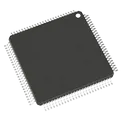
2.4k Uses0 StarsPIC32MZ2048EFM100-I/PT
MIPS32® M-Class PIC® 32MZ Microcontroller IC 32-Bit 200MHz 2MB (2M x 8) FLASH 100-TQFP (12x12) The PIC32MZ2048EFM100-I/PT is built around a MIPS32® M-Class core operating at up to 200 MHz, delivering high computational performance suitable for real-time control, signal processing, and communication-intensive systems. It integrates large on-chip memory, multiple communication interfaces, and rich peripheral support in a compact package. Key Features Core Architecture: 32-bit MIPS32® M-Class CPU Clock Speed: Up to 200 MHz Program Memory: 2 MB Flash RAM: 512 KB Package: 100-pin TQFP (12×12 mm), surface-mount Operating Voltage: 2.1 V to 3.6 V I/O Pins: Up to 78 programmable I/O Integrated Peripherals & Interfaces Communication Interfaces: CAN, Ethernet, USB OTG I²C, SPI, SQI, UART/USART Parallel Master Port (PMP) Analog Features: 40-channel, 12-bit ADC System Peripherals: DMA controller PWM modules Watchdog timer (WDT) Brown-out reset and power-on reset Advanced Features: Floating Point Unit (FPU) for fast math operations Hardware crypto engine (AES, SHA, etc., depending on variant) High-speed USB and Ethernet connectivity #CommonPartsLibrary #IntegratedCircuit #Microcontroller #PIC® 32MZ
4 Uses0 Stars1250360000
2 Position Wire to Board Terminal Block Vertical with Board 0.138" (3.50mm) Surface Mount The 1250360000 is a high-quality PCB terminal block manufactured by Weidmüller, designed for secure and reliable wire-to-board connections. It features a robust screw-clamp connection system that ensures strong mechanical retention and excellent electrical conductivity. This component is widely used in industrial control systems, power distribution modules, and automation equipment where dependable field wiring is required. The terminal block is designed for easy installation on printed circuit boards and supports solid or stranded wires. Its durable housing material provides resistance to environmental stress, making it suitable for long-term operation in demanding applications. Key Features Screw clamp connection for secure wire termination Through-hole PCB mounting for strong mechanical stability High current carrying capability مقاust insulating housing with flame-retardant properties واضحة labeling area for easy identification Suitable for industrial and automation applications Electrical Characteristics Rated Voltage: 300 V (typical, verify datasheet) Rated Current: Up to 10–16 A (depending on wire size) Contact Resistance: Low (optimized for power applications) Insulation Resistance: High (>10⁸ Ω typical) Mechanical Characteristics Mounting Type: Through-Hole PCB Connection Type: Screw Clamp Number of Positions: Typically 2–12 positions (variant dependent) Wire Gauge Range: ~24 AWG to 12 AWG (approx.) Pitch: Typically 5.00 mm or 5.08 mm (verify exact variant) Material Information Housing Material: Polyamide (PA), flame-retardant (UL94 V-0) Contact Material: Copper alloy Contact Plating: Tin-plated Environmental Characteristics Operating Temperature Range: -40°C to +105°C (typical) Flammability Rating: UL94 V-0 RoHS Compliant: Yes Applications Industrial control systems Power supply units Automation and PLC systems Signal and power distribution boards Building and factory wiring interfaces Notes Exact electrical ratings and pitch may vary depending on the specific configuration under this series. Always refer to the official Weidmüller datasheet for precise parameters before design integration. #commonpartslibrary #connector #terminalblock
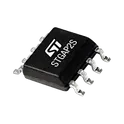
131 Uses0 StarsM24256E-FMN6TP
EEPROM Memory IC 256Kbit I2C 1 MHz 450 ns 8-SO The M24256E-FMN6TP is a 256-Kbit (32 Kbyte) I²C-compatible serial EEPROM from STMicroelectronics. It is designed for reliable, non-volatile data storage in a wide range of electronic applications including consumer, industrial, and automotive systems. The device supports standard (100 kHz), fast (400 kHz), and fast-mode plus (1 MHz) I²C communication, enabling efficient data transfer. It features byte and page write operations, low power consumption, and a high endurance of write cycles, making it suitable for frequent data logging and configuration storage. Housed in a compact SO8 package, the device is optimized for space-constrained PCB designs while maintaining robust performance and data retention capabilities. Key Features Memory size: 256 Kbit (32 Kbyte) Interface: I²C (2-wire serial interface) Clock frequency: Standard mode: 100 kHz Fast mode: 400 kHz Fast-mode Plus: 1 MHz Supply voltage range: 1.7 V to 5.5 V Page write capability: up to 64 bytes Write cycle time: ~5 ms (typical) Data retention: > 200 years Endurance: > 4 million write cycles Hardware write protection available ESD protection and latch-up immunity Functional Description The device operates as a slave on the I²C bus and supports: Byte write and read Page write (up to 64 bytes) Random and sequential read operations Memory addressing is internally managed using a 16-bit address pointer, allowing access to the full 32 KB memory array. The device includes an internal write cycle controller, eliminating the need for external timing management. Pin Configuration (SO8 Package) A0, A1, A2: Device address inputs VSS: Ground SDA: Serial data line SCL: Serial clock line WC: Write control (hardware write protection) VCC: Supply voltage Absolute Maximum Ratings Supply voltage (VCC): -0.3 V to 6.5 V Input voltage: -0.3 V to VCC + 0.6 V Storage temperature: -65°C to +150°C Operating temperature (industrial grade): -40°C to +85°C Electrical Characteristics Low standby current: < 1 µA (typical) Operating current: < 1 mA Input/output compatible with CMOS logic levels Schmitt trigger inputs for noise immunity Timing Characteristics Write cycle time: 5 ms (typical) Fast-mode Plus support up to 1 MHz Sequential read supports continuous data streaming Package Information Package type: SO8 (8-lead Small Outline) Mounting: Surface-mount (SMD) Tape & reel packaging (TP suffix) Applications Configuration storage Calibration data storage Data logging systems Industrial control systems Consumer electronics Embedded systems requiring non-volatile memory Advantages High endurance and long data retention Wide voltage range (ideal for mixed-voltage systems) Compact footprint High-speed I²C compatibility (up to 1 MHz) #commonpartslibrary #integratedcircuit #memory
15 Uses0 Stars