Interface ICs
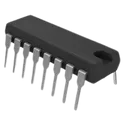
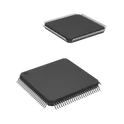
An interface IC is a type of integrated circuit that is designed to facilitate communication between two devices or systems. These devices are commonly used in electronic systems to enable the transfer of data and control signals between different components or subsystems. Some common use cases for interface ICs include connecting microcontrollers to peripherals such as sensors or displays, linking multiple processors together in a network, and enabling communication between devices using different communication protocols. Flux.ai has the world's largest community-driven public library of interface ICs, with footprints, symbols, datasheets, and simulation models. This library is a valuable resource for engineers and designers who need access to accurate and up-to-date information on these important components. Whether you are working on a new design project or simply looking to learn more about interface ICs, Flux.ai is an excellent resource to help you find the information you need.
OPA4391PWR
Standard (General Purpose) Amplifier 4 Circuit Push-Pull, Rail-to-Rail 14-TSSOP The OPA4391PWR is a precision quad operational amplifier designed for low-noise, high-speed signal conditioning in a wide range of analog applications. It integrates four independent amplifier channels within a single compact package, making it suitable for space-constrained designs that require consistent performance across multiple signal paths. The device offers a combination of low offset voltage, wide bandwidth, and fast slew rate, enabling accurate amplification of both small and rapidly changing signals. It is commonly used in instrumentation, data acquisition systems, active filtering, and audio signal processing where stability and signal integrity are critical. Functional Overview The device consists of four matched operational amplifiers that share common power supply connections while maintaining independent signal paths. Each amplifier is capable of operating in standard configurations such as inverting, non-inverting, differential, and buffer modes. The architecture supports rail-to-rail output swing, allowing efficient use of the available supply voltage. Internal design optimization ensures low distortion and stable operation across a broad range of load conditions. Electrical Characteristics The OPA4391PWR is optimized for low input offset voltage and low input bias current, contributing to high accuracy in precision applications. It features wide gain bandwidth and a high slew rate, supporting fast transient response and high-frequency operation. The amplifier maintains low noise performance, making it suitable for sensitive analog front-end designs. Power consumption is balanced to provide efficient operation without compromising dynamic performance. Operating Conditions The device operates over a wide supply voltage range, supporting both single-supply and dual-supply configurations. It is designed to function reliably across an extended temperature range, ensuring consistent performance in varying environmental conditions. Proper decoupling and layout practices are recommended to maintain stability and minimize noise coupling. Package and Mechanical Characteristics The OPA4391PWR is provided in a compact surface-mount package suitable for automated assembly processes. The package is designed to facilitate efficient thermal dissipation and reliable electrical connections. Pin configuration allows straightforward integration into standard PCB layouts for quad operational amplifiers. Applications This device is intended for use in precision analog circuits including signal conditioning, sensor interfaces, active filters, audio amplification, and data acquisition systems. Its combination of low noise, high speed, and multi-channel integration makes it well-suited for both industrial and consumer electronics applications. Design Considerations Careful PCB layout is recommended to optimize performance, including short signal paths, proper grounding, and adequate power supply decoupling. Input and output traces should be routed to minimize interference and crosstalk between channels. Thermal management should be considered in high-performance or high-density designs to ensure long-term reliability. #commonpartslibrary #integratedcircuit #linearamplifier #opamp
6 Uses0 StarsSMAJ33A-13-F
53.3V Clamp 7.5A Ipp Tvs Diode Surface Mount SMA TVS diode SMA 33V The SMAJ33A-13-F is a surface-mount transient voltage suppression (TVS) diode designed to protect sensitive electronic components from voltage spikes and transient events. It is typically used in circuits exposed to electrostatic discharge, inductive load switching, and other transient voltage conditions. The device operates by clamping excessive voltage to a safe level, thereby preventing damage to downstream components. Its compact surface-mount package enables efficient use of board space while maintaining reliable thermal and electrical performance. Device Overview This component is constructed using silicon avalanche technology, providing fast response time to transient events. It is intended for use in high-reliability applications where overvoltage protection is critical. The unidirectional configuration ensures effective suppression in circuits with a defined polarity. The device is optimized for low leakage current under normal operating conditions and high surge capability during transient events. Electrical Characteristics The diode is designed to operate with a defined stand-off voltage, ensuring it remains non-conductive during normal system operation. Upon exceeding the breakdown threshold, the device transitions into conduction, clamping the voltage to a specified level. It supports high peak pulse power dissipation and is capable of handling repeated transient events without significant degradation. Mechanical and Packaging Information The device is provided in a compact surface-mount package suitable for automated assembly processes. The package is designed for efficient heat dissipation and mechanical robustness, supporting standard reflow soldering techniques. Terminal finishes are compatible with common PCB manufacturing processes and ensure reliable solder joints. Applications Suitable for use in consumer electronics, industrial control systems, telecommunications equipment, and automotive electronics where protection against voltage transients is required. Common use cases include power supply lines, data lines, and interface ports. Environmental and Reliability Considerations The component is designed to meet standard environmental and reliability requirements for electronic components. It is suitable for operation across a wide temperature range and is built to withstand typical handling and assembly stresses. #commonpartslibrary #circuitprotection #tvsdiode
275 Uses0 StarsMJ-63022B
6.35mm (0.250", 1/4") - Headphone Phone Jack Mono Connector Solder 6.35mm mono jack PCB The MJ-63022B is a right-angle, through-hole mounted 6.35 mm mono audio jack connector manufactured by Same Sky (formerly CUI Devices). The component is designed for PCB-mounted audio signal applications requiring a durable female phone jack interface with an internal switching mechanism. The connector supports mono audio transmission and is suitable for consumer, industrial, and embedded electronic systems where compact horizontal mounting is required. Mechanical Specification Connector type: Audio phone jack, female receptacle Audio standard: 6.35 mm (1/4 inch) mono Mounting orientation: Horizontal / right angle Mounting method: Through-hole PCB mount Number of conductors: 2 Number of contacts: 3 Internal switch configuration: Single switch / tip switch Thread size: M12 Mating depth: 31.00 mm Body color: Black Shielding: Unshielded Housing material: Polybutylene Terephthalate (PBT) Contact material: Phosphor bronze Contact plating: Silver Electrical Specification Rated voltage: 12 VDC Current rating: 1 A Signal type: Mono audio Termination type: Solder Environmental Specification Operating temperature range: -25 °C to +70 °C RoHS compliance: RoHS3 compliant REACH status: REACH unaffected Functional Features Supports standard 6.35 mm mono audio plugs Provides PCB space savings through right-angle orientation Integrated internal switch enables signal routing or detection functionality Designed for repeated insertion and removal cycles in audio applications Recommended Applications Audio amplifiers Musical instrument equipment Embedded audio systems Industrial control interfaces Consumer electronics audio input/output systems #commonpartslibrary #connector #headphone #jack
101 Uses0 StarsEFR32ZG23B020F512IM48-B
IC RF TxRx + MCU General ISM < 1GHz Z-Wave® 863MHz ~ 870MHz, 902MHz ~ 928MHz 48-VFQFN Exposed Pad The Silicon Labs EFR32ZG23B020F512IM48-B is a 2.4 GHz–independent (sub-GHz) RF Tx/Rx + MCU SoC optimized for Z-Wave smart home and IoT mesh networks. It integrates computing, RF communication, and security features in a compact 48-pin QFN package. It is part of the EFR32ZG23 Series 2 platform, which focuses on low-power, secure, long-range wireless connectivity for smart home, building automation, and industrial IoT devices. Key Features MCU Core & Memory ARM Cortex-M33 core (up to ~80 MHz) 512 kB Flash memory 64 kB RAM RF / Wireless Z-Wave protocol support (mesh + long-range) Frequency bands: 863–870 MHz (EU) 902–928 MHz (US) Max data rate: up to 100 kbps Output power: up to +20 dBm High sensitivity: around –110 dBm Security Secure Vault™ high-level security subsystem Hardware cryptography support Secure boot and key protection (IoT-grade security) Low Power Performance Ultra-low receive and transmit currents (single-digit mA RX, tens of mA TX) Designed for battery-powered IoT nodes Peripherals & Interfaces GPIO (up to ~31 pins depending on variant) ADC, I2C, SPI, UART, I2S, IrDA Flexible digital/analog peripheral integration Package & Electrical 48-pin QFN (6 × 6 mm) Supply voltage: 1.71 V – 3.8 V Industrial temperature range: –40°C to +125°C #CommonPartsLibrary #IntegratedCircuit #RF-transceiver #EFR32ZG23B020
0 Uses0 StarsSTM32F407VGT6
ARM Microcontrollers - MCU ARM M4 1024 FLASH 168 Mhz 192kB SRAM 100-LQFP (14x14) Arm® Cortex®-M4 32b MCU+FPU, 210DMIPS, up to 1MB Flash/192+4KB RAM, USB OTG HS/FS, Ethernet, 17 TIMs, 3 ADCs, 15 comm. interfaces & camera • Core: Arm® 32-bit Cortex®-M4 CPU with FPU, Adaptive real-time accelerator (ART Accelerator) allowing 0-wait state execution from Flash memory, frequency up to 168 MHz, memory protection unit, 210 DMIPS/ 1.25 DMIPS/MHz (Dhrystone 2.1), and DSP instructions • Memories – Up to 1 Mbyte of Flash memory – Up to 192+4 Kbytes of SRAM including 64- Kbyte of CCM (core coupled memory) data RAM – 512 bytes of OTP memory – Flexible static memory controller supporting Compact Flash, SRAM, PSRAM, NOR and NAND memories • LCD parallel interface, 8080/6800 modes • Clock, reset and supply management – 1.8 V to 3.6 V application supply and I/Os – POR, PDR, PVD and BOR – 4-to-26 MHz crystal oscillator – Internal 16 MHz factory-trimmed RC (1% accuracy) – 32 kHz oscillator for RTC with calibration – Internal 32 kHz RC with calibration • Low-power operation – Sleep, Stop and Standby modes –VBAT supply for RTC, 20×32 bit backup registers + optional 4 KB backup SRAM • 3×12-bit, 2.4 MSPS A/D converters: up to 24 channels and 7.2 MSPS in triple interleaved mode • 2×12-bit D/A converters • General-purpose DMA: 16-stream DMA controller with FIFOs and burst support • Up to 17 timers: up to twelve 16-bit and two 32- bit timers up to 168 MHz, each with up to 4 IC/OC/PWM or pulse counter and quadrature (incremental) encoder input • Debug mode – Serial wire debug (SWD) & JTAG interfaces – Cortex-M4 Embedded Trace Macrocell™ • Up to 140 I/O ports with interrupt capability – Up to 136 fast I/Os up to 84 MHz – Up to 138 5 V-tolerant I/Os • Up to 15 communication interfaces – Up to 3 × I2C interfaces (SMBus/PMBus) – Up to 4 USARTs/2 UARTs (10.5 Mbit/s, ISO 7816 interface, LIN, IrDA, modem control) – Up to 3 SPIs (42 Mbits/s), 2 with muxed full-duplex I2S to achieve audio class accuracy via internal audio PLL or external clock – 2 × CAN interfaces (2.0B Active) – SDIO interface • Advanced connectivity – USB 2.0 full-speed device/host/OTG controller with on-chip PHY – USB 2.0 high-speed/full-speed device/host/OTG controller with dedicated DMA, on-chip full-speed PHY and ULPI – 10/100 Ethernet MAC with dedicated DMA: supports IEEE 1588v2 hardware, MII/RMII #CommonPartsLibrary #IntegratedCircuit #Microcontroller #STM32F407
51 Uses0 StarsSE868K3-A
Telit SE868K3-A/AL GNSS antenna module, multi-constellation GPS/QZSS/GLONASS receiver with Galileo ready support, integrated 9x9mm patch antenna, SAW filter, LNA, flash memory, RTC and TCXO, 11x11mm SMT PCB package, supports UART/I2C/SPI interfaces, A-GPS ephemeris prediction/injection, SBAS compliant, simultaneous GPS+GLONASS/Galileo tracking, optimized RF path, low power consumption, backward compatible with SE868-A series. SE868K3
15 Uses0 Stars0533981271
Connector Header Surface Mount 12 position 0.049" (1.25mm) 53398-1271 The 0533981271 is a board-to-wire connector assembly component designed to provide a reliable electrical and mechanical interface between a printed circuit board and discrete wire harnesses. It belongs to a compact connector system intended for applications requiring secure mating, efficient signal transmission, and ease of assembly. The component is engineered to support consistent electrical contact performance while maintaining a small footprint suitable for space-constrained designs. Its construction ensures dependable connectivity under typical operating conditions encountered in consumer electronics, industrial equipment, and embedded systems. Functional Description This connector component serves as part of a modular interconnect system, enabling termination of wires and subsequent mating to a corresponding board-mounted header. It provides stable retention and alignment during mating and unmating operations, ensuring consistent electrical continuity. The design supports straightforward integration into automated or manual assembly processes, facilitating efficient production workflows. Contact geometry and housing features are optimized to maintain reliable engagement and minimize the risk of intermittent connections. Electrical Characteristics The component is designed to support low-voltage signal and power transmission in compact electronic systems. It provides low contact resistance to ensure efficient current flow and stable signal integrity. Insulation materials are selected to maintain dielectric performance and prevent leakage under normal operating conditions. The connector system is suitable for typical electronic applications where consistent and reliable electrical performance is required. Mechanical Characteristics The connector features a durable housing constructed from engineered thermoplastic material, providing mechanical strength and resistance to environmental stress. Contact elements are formed from conductive alloys and finished to enhance conductivity and corrosion resistance. The design includes features that promote secure mating retention and proper alignment, reducing wear and ensuring longevity over repeated use. Its compact form factor supports high-density layouts on printed circuit boards. Environmental Characteristics The component is designed to operate reliably within standard environmental conditions encountered in electronic equipment. Materials used in the housing and contacts are selected for thermal stability and resistance to common environmental factors such as humidity and mechanical vibration. The connector system maintains performance over typical temperature ranges associated with consumer and industrial applications. Applications This connector is intended for use in electronic systems requiring compact and reliable wire-to-board interconnection. Common applications include consumer devices, industrial control systems, embedded modules, and communication equipment where dependable signal or power connectivity is essential. Summary The 0533981271 from Molex is a compact and reliable connector solution for board-to-wire applications. It offers consistent electrical performance, robust mechanical design, and ease of integration, making it well suited for modern electronic assemblies requiring dependable interconnect solutions. #commonpartslibrary #connector #header
2 Uses0 StarsFUSB340TMX
USB Switch USB 3.1 USB Interface 18-TMLP (2x2.8) The FUSB340 is a 2:1 data switch for USB SuperSpeed Gen1 and Gen2, 5 Gbps and 10 Gbps data. It is targeted at the mobile device market and for use in Type−C applications where a reversible cable requires a switch. The FUSB340 data switch offers superior performance various high speed data transmission protocols: • USB 3.1 SuperSpeed (Gen 2), 10 Gbps • PCI Express, Gen 3 • SATA • Fibre Channel • Display Port 1.3 Features • 10 GHz Typical Bandwidth • USB 3.1 SuperSpeed 5 Gbps and10 Gbps Switch • −1.0 dB Typical Insertion Loss at 2.5 GHz • Low Active Power of 12 A Typical • Low Shutdown Power of < 1 A Max. • 2 kV HBM ESD Protection • Small Packaging, 18 Lead TMLP • Wide VDD Operating Range, 1.5 V−5.0 V • This is a Pb−Free Device #CommonPartsLibrary #IntegratedCircuit #Controller #FUSB340
20 Uses0 Stars