Battery Management ICs
A Battery Management IC is a specialized microcontroller that monitors and manages the charging and discharging of a lithium-ion or other type of battery. These ICs are essential for ensuring the safe and efficient operation of batteries in a wide range of applications, including portable electronics, electric vehicles, and renewable energy systems. One of the key functions of a Battery Management IC is to optimize the charging and discharging of a battery by controlling the flow of current. This can help to extend the life of the battery and improve its overall performance. In addition to controlling the charging and discharging of a battery, a Battery Management IC can also perform other functions such as monitoring the temperature and voltage of the battery, protecting the battery from overcharge and overdischarge, and providing diagnostic information about the battery's health. Flux.ai has the world's largest community-driven public library of Battery Management ICs, with footprints, symbols, datasheets, and simulation models available for use. Whether you are a designer, engineer, or researcher, the Flux.ai library is an invaluable resource for finding the right Battery Management IC for your project.
BQ24075RGTR
Charger IC Lithium Ion 16-VQFN (3x3) The BQ24075RGTR is a standalone linear charger and power-path management integrated circuit developed by Texas Instruments for single-cell lithium-ion and lithium-polymer battery applications. The device is designed for portable and space-constrained electronic systems requiring efficient battery charging, USB compatibility, and simultaneous system power delivery. The integrated dynamic power-path management architecture enables the system load to be powered while independently charging the battery. The charger supports operation from either a USB power source or an external adapter and includes programmable charging and input current limiting functions for optimized power management. The device incorporates multiple protection and monitoring features including thermal regulation, overvoltage protection, reverse current protection, battery temperature monitoring, and safety timers. The BQ24075RGTR also provides battery disconnect capability through the SYSOFF control function, making it suitable for low-power and portable embedded designs. Typical applications include portable consumer electronics, handheld instruments, wearable devices, wireless accessories, battery-powered IoT equipment, medical portable systems, and embedded rechargeable products. Device Features Standalone single-cell lithium-ion and lithium-polymer battery charger Integrated power-path management architecture Simultaneous battery charging and system power support USB-compatible input current limiting Programmable fast-charge current capability Dynamic power management for unstable or limited input sources Battery temperature monitoring through external thermistor input Integrated thermal regulation and protection mechanisms Reverse current, short-circuit, and input overvoltage protection Programmable safety timers for pre-charge and fast-charge modes Charging status and power-good indication outputs Battery disconnect functionality through SYSOFF control Compact surface-mount VQFN package implementation Electrical Characteristics Designed for single-cell lithium-ion or lithium-polymer batteries Fixed battery regulation voltage suitable for standard single-cell charging Supports USB and external adapter input operation Linear charging topology Wide operating temperature range for portable and industrial applications Programmable input current limit for USB compliance and adapter compatibility Package Information Package Type: VQFN Pin Configuration: Sixteen-pin package Mounting Style: Surface mount Package Dimensions: Compact three-millimeter square footprint Functional Overview The BQ24075RGTR manages power distribution between the external input source, the system load, and the rechargeable battery. When external power is present, the device prioritizes powering the system while charging the battery according to programmable charging parameters. Dynamic power management prevents excessive loading of weak USB or adapter sources by automatically reducing charging current when necessary. Thermal regulation circuitry continuously monitors device temperature and adjusts charging operation to maintain safe operating conditions. Additional integrated protection functions ensure reliable operation during fault conditions such as input overvoltage, battery temperature abnormalities, reverse current flow, and output short circuits. #commonpartslibrary #integratedcircuit #powermanagement
59 Uses0 StarsLM393N
Comparator Standard (General Purpose) Open-Collector, Rail-to-Rail 8-PDIP The LM393N is a dual independent voltage comparator designed for operation from a single power supply over a wide range of voltages. It can also operate from split power supplies, allowing flexible integration into analog and mixed-signal systems. Each comparator features high gain and low input offset voltage, enabling precise comparison between two input signals. The device is optimized for low power consumption and supports open-collector outputs, making it suitable for interfacing with a variety of logic families and external circuits. Its robust design allows reliable performance across a broad temperature range, making it appropriate for industrial, automotive, and consumer applications. Functional Overview The device contains two separate comparators sharing a common power supply. Each comparator compares the voltage at its inverting and non-inverting inputs and drives the output transistor accordingly. The open-collector output stage allows wired-OR configurations and easy level shifting using an external pull-up resistor. When the non-inverting input voltage exceeds the inverting input voltage, the output transistor turns off, allowing the output to be pulled high externally. When the inverting input is higher, the transistor conducts and pulls the output low. Electrical Characteristics The LM393N operates over a wide supply voltage range and exhibits low input bias current and low input offset voltage, contributing to stable and accurate performance. The input common-mode voltage range includes ground, enabling ground-referenced sensing. The output stage is capable of sinking current sufficient to drive loads such as LEDs, relays (with appropriate buffering), or logic inputs. The device is designed for low supply current, supporting energy-efficient designs. Input and Output Behavior Inputs are high impedance and suitable for direct connection to sensors, reference voltages, or signal conditioning networks. The output requires an external pull-up resistor to define the high logic level. This configuration allows flexibility in selecting output voltage levels independent of the supply voltage, within device limits. The open-collector structure also supports multiple outputs connected together for logical operations. Thermal and Environmental Conditions The device is specified for operation across a wide temperature range, ensuring stable functionality under varying environmental conditions. Proper thermal management and adherence to recommended operating conditions ensure long-term reliability. Packaging and Pin Configuration The LM393N is typically provided in a dual in-line package suitable for through-hole mounting. The pin configuration supports two independent comparator channels, each with inverting input, non-inverting input, and output, along with shared power supply and ground connections. Applications The LM393N is suitable for voltage level detection, threshold sensing, zero-crossing detection, oscillator circuits, pulse generation, and analog-to-digital interfacing. It is commonly used in power management systems, battery monitoring, signal conditioning, and embedded control systems. Design Considerations External components such as pull-up resistors, input filtering networks, and hysteresis feedback may be required depending on the application. Careful layout and noise considerations improve performance in high-sensitivity circuits. The open-collector output requires proper configuration to ensure correct logic levels and switching behavior. #commonpartslibrary #integratedcircuit #comparator
29 Uses0 StarsFS8205A
FS8205A dual N-channel enhancement mode MOSFET, 20V drain-source voltage, 6A drain current, low RDS(on) 22.5mΩ at VGS=4.5V and 27mΩ at VGS=2.5V, low gate charge, ±12V gate-source voltage, 26A pulsed drain current, 2W power dissipation, suitable for battery protection, load switch and power management applications, SOT-23-6L surface mount package.
1.2k Uses0 StarsRS01010R00FE73
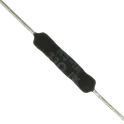
10 Ohms ±1% 10W Through Hole Resistor Axial Moisture Resistant Wirewound RS01010R00FE73 is a surface-mount, low-ohmic current sense resistor designed for precision current measurement and power management applications. It features a robust metal element construction that provides excellent thermal stability, low inductance, and high accuracy. This component is commonly used in power supplies, battery management systems, motor control circuits, and DC-DC converters where accurate current sensing is critical. Key Features Ultra-low resistance value for current sensing applications High power rating in compact SMD package Tight tolerance for precision measurement Low temperature coefficient for stable performance Excellent pulse handling capability RoHS compliant and lead-free Electrical Characteristics Resistance Value: 0.010 Ω (10 mΩ) Tolerance: ±1% Power Rating: 1 W Temperature Coefficient (TCR): ±75 ppm/°C (typical) Operating Temperature Range: -55°C to +155°C Mechanical Characteristics Package Type: Surface Mount (SMD) Package Size: 2512 (approx. 6.3 mm × 3.2 mm) Construction: Metal strip / metal element Termination: Nickel barrier with matte tin plating Performance Characteristics Low parasitic inductance for high-frequency applications High thermal conductivity for efficient heat dissipation Stable resistance over temperature and load conditions Suitable for high current measurement Applications Current sensing in power supplies Battery management systems (BMS) Motor control and drive circuits DC-DC converters Automotive electronics #CommonPartsLibrary #Resistor #THT #Axial
1 Uses0 Stars