Battery Management ICs
A Battery Management IC is a specialized microcontroller that monitors and manages the charging and discharging of a lithium-ion or other type of battery. These ICs are essential for ensuring the safe and efficient operation of batteries in a wide range of applications, including portable electronics, electric vehicles, and renewable energy systems. One of the key functions of a Battery Management IC is to optimize the charging and discharging of a battery by controlling the flow of current. This can help to extend the life of the battery and improve its overall performance. In addition to controlling the charging and discharging of a battery, a Battery Management IC can also perform other functions such as monitoring the temperature and voltage of the battery, protecting the battery from overcharge and overdischarge, and providing diagnostic information about the battery's health. Flux.ai has the world's largest community-driven public library of Battery Management ICs, with footprints, symbols, datasheets, and simulation models available for use. Whether you are a designer, engineer, or researcher, the Flux.ai library is an invaluable resource for finding the right Battery Management IC for your project.
SQ4435EY-T1_GE3
P-Channel 30V 15A (Tc) 6.8W (Tc) Surface Mount 8-SOIC The SQ4435EY-T1_GE3 is an automotive-grade P-Channel enhancement-mode TrenchFET® power MOSFET from Vishay Siliconix. It is designed for efficient high-side load switching and power management applications, offering low on-resistance, fast switching performance, and excellent thermal reliability. Qualified to AEC-Q101, this MOSFET is suitable for demanding automotive and industrial environments. It is housed in a compact SO-8 surface-mount package, making it ideal for space-constrained designs. Key Features P-Channel enhancement-mode TrenchFET® MOSFET 30 V drain-to-source voltage (VDS) 15 A continuous drain current (TC = 25°C) Low RDS(on): 18 mΩ max @ VGS = -10 V 31 mΩ max @ VGS = -4.5 V AEC-Q101 qualified for automotive applications Operating junction temperature: -55°C to +175°C Low conduction losses for improved power efficiency Fast switching characteristics 100% Rg and UIS tested RoHS compliant and halogen-free Compact SO-8 surface-mount package Typical Applications Automotive high-side load switches Battery management systems (BMS) DC-DC converters Power distribution switches Motor control circuits Industrial power management Reverse battery protection #Vishay #SQ4435EY #PChannelMOSFET #TrenchFET #PowerMOSFET #Automotive #AECQ101 #HighSideSwitch #PowerManagement #DCDC #BatteryManagement #SO8 #IndustrialElectronics #LowRDSon #SurfaceMount
13 Uses0 StarsBSC030N10NS5SCATMA1
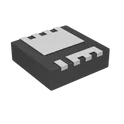
N-Channel 100 V 171A (Tc) 188W (Tc) Surface Mount PG-WSON-8-2 The BSC030N10NS5SCATMA1 specification defines the engineering requirements for an N-channel power MOSFET designed for high-efficiency switching and power management applications. This specification establishes the functional, electrical, mechanical, thermal, environmental, and quality requirements necessary to ensure reliable switching performance, low conduction losses, and long-term operational stability in power electronic systems. The device is intended for use in DC-DC converters, synchronous rectification circuits, motor control systems, battery management systems, power distribution modules, and industrial electronic equipment. It provides low on-state resistance, fast switching characteristics, and efficient power handling, making it suitable for high-frequency and high-current applications requiring optimized efficiency and thermal performance. Engineering Requirements The power MOSFET shall be manufactured using advanced semiconductor fabrication processes and qualified materials to ensure consistent electrical characteristics, high switching efficiency, and reliable long-term operation. The device shall maintain stable performance under specified voltage, current, and environmental operating conditions. Electrical characteristics shall provide low on-state resistance, high current-carrying capability, low gate charge, and fast switching performance to minimize conduction and switching losses. The device shall maintain stable operation during repetitive switching cycles, transient load conditions, and dynamic power management applications. Thermal performance shall support efficient heat dissipation through the package structure and printed circuit board interface. The component shall maintain electrical integrity and operational reliability within the specified junction temperature range during continuous and intermittent high-power operation. Mechanical construction shall be suitable for automated surface-mount assembly and compatible with standard solder reflow manufacturing processes. The package shall withstand vibration, thermal cycling, mechanical handling, and environmental exposure without degradation of electrical or mechanical performance. Workmanship shall be free from defects including contamination, cracks, bond failures, package deformation, or structural inconsistencies. Inspection, validation, and testing shall be conducted using calibrated equipment and controlled quality procedures to verify compliance with all applicable engineering and manufacturing requirements. Any deviation from this specification shall require formal engineering evaluation, documented technical justification, and approval through the established engineering change control process. Documentation Supporting documentation shall include engineering drawings, electrical performance specifications, thermal characterization reports, qualification records, inspection reports, material declarations, reliability data, and revision-controlled manufacturing documentation. All documentation shall be maintained under formal configuration management and quality assurance systems to ensure complete product traceability. Revision Control Any modification to this specification shall be managed through the formal engineering change management process. All revisions shall undergo technical review, validation, and approval before implementation to ensure continued compliance with design intent and applicable engineering standards. #EngineeringSpecification #PowerMOSFET #NChannelMOSFET #PowerElectronics #PowerManagement #MotorControl #DCDCConverter #Semiconductor #QualityAssurance #EngineeringDocumentation #commonpartslibrary #transistor #mosfet
0 Uses0 StarsMSPM0C1104S8YCJR
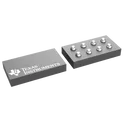
ARM® Cortex®-M0+ MSPM0 C Microcontroller IC 32-Bit 24MHz 16KB (16K x 8) FLASH 8-DSBGA (0.86x1.6) MSPM0C110x microcontrollers (MCUs) are part of the MSP highly-integrated ultra-low-power 32-bit MCU family based on the enhanced Arm® Cortex®-M0+ core platform operating at up to 24MHz frequency. These costoptimized MCUs offer high-performance analog peripheral integration, support extended temperature ranges from -40°C to 125°C, and operate with supply voltages from 1.62V to 3.6V. The MSPM0C110x devices provide up to 16KB embedded flash program memory with 1KB SRAM. These MCUs incorporate a high-speed on-chip oscillator with an accuracy from -2% to +1.2%, eliminating the need for an external crystal. Additional features include a 1-channel DMA, CRC-16 accelerator, and a variety of highperformance analog peripherals such as one 12-bit 1.5Msps ADC with VDD as the voltage reference, and an on-chip temperature sensor. These devices also offer intelligent digital peripherals such as one 16-bit advanced timer, two 16-bit general purpose timer, one windowed watchdog timer, and a variety of communication peripherals including one UART, one SPI, and one I2C. These communication peripherals offer protocol support for LIN, IrDA, DALI, Manchester, smart card, SMBus, and PMBus. The TI MSPM0 family of low-power MCUs consists of devices with varying degrees of analog and digital integration let customers find the MCU that meets their project needs. The architecture combined with extensive low-power modes is optimized to achieve extended battery life in portable measurement applications. MSPM0C110x MCUs are supported by an extensive hardware and software ecosystem with reference designs and code examples to get the design started quickly. Development kits include a LaunchPad™ kit available for purchase and design files for a target-socket board. TI also provides a free MSP Software Development Kit (SDK), which is available as a component of Code Composer Studio™ IDE desktop and cloud version within the TI Resource Explorer. MSPM0 MCUs are also supported by extensive online collateral, training with MSP Academy, and online support through the TI E2E™ support forums. Features • Core – Arm® 32-bit Cortex®-M0+ CPU, frequency up to 24MHz • Operating characteristics – Extended temperature: –40°C to 125°C – Wide supply voltage range: 1.62V to 3.6V • Memories – Up to 16KB of flash – 1KB of SRAM • High-performance analog peripherals – One analog-to-digital converter (ADC) with up to 10 total external channels, 1.7Msps at 10 bit or 1.5Msps at 12 bit with VDD as the voltage reference – Configurable 1.4V or 2.5V internal ADC voltage reference (VREF) – Integrated temperature sensor – Integrated supply monitor • Optimized low-power modes – RUN: 87µA/MHz – STOP: 609µA at 4MHz, 311µA at 32kHz – STANDBY: 5µA with SRAM retention – SHUTDOWN: 200nA • Intelligent digital peripherals – 1-channel DMA controller dedicated for ADC – Three timers supporting up to 14 PWM channels • One 16-bit advanced timers with deadband support up to 8 PWM channels • One 16-bit general purpose timer with 4 capture/compares • One 16-bit general purpose timer with 2 capture/compares – Windowed watchdog timer – BEEPER generating 1kHz, 2kHz, 4kHz, or 8kHz square wave to drive the external beeper • Enhanced communication interfaces – One UART interface supporting LIN, IrDA, DALI, smart card, Manchester and low-power operation in STANDBY mode – One I2C interface supporting FM+ (1Mbps), SMBus, PMBus, and wakeup from STOP mode – One SPI supporting up to 12Mbps • Clock system – Internal 24MHz oscillator with an accuracy from -2% to +1.2% (SYSOSC) – Internal 32kHz low-frequency oscillator (LFOSC) • Data integrity – Cyclic redundancy checker (CRC-16) • Flexible I/O features – Up to 18 GPIOs – Two 5V-tolerant open-drain IOs • Development support – 2-pin serial wire debug (SWD) • Package options – 20-pin TSSOP (PW) – 20-pin VSSOP (DGS) – 20-pin WQFN (RUK) – 16-pin SOT (DYY) – 8-pin SOT (DDF) – 8-pin WSON (DSG) – 8-pin DSBGA (YCJ) • Family members (also see Device Comparison) – MSPS003F4: 16KB of flash, 1KB of RAM – MSPS003F3: 8KB of flash, 1KB of RAM – MSPM0C1104: 16KB of flash, 1KB of RAM – MSPM0C1103: 8KB of flash, 1KB of RAM • Development kits and software (also see Tools and Software) – LP-MSPM0C1104 LaunchPad™ development kit – MSP Software Development Kit (SDK) 2 Applications • Battery charging and management • Power supplies and power delivery • Personal electronics • Building security and fire safety • Connected peripherals and printers • Grid infrastructure • Smart metering • Communication modules • Medical and healthcare • Lighting #MSPM0C1104S8YCJR #MSPM0C1104 #TexasInstruments #CortexM0Plus #Microcontroller #EmbeddedSystems #LowPowerMCU #IoT #WearableDevices #IndustrialControl #ConsumerElectronics #ADC #UART #SPI #I2C #PWM #TI #ElectronicsDesign #PCBDesign #EmbeddedDevelopment
2 Uses0 StarsSIWG917Y111MGABAR
Bluetooth, WiFi 802.11b/g/n/ax, Bluetooth v5.4 Transceiver Module 2.4GHz Integrated, Chip Surface Mount Silicon Labs SiWG917 module is our lowest power Wi-Fi 6 plus Bluetooth LE 5.4, ideal for ultra-low power IoT wireless devices using Wi-Fi®, Bluetooth, Matter, and IP networking for secure cloud connectivity. It is optimal for developing battery operated devices that need long battery life. SiWG917 module includes an ultra-low power Wi-Fi 6 plus Bluetooth Low Energy (LE) 5.4 wireless CPU subsystem, and an integrated micro-controller (MCU) application subsystem, security, peripherals and power management subsystem all in a single 16 x 21.1 x 2.3 mm package. The wireless subsystem consists of a multi-threaded Network Wireless Processor (NWP) running up to 160 MHz, baseband digital signal processing, analog front end, 2.4 GHz RF transceiver and integrated power amplifier. The application subsystem consists of an ARM® Cortex®-M4 running up to 180 MHz, embedded SRAM, flash, ultra-low power sensor hub, and matrix vector processor. The ARM® Cortex®-M4 is dedicated for peripheral and application-related processing, while the NWP runs the wireless and networking stacks on independent threads, thus providing a fully integrated solution that is ready for a wide range of embedded wireless IoT applications. The modules come with modular radio type approvals for various countries, including USA (FCC), Canada (IC/ISED) and Japan (MIC), and are in compliance with the relevant EN standards (including EN 300 328 v2.2.2) for the conformity with the directives and regulations in EU and UK. KEY FEATURES • Wi-Fi 6 Single Band 2.4 GHz 20 MHz 1x1 stream IEEE 802.11 b/g/n/ax • Bluetooth LE 5.4 • Single chip Matter Over Wi-Fi Solution • ARM® Cortex® M4 Processor with FPU subsystem up to 180 MHz with rich set of Digital and Analog Peripherals. • Wi-Fi 6 Benefits: TWT for improved efficiency and longer battery life, MUMIMO/OFDMA for Higher Throughput, network capacity and low latency • Best in Class Device and Wireless Security • WLAN Tx power up to +17.5 dBm with integrated PA • Bluetooth LE Tx power up to +17 dBm with integrated PA • WLAN Rx sensitivity as low as -95.5 dBm • Wi-Fi 4 Standby Associated mode current: 71 μA @ 1-second listen interval • Embedded Flash option up to 8 MB/ optional external Flash up to 16 MB • Embedded PSRAM option up to 2 MB/ optional external PSRAM option up to 16 MB • Ultra-low power sensor hub peripherals • Matrix Vector Processor (MVP) • Embedded Wi-Fi, Bluetooth LE, Matter, and networking stacks supporting wireless coexistence • Three software-configurable MCU application memory options for sharing the RAM between the wireless, system, and application (192/256/320 KB) • Operating temperature: -40 to +85 ºC • Operating supply range: 3.0 to 3.63 V • Supply voltage for GPIOs: 1.71 to 3.63 V #WiFi6 #BluetoothLE54 #IoTModule #WirelessSoC #SiliconLabs #EmbeddedSystems #SmartHome #IndustrialIoT #LowPowerDesign #RFModule #ConnectedDevices #EdgeComputing #MatterReady #PCBDesign #ElectronicsEngineering
2.5k Uses0 StarsCRM2512-FX-1R00ELF
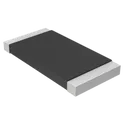
1 Ohms ±1% 2W Chip Resistor 2512 (6332 Metric) Current Sense Thick Film The CRM2512-FX-1R00ELF specification defines the engineering requirements for a surface-mount current sense resistor designed for precision current measurement and power management applications. This specification establishes the functional, electrical, mechanical, thermal, environmental, and quality requirements necessary to ensure accurate resistance performance, efficient power dissipation, and long-term operational reliability in electronic systems. The component is intended for use in power supplies, battery management systems, motor control circuits, industrial automation equipment, and embedded electronic applications requiring precise current monitoring. The resistor provides a low-resistance element for current sensing while maintaining high measurement accuracy, thermal stability, and compatibility with automated surface-mount manufacturing processes. Engineering Requirements The resistor shall be manufactured using high-quality resistive materials and controlled fabrication processes to ensure stable resistance characteristics, low temperature coefficient, and reliable long-term performance. The construction shall provide consistent electrical behavior throughout the specified operating conditions without significant drift or degradation. Electrical characteristics shall ensure accurate resistance value, stable current sensing performance, and low inductance suitable for high-frequency switching environments. The component shall maintain its specified tolerance and thermal performance under continuous rated power and transient load conditions. Thermal performance shall support efficient heat dissipation through the package structure and printed circuit board interface. The resistor shall withstand normal solder reflow processes and maintain structural integrity during thermal cycling, vibration, and mechanical handling. Mechanical construction shall be compatible with standard surface-mount assembly processes and shall provide reliable solder joint formation. Workmanship shall be free from defects including cracks, delamination, contamination, plating irregularities, or structural inconsistencies that could adversely affect electrical or mechanical performance. Inspection, validation, and testing shall be conducted using calibrated equipment and controlled quality procedures to verify compliance with all applicable engineering and manufacturing requirements. Any deviation from this specification shall require formal engineering evaluation, documented technical justification, and approval through the established engineering change control process. Documentation Supporting documentation shall include engineering drawings, electrical performance specifications, thermal characterization data, qualification reports, inspection records, material declarations, and revision-controlled manufacturing documentation. All documentation shall be maintained under formal configuration management and quality assurance systems to ensure complete product traceability. Revision Control Any modification to this specification shall be managed through the formal engineering change management process. All revisions shall undergo technical review, validation, and approval before implementation to ensure continued compliance with design intent and applicable engineering standards. #EngineeringSpecification #CurrentSenseResistor #PowerElectronics #SurfaceMount #PrecisionResistor #IndustrialElectronics #PowerManagement #QualityAssurance #EngineeringDocumentation #ElectronicComponents
18 Uses0 StarsCSS4J-4026R-1L00F
1 mOhms ±1% 4W Chip Resistor Nonstandard Automotive AEC-Q200, Current Sense Metal Element Bourns Inc. CSS4J-4026R-1L00F is a high-power surface-mount current sense resistor designed for accurate current measurement in power electronics applications. It belongs to the CSS4J-4026 series and uses a metal element construction that provides low resistance, high power handling, and excellent stability for automotive and industrial applications. This device features a 1 mΩ resistance value, ±1% tolerance, and 4 W power rating, making it suitable for monitoring high-current paths while minimizing measurement losses. It is also qualified for AEC-Q200 automotive applications and operates across a wide temperature range. Key Features Component Type: SMD Current Sense Resistor (Metal Element / Metal Strip) Resistance Value: 1 mΩ (0.001 Ω) Resistance Tolerance: ±1% Power Rating: 4 W Package Size: 4026 (approx. 10.06 mm × 6.60 mm) Number of Terminals: 4 terminals (Kelvin sensing configuration) Temperature Coefficient: approximately ±75 ppm/°C Operating Temperature Range: −55°C to +170°C Construction: Metal element current shunt resistor for accurate current measurement Qualification: Automotive AEC-Q200 compliant Typical Applications Battery Management Systems (BMS) EV and automotive power systems Motor control circuits Power supplies and DC/DC converters Overcurrent monitoring and protection circuits Industrial power monitoring equipment #CommonPartsLibrary #Bourns #CSS4J4026 #CurrentSenseResistor #ShuntResistor #MetalElementResistor #AECQ200 #PowerElectronics #BatteryManagementSystem #EVElectronics #SMTComponents #PCBDesign
121 Uses0 StarsWSLP40261L000FEA
1 mOhms ±1% 7W Chip Resistor Nonstandard Anti-Sulfur, Automotive AEC-Q200, Current Sense, Pulse Withstanding Metal Element The WSLP40261L000FEA is a high-power Power Metal Strip® current sense resistor manufactured by Vishay Intertechnology, Inc. (Vishay Dale). It is a surface-mount, ultra-low resistance resistor designed for precision current measurement and power monitoring applications. The device features a 1 mΩ resistance value, ±1% tolerance, and 7 W power rating, making it suitable for high-current automotive, industrial, battery management, and power supply applications. The resistor uses a solid metal element construction with a 4-terminal Kelvin connection to improve measurement accuracy by minimizing parasitic resistance effects. It is AEC-Q200 qualified, making it suitable for demanding automotive environments requiring high reliability and stability. • High power to foot print size ratio • All welded construction of the Power Metal Strip® resistors are ideal for all types of current sensing, voltage division and pulse applications • Proprietary processing technique produces extremely low resistance values, down to 0.0002 Ω • Sulfur resistance by construction that is unaffected by high sulfur environments • Specially selected and stabilized materials allow for high power rating (to 12 W) • Solid metal nickel-chrome or manganese-copper alloy resistive element with low TCR (< 20 ppm/°C) • Very low inductance 0.5 nH to 5 nH • Low thermal EMF (< 3 μV/°C) • AEC-Q200 qualified (1) • Material categorization: for definitions of compliance please see www.vishay.com/doc?99912 #WSLP40261L000FEA #Vishay #CurrentSenseResistor #PowerMetalStrip #ShuntResistor #LowOhmResistor #AECQ200 #AutomotiveElectronics #BMS #PowerElectronics #SMDResistor #PrecisionMeasurement
32 Uses0 StarsCSS4J-4026R-L500F
0.5 mOhms ±1% 5W Chip Resistor Nonstandard Automotive AEC-Q200, Current Sense Metal Element # Engineering Specification ## Product Name CSS4J-4026R-L500F ## General Description CSS4J-4026R-L500F is a precision four-terminal Kelvin current sense shunt resistor designed for accurate current measurement in high-performance electronic and power management systems. The device is intended for use in applications requiring low resistance sensing, high measurement accuracy, and stable thermal performance under varying electrical loads. The component utilizes a metal element resistive structure optimized for minimal resistance drift, reduced temperature effects, and consistent long-term stability. Its four-terminal Kelvin configuration separates current flow and voltage sensing paths, enabling improved measurement accuracy by eliminating errors caused by PCB trace and connection resistance. The device is widely used in power conversion systems, battery monitoring systems, motor control circuits, and industrial power electronics where precise current feedback is essential for control, protection, and monitoring functions. Its surface-mount construction supports compact PCB layouts and automated assembly processes while maintaining robust mechanical and electrical reliability. The design emphasizes efficient heat dissipation, stable electrical characteristics, and compatibility with demanding industrial and automotive environments. It is suitable for integration into systems requiring continuous current monitoring and high measurement fidelity. ## Functional Requirements ### Current Measurement The device shall provide accurate current sensing through a low-resistance conductive path designed for minimal measurement error. ### Kelvin Sensing Operation The device shall support four-terminal Kelvin sensing to improve measurement accuracy by separating current and voltage sensing paths. ### Signal Stability The device shall maintain stable sensing characteristics under varying load and thermal conditions. ### System Integration The component shall support integration into power electronics and embedded control systems requiring precise current feedback. ## Electrical Requirements ### Low Resistance Operation The device shall exhibit very low resistance to minimize power loss and maintain measurement accuracy. ### Thermal Stability The resistor shall maintain consistent electrical behavior under elevated operating temperatures and thermal cycling conditions. ### Power Handling The device shall support operation in high-current environments typical of power conversion and motor control systems. ### Measurement Accuracy The design shall support precise voltage drop measurement proportional to current flow for control and monitoring applications. ## Mechanical Requirements ### Surface Mount Construction The device shall be provided in a surface mount package suitable for automated PCB assembly. ### Structural Integrity The component shall maintain mechanical stability during assembly, operation, and thermal cycling. ### PCB Integration The device shall support direct integration into multilayer printed circuit board designs with optimized current path layout. ## Environmental Requirements ### Operating Conditions The device shall operate reliably under industrial and automotive environmental conditions. ### Thermal Performance The component shall maintain performance stability under continuous electrical loading and heat generation. ### Storage and Handling The device shall maintain physical and electrical integrity during storage, transport, and handling procedures. ## Quality Requirements ### Reliability The device shall provide long-term stability in resistance value and sensing accuracy under continuous operation. ### Verification Electrical, thermal, and mechanical characteristics shall be validated through appropriate testing and qualification procedures. ### Compliance The product shall conform to applicable standards for current sensing resistors used in industrial and automotive electronics. ## Documentation Requirements Technical documentation shall include application guidelines, layout recommendations for Kelvin sensing, thermal considerations, electrical characteristics, and integration practices for power electronics systems. ## Classification Tags #CSS4J4026RL500F #CurrentSenseResistor #ShuntResistor #KelvinSensing #FourTerminalResistor #PowerElectronics #BatteryManagement #MotorControl #PowerSupplyDesign #AnalogSensing #ElectricalEngineering #PCBDesign #EmbeddedSystems #IndustrialElectronics #AutomotiveElectronics #CommonPartsLibrary #ComponentLibrary #EngineeringSpecification #TechnicalDocumentation #HighCurrentSensing #PrecisionMeasurement #CircuitDesign
216 Uses0 StarsMIC5209-1.8YM
Linear Voltage Regulators (LDO) MIC5209-1.8YM SOIC-8_L4.9-W3.9-P1.27-LS6.0-BL LCSC Part Number: C150786 Microchip MIC5209 – 500 mA low-noise Low Dropout (LDO) linear voltage regulator designed for battery-powered and noise-sensitive applications. Supports input voltages from 1.8 V to 15 V and provides highly accurate regulated output with low dropout voltage and excellent line/load regulation. Features current limiting, thermal shutdown, reverse-battery protection, low quiescent current, and stable operation with minimal external components. Available in fixed and adjustable output versions for portable electronics, embedded systems, RF circuits, sensors, and post-regulation of switching power supplies. Search Keywords: MIC5209, Microchip MIC5209, LDO Regulator, Low Noise LDO, 500mA Voltage Regulator, Linear Regulator, Low Dropout Regulator, Adjustable LDO, Fixed Output LDO, Battery Powered Regulator, Power Management IC, Embedded Power Supply, Analog Power IC, Post Regulator, Low Quiescent Current Regulator, Reverse Battery Protection, Thermal Shutdown Regulator, 3.3V Regulator, 5V Regulator, Precision Voltage Regulator Hashtags: #MIC5209 #Microchip #LDO #LDORegulator #VoltageRegulator #LinearRegulator #LowNoiseLDO #PowerManagement #PowerSupply #AnalogIC #EmbeddedSystems #BatteryPowered #LowDropoutRegulator #PowerElectronics #ElectronicsDesign #PCBDesign #HardwareDesign #IndustrialElectronics #IoTDevices #VoltageRegulation
6 Uses0 Stars