Top User Projects
Explore innovation and practical design in Flux.ai's top user projects. This collection highlights outstanding printed circuit board (PCB) projects crafted by our community members. Featuring a range of complexities and applications, these projects showcase the real-world potential and diversity of PCB design. The top user projects section is an invaluable resource for inspiration and learning. Whether you’re a veteran PCB designer seeking fresh ideas or a newcomer aiming to understand various design strategies, these projects offer a wealth of knowledge and insight into the dynamic world of PCB design. By highlighting the achievements of our community, the top user projects stand as a testament to the innovative spirit and collaborative nature of Flux.ai’s users, fostering a culture of knowledge sharing and continuous advancement in the field of electronics design.
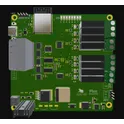
LoRa Door and Window Sensor Reference Design bbYa
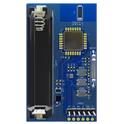
This is a LoRa-based door and window sensor incorporating a microcontroller unit (MCU). It features a reed sensor, LED indicators, a AAA non-rechargeable battery, and a booster IC for constant voltage. The MCU is linked to peripherals through nets, ensuring optimal performance #LoRa #MCU #ReferenceDesign #project #referenceDesign #simple-embedded #seeed #seeed-studio #template #reference-design
0 Uses2 StarsMQ-2
MQ-2 is a smoke and combustible gas sensor from Winsen. It can detect flammable gas in a range of 300 - 10000ppm. It's most common use is domestic gas leakage alarms and detectors with a high sensitivity to propane and smoke. The sensing material is SNO₂ for which the conductivity is lower in clean environments and higher when smoke or flammable gas is present. #commonpartslibrary #sensor #gassensor #integratedcircuit
696 Uses2 StarsRP2350B
The RP2350, developed by Raspberry Pi Ltd, is a high-performance microcontroller designed to cater to a broad range of applications requiring efficient power management, advanced security features, and versatile IO options. This microcontroller stands out with its dual-core architecture, featuring either Cortex-M33 or Hazard3 processors operating at up to 150 MHz, ensuring robust performance for complex applications. It boasts a substantial 520 KB of on-chip SRAM distributed across 10 independent banks, enhancing parallel data processing capabilities. Additionally, the RP2350 supports up to 16 MB of external QSPI flash/PSRAM for extensive program and data storage, further expandable via an optional second chip-select. A notable feature of the RP2350 is its integrated on-chip switched-mode power supply, designed to generate core voltage efficiently, complemented by a low-quiescent-current LDO mode for reduced power consumption in sleep states. Security is a paramount feature of the RP2350, offering options for boot signing with key fingerprint in OTP, hardware mitigations against fault injection attacks, and a hardware SHA-256 accelerator for cryptographic operations. The microcontroller is also equipped with a comprehensive set of peripherals, including USB 1.1 controller and PHY, multiple UARTs, SPI, and I2C controllers, 24 PWM channels, and 12 programmable IO (PIO) state machines, providing extensive interface capabilities. The RP2350 is available in QFN-60 and QFN-80 packages, with or without flash-in-package options, catering to various design requirements and application needs.
55 Uses2 StarsRP2350A
The RP2350, developed by Raspberry Pi Ltd, represents a significant advancement in the field of microcontrollers, building upon the foundation laid by its predecessor, the RP2040. This component is designed to cater to a wide range of applications requiring dual-core processing capabilities, with the option to switch between Dual Cortex-M33 or Hazard3 processors operating at up to 150 MHz. It features an extensive 520 kB of on-chip SRAM distributed across 10 independent banks, alongside 8 KB of one-time-programmable (OTP) storage. External memory interfaces are well-supported, with provisions for up to 16 MB of external QSPI flash/PSRAM, and an additional 16 MB accessible via an optional second chip-select, facilitating extensive code and data storage options. Security features are robust, including options for boot signing enforced by on-chip mask ROM, with key fingerprints stored in OTP, and hardware mitigations against fault injection attacks. The RP2350 also boasts a comprehensive set of peripherals, including 2x UARTs, 2x SPI controllers, 2x I2C controllers, 24x PWM channels, and a USB 1.1 controller with PHY for host and device support, among others. Programmable IO (PIO) state machines enhance its flexibility, enabling the implementation of custom peripherals. For developers, the RP2350 offers low-power operation modes and a built-in boot ROM that supports direct boot from external flash or OTP, serial boot from USB or UART, and secure boot with code signature enforcement. The device is available in QFN-60 (7x7 mm) and QFN-80 (10x10 mm) packages, with or without built-in flash, catering to diverse application requirements. This microcontroller is a compelling choice for sophisticated projects that demand high performance, extensive memory and peripheral support, and advanced security features.
62 Uses2 Stars