Top Organization Components
Curated collection features components used in significant projects by various businesses and institutions, reflecting the current trends and high standards of the industry. From basic electronic elements to advanced modules, these components are selected for their superior quality, efficiency, and adaptability in diverse applications. It offers a glimpse into the components that are shaping the future of PCB design in professional settings. It serves as a vital resource for designers and organizations looking to stay ahead of the curve, providing insights into the component choices that lead to successful and innovative designs. By showcasing the preferred components of leading organizations, Flux.ai creates an avenue for knowledge exchange and benchmarking within the electronics design community. This subcategory is more than just a list of components; it's a reflection of industry-leading practices and a source of inspiration for those striving for excellence in PCB design.
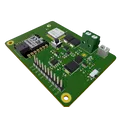
ArduPlus_Tirth
Welcome to the Design Challenge - ArduPlus by Tirth. This PCB is designed for remote monitoring, capable of collecting temperature data, processing it via the ATmega328, and transmitting it over long distances with a LoRa module. It's ideal for environments where power and bandwidth are limited. The inclusion of an ADC and op-amp supports complex sensor inputs, while mini-USB and CH340G facilitate easy programming and computer interfacing, enhancing its versatility and developer-friendliness.
0 Uses2 StarsMSP430FR6035IPZ
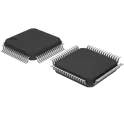
The Texas Instruments MSP430FR604x and MSP430FR603x family comprises highly integrated ultrasonic sensing and measurement system-on-chips (SoCs) designed specifically for water and heat metering applications. The featured components, including MSP430FR6047, MSP430FR60471, MSP430FR6045, MSP430FR6037, MSP430FR60371, and MSP430FR6035, deliver best-in-class ultrasonic water flow measurement with ultra-low power consumption. These microcontrollers excel with an active mode current consumption of approximately 120 µA/MHz and a standby mode power draw as low as 450 nA with a real-time clock (RTC) enabled. Key functionalities include a high-precision differential time-of-flight (dTOF) accuracy of less than 25 ps, integrated analog front-end, programmable pulse generation (PPG), and an analog comparator. They also interface directly with standard ultrasonic sensors up to 2.5 MHz and feature up to 256KB FRAM, robust RAM options, and integrated LCD drivers for up to 264 segments. The embedded low-energy accelerator (LEA) enhances digital signal processing capabilities, making these components ideal for battery-powered metering solutions. Peripherals include multiple enhanced serial communication interfaces, high-performance ADCs, DMA controllers, and a suite of timers and encryption modules. These features combine to offer a powerful solution for high-accuracy, low-cost, and ultra-low-power metering applications.
0 Uses2 StarsThe Green Dot 2040E5 Board
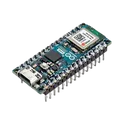
The "Green Dot 2040E5" Board is a Node that interfaces RS485 Sensor probes and can log information to the cloud using LoRa Connectivity. It uses the XIAO RP2040 and the LoRa-E5 (STM32WLE5JC) modules from Seeed Studio to do its magic. It also has amazing power management capabilities (Solar charging, Battery protection, etc) that make it very useful for IoT applications #Seeed #XIOA #LoRa #RP2040 #IoT
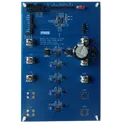
0 Uses2 StarsEV5920-5048-V-00A Evaluation Board
This is a recreation of the [EV5920-5048-V-00A](https://www.monolithicpower.com/en/ev5920-5048-v-00a.html) from MPS which demonstrates a MP5920 Hot-Swap controller commanding 5 MP5048 e-fuses in parallel. WIP Items: -Routing In flux, this project demonstrates hierarchal design through the use of modules. Additionally, parametric symbols are used extensively to improve schematic cleanliness. Components in the canvas are locked because their positions correspond to the same positions as the original layout. Changelog from Original MPS Design: - Not including GPIO2 or GPIO3 as included in the original board due to NC pin name on the IC. - PC1 and PC2 footprints are 5mm in pitch and 12.5mm in diameter rather than the 16mm diameter in the original layout. This change corresponds with the selected part more accurately. -Renamed Designators to be More Verbose
0 Uses2 Stars